01Jagat Singh’s temple
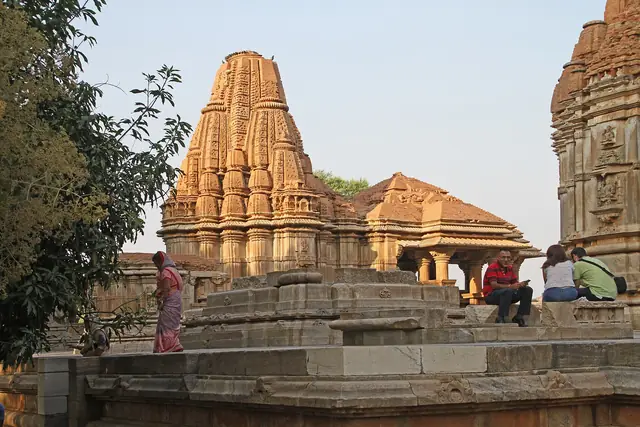
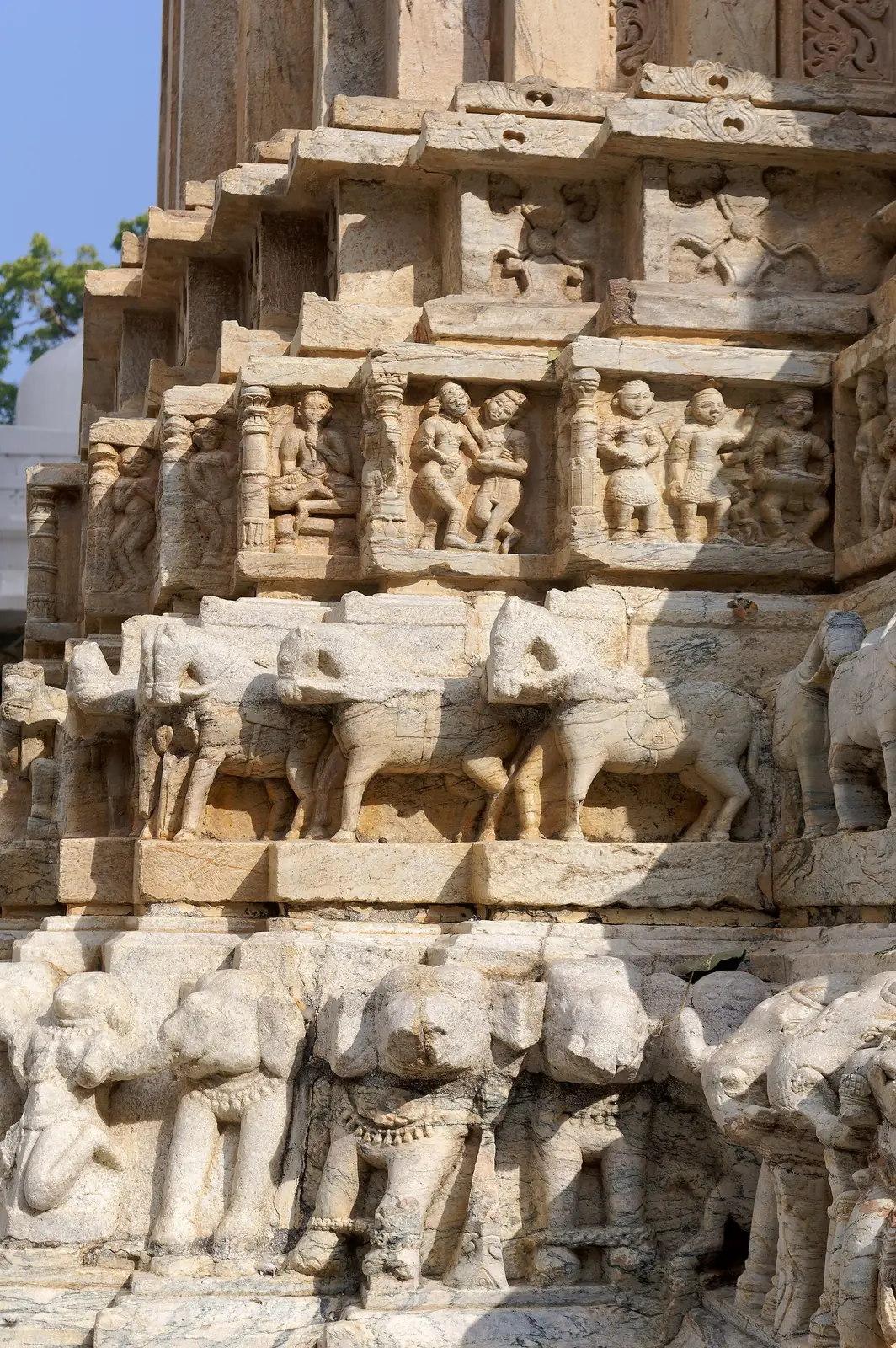
Thirty-two marble steps climb from the street to a brass Garuda, kneeling with folded hands before the shrine. Behind him rises a Maru-Gurjara temple of three storeys, its spire about 79 feet high, every course carved with elephants, dancers and riders. Maharana Jagat Singh I built it and gave the image the name Jagannath Rai; the people of Udaipur simply say Jagdish ji. A black stone Vishnu with four arms stands in the sanctum, and four smaller shrines, to Ganesh, Surya, Shakti and Shiva, stand at the corners of the platform.
02The attack of 1680
In January 1680, during Aurangzeb’s war on Mewar, his officers Ruhullah Khan and Ikkataz Khan were sent to destroy the great temple in front of the Rana’s palace. The court chronicle Maasir-i-Alamgiri records that a band of twenty Rajputs inside the temple came out one by one to fight and were killed to the last man, and that the temple was then damaged and many others round Udaipur were pulled down. The Maharanas repaired Jagdish after the war, and worship has not stopped since. The Rath Yatra on Ashadha Shukla Dwitiya takes the deity through the lanes of the old city.
The life of this place
- 1651Maharana Jagat Singh I completes the temple of Jagannath Rai.
- January 1680Aurangzeb’s officers attack the temple; twenty Rajput defenders die and the temple is damaged (Maasir-i-Alamgiri).
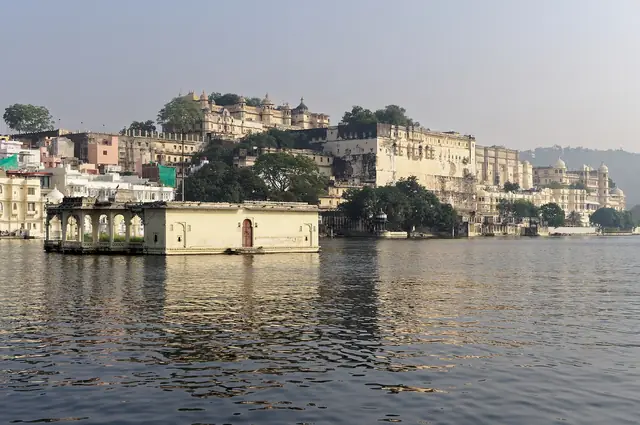
The temple is at Jagdish Chowk, a short walk uphill from Gangaur Ghat on Lake Pichola and below the City Palace gate.