Cite
MLA
“Jagannath Rath Yatra.” Hindu History, 2026, https://www.hinduhistory.in/yatra/jagannath-rath-yatra/. Accessed .
APA
Hindu History. (2026). Jagannath Rath Yatra. Retrieved , from https://www.hinduhistory.in/yatra/jagannath-rath-yatra/
The route
- 1Jagannath temple, Simhadwara
- 2Mausi Maa temple
- 3Gundicha temple
What defines it
- 01
Nandighosa (16 wheels), Taladhwaja (14), Darpadalana (12)
- 02
Chariots built new every year from Akshaya Tritiya
- 03
Chhera pahanra by the Gajapati king
- 04
Nine days at Gundicha; Bahuda Yatra and Suna Besha
- 05
About 10–12 lakh on 27 June 2025 (temple administration)
01Three chariots, new every year
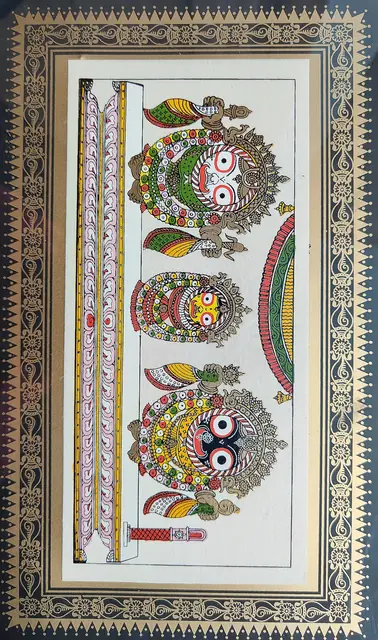
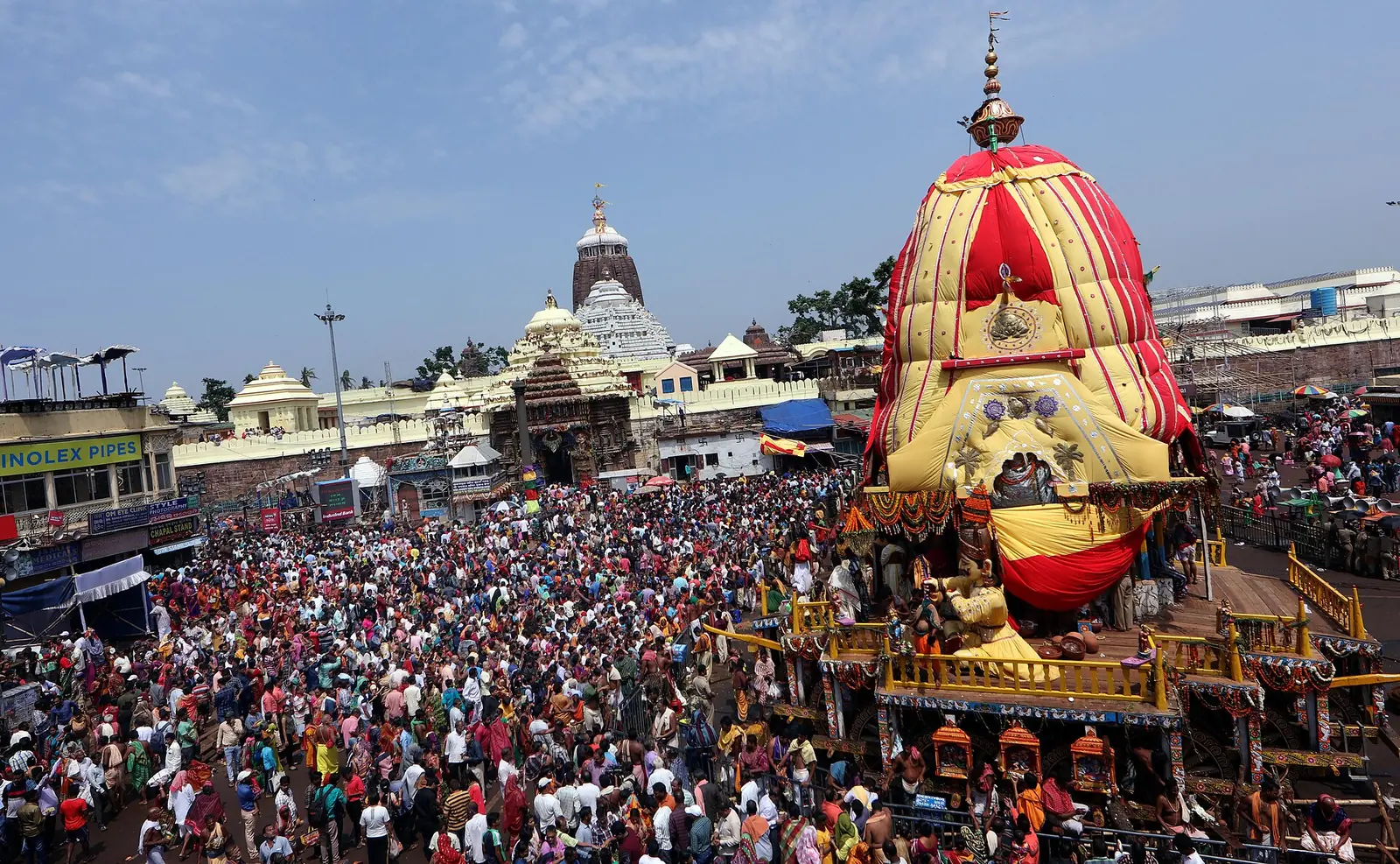
Work on the chariots starts on Akshaya Tritiya, when hereditary carpenters begin cutting logs brought down from the forests of Odisha. Nandighosa, Bhagwan Jagannath’s chariot, in red and yellow, runs on 16 wheels; Taladhwaja, Balabhadra’s, in red and green, on 14; Darpadalana, Subhadra’s, in red and black, on 12. The deities are brought out in pahandi, rocked forward step by step by the daitapati servitors to the sound of gongs and conch. Then the Gajapati king of Puri, heir of the kings who ruled Odisha in Jagannath’s name, sweeps the chariot floors with a golden broom in the rite of chhera pahanra, and the ropes are given to the people.
02Nine days at Gundicha
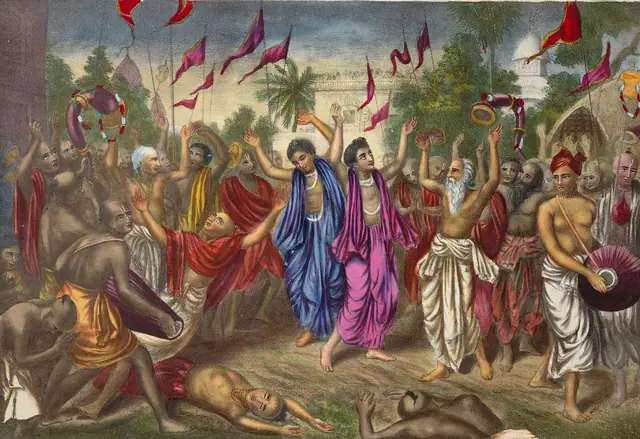
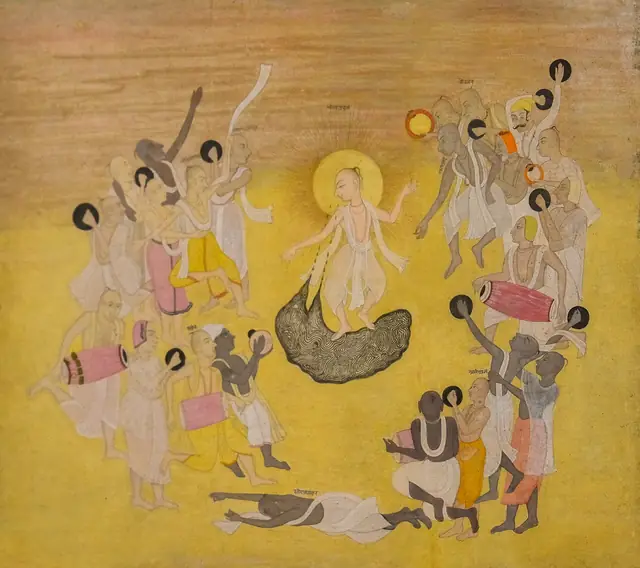
The Skanda Purana’s Purushottama Kshetra Mahatmya tells of King Indradyumna and of the Gundicha temple as the place of the deities’ birth, and the yatra takes them back there along the broad Bada Danda, about three kilometres. They stay nine days. On the way back, the Bahuda Yatra, the chariots halt at the Mausi Maa temple for poda pitha, and on reaching the Simhadwara the deities are dressed in gold for the Suna Besha. In the early sixteenth century Chaitanya Mahaprabhu, who lived at Puri from 1510, danced and sang kirtan before the chariots with his companions, and Bengali Vaishnavas have walked to Puri for the festival ever since.
03Years without a chariot
In 1568 Kalapahad, a general of the Bengal sultan, came to Puri. The servitors carried the images away and hid them on an island in Chilika lake, but he found them and burnt them; a devotee is said to have saved the brahma padartha, the sacred essence, from the ashes, and new images were later made around it. Further attacks by Mughal governors in the seventeenth and early eighteenth centuries drove the deities into hiding again, at Khurda and around Chilika, and Odia historians count about 32 years between 1568 and 1735 in which the Rath Yatra could not be held, though the exact years differ between accounts. Each time it returned. In 1967 ISKCON held the first Rath Yatra outside India, in San Francisco.
Great masters
In the texts
- Purushottama Kshetra Mahatmya (Skanda Purana)
- Madala Panji