Cite
MLA
“Achintya Bhedabheda.” Hindu History, 2026, https://www.hinduhistory.in/darshana/achintya-bhedabheda/. Accessed .
APA
Hindu History. (2026). Achintya Bhedabheda. Retrieved , from https://www.hinduhistory.in/darshana/achintya-bhedabheda/
What defines it
- 01
Krishna is Bhagwan himself (Bhagavata 1.3.28)
- 02
Three shaktis: antaranga, tatastha, bahiranga
- 03
Shakti and shaktiman: one and different, inconceivably
- 04
Prema as the highest goal
- 05
The holy name as the path for Kali Yuga
01The teacher who wrote eight verses
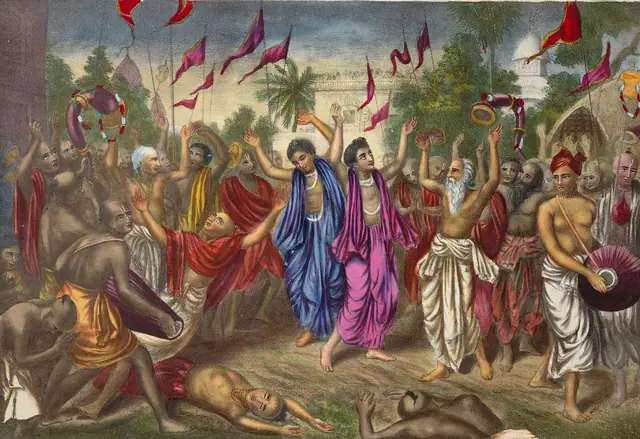
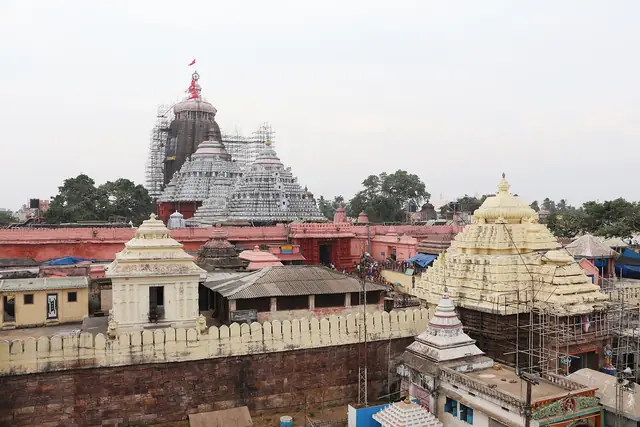
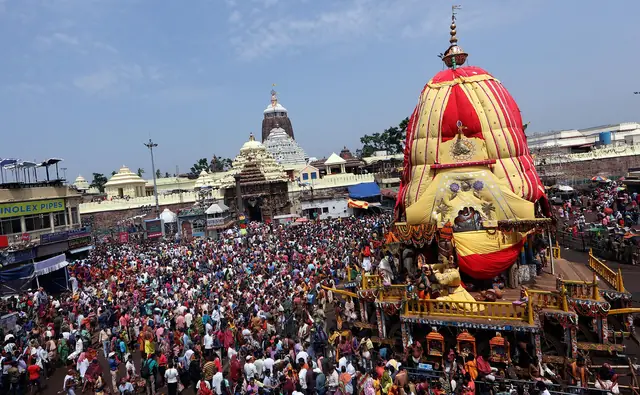
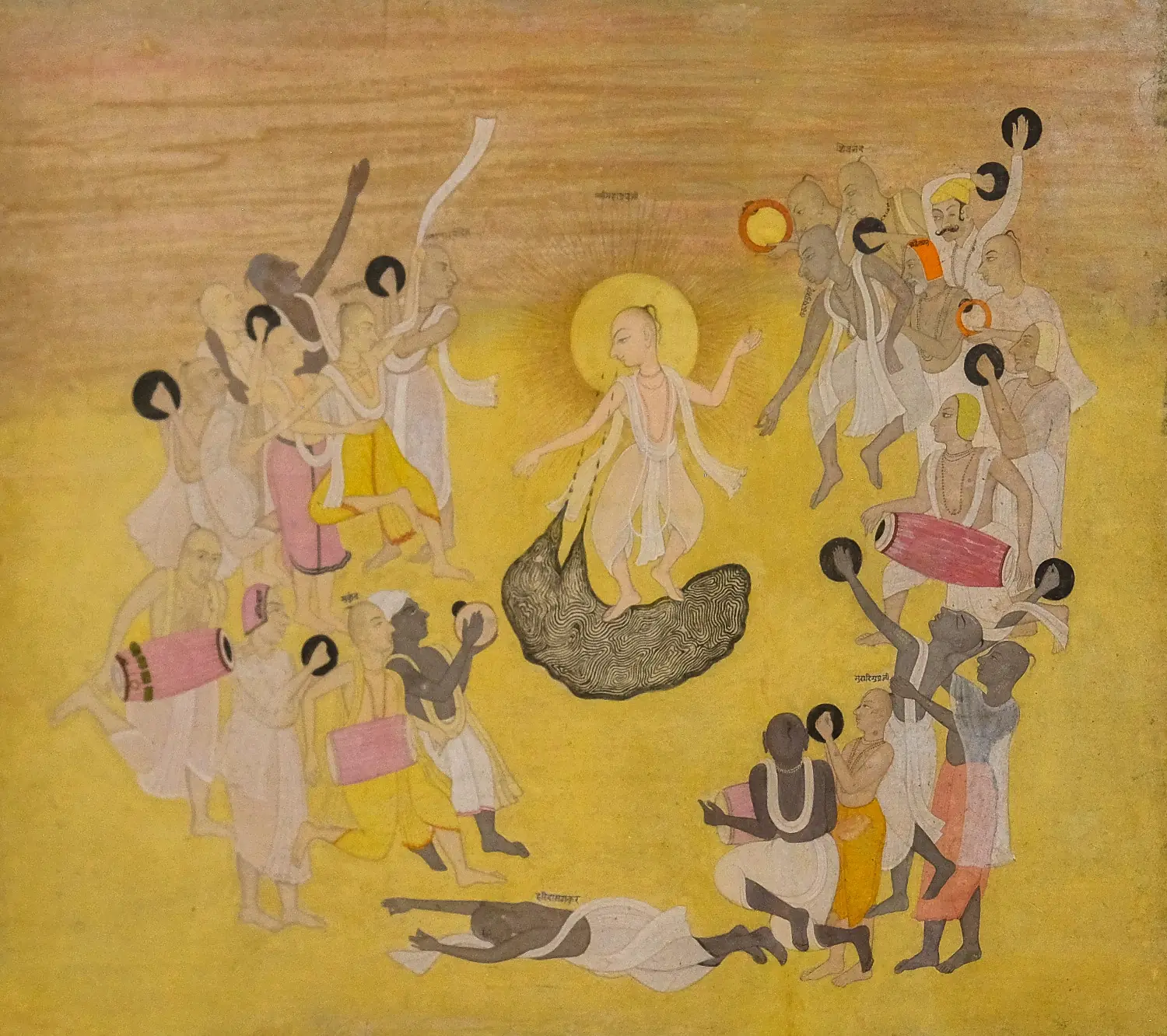
Chaitanya was born Vishvambhara Mishra at Navadvip in 1486, a brilliant young scholar of grammar and Nyaya in the town that was then the centre of Navya-Nyaya. After receiving initiation at Gaya he turned wholly to Krishna-kirtan. He took sannyasa from Keshava Bharati in 1510, travelled through the south and to Vrindavan, and spent most of his later years at Puri near Bhagwan Jagannath, where he passed away in 1534. He himself left only the Shikshashtakam, eight verses on the holy name and humility. At Puri, the Chaitanya Charitamrita says, he spoke with the great naiyayika Vasudeva Sarvabhauma, who became his follower.
02Fire and its sparks
The school takes as its root Bhagavata Purana 1.3.28: krishnas tu bhagavan svayam, Krishna is Bhagwan himself. Bhagwan has energies, shaktis, of three kinds: the inner (antaranga or svarupa) shakti of his own being and bliss; the marginal (tatastha) shakti, which is the jivas; and the outer (bahiranga) shakti, maya, the world. A shakti is never separate from the one who holds it, and yet it is not the same as him; the Goswamis compare it to fire and its heat and light, or to the sun and its rays. How both can be true at once is achintya, beyond the reach of thought, and must be accepted from shastra. The goal is prema, pure love of Krishna, which the tradition counts above even moksha.
03Jiva Goswami and the Govinda Bhashya
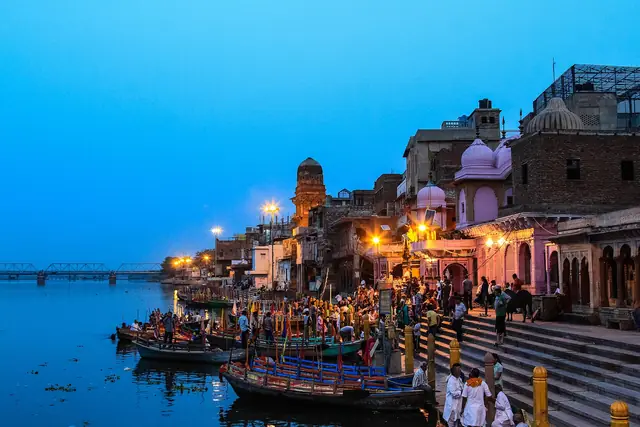
Chaitanya sent Rupa and Sanatana Goswami to Vrindavan to write and to recover the lost lila-sthalas. Their nephew Jiva Goswami gave the philosophy its full form in the six Sandarbhas: Tattva, Bhagavat, Paramatma, Krishna, Bhakti and Priti. For a long time the school had no Brahma Sutra commentary of its own and treated the Bhagavata as the natural commentary on the sutras. In the early 18th century, at Jaipur, Baladeva Vidyabhushana wrote the Govinda Bhashya on the Brahma Sutra to establish the tradition’s Vedanta credentials before other Vaishnava schools. Krishnadasa Kaviraja’s Chaitanya Charitamrita, in Bengali, remains the most loved account of the teaching.
Family tree
Great masters
In the texts
- Shikshashtakam of Chaitanya
- Sat Sandarbha of Jiva Goswami
- Govinda Bhashya on the Brahma Sutra
- Chaitanya Charitamrita of Krishnadasa Kaviraja