Cite
MLA
“Odissi.” Hindu History, 2026, https://www.hinduhistory.in/kala/odissi/. Accessed .
APA
Hindu History. (2026). Odissi. Retrieved , from https://www.hinduhistory.in/kala/odissi/
What defines it
- 01
Chauka and tribhangi stances
- 02
Sideways movement of the torso
- 03
Ashtapadis of the Gita Govinda
- 04
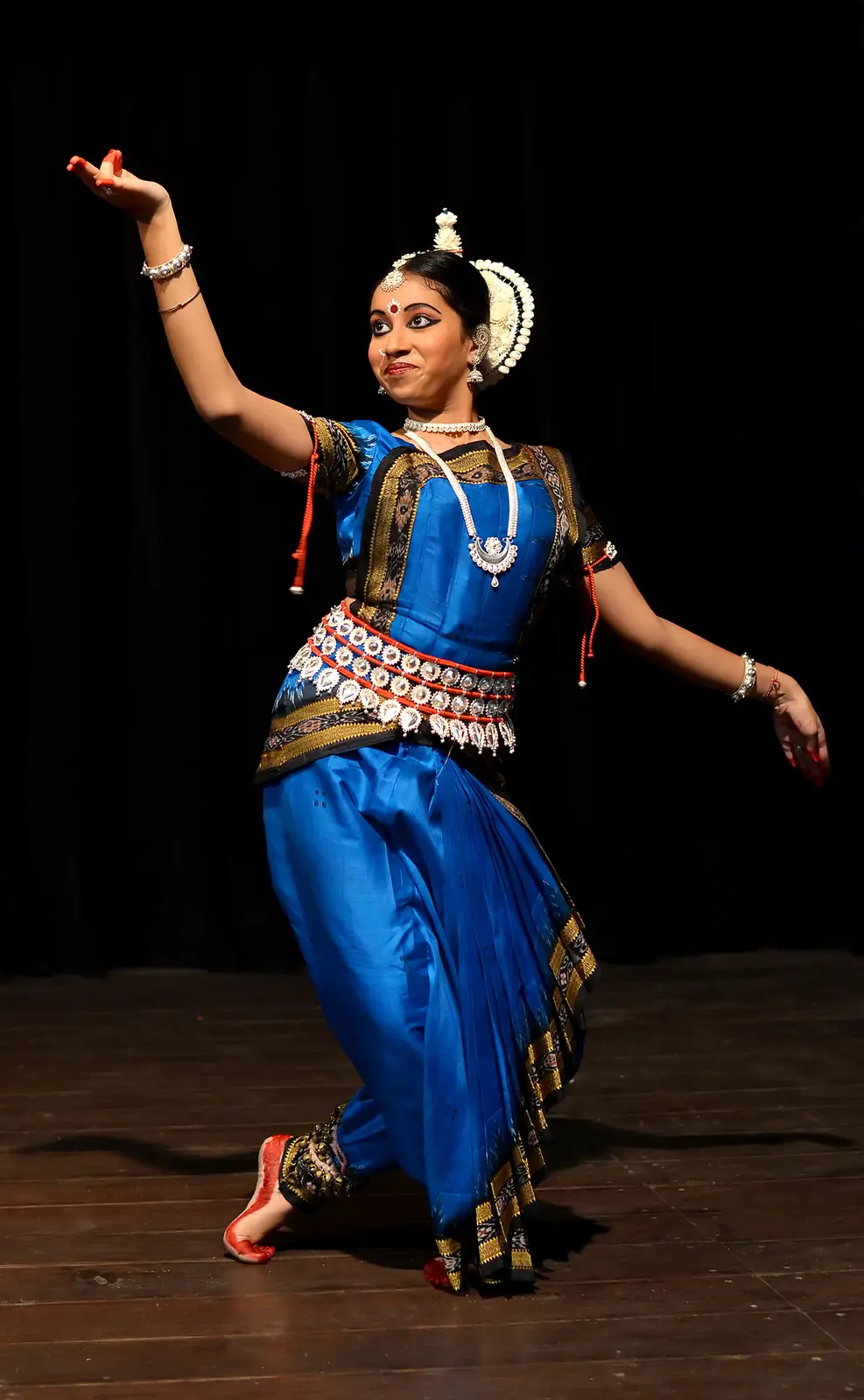
Silver jewellery and pith crown
- 05
Mardala drum
01From Kharavela to Jagannath
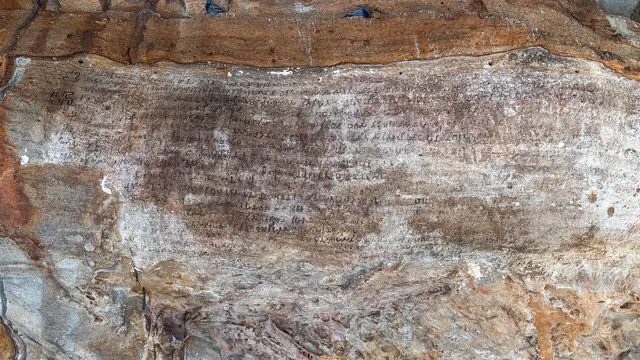
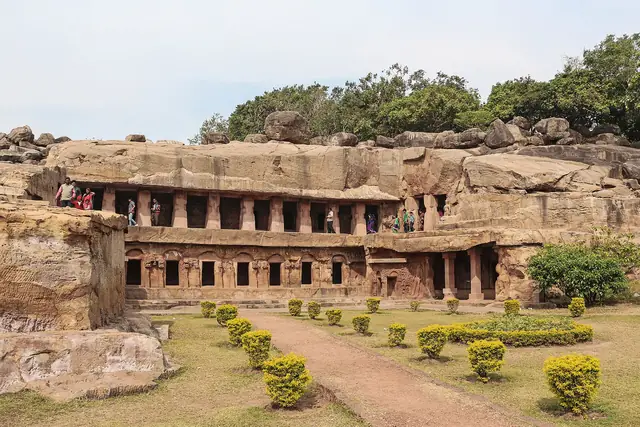
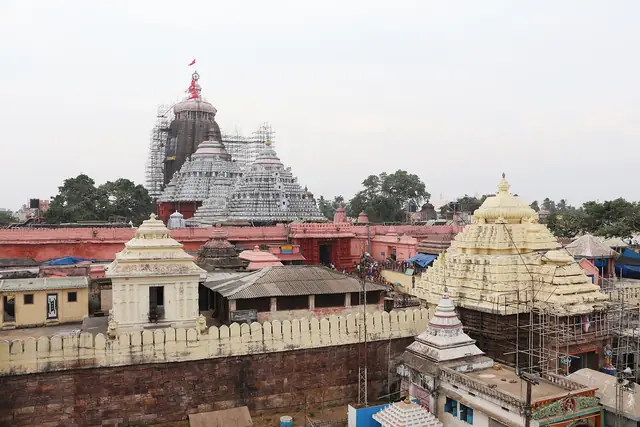
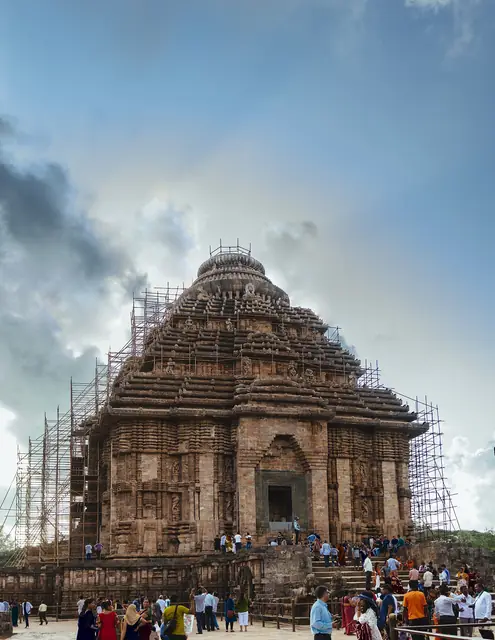
Kharavela’s Hathigumpha inscription at Udayagiri says that in his third year the king, versed in the gandharva arts, entertained his capital with dance, song and music, and the Rani Gumpha cave nearby has a frieze of a dancer with musicians. The great temples of Bhubaneswar and Konark are covered with dancers. In the Jagannath temple the maharis danced before Bhagwan, and from the 12th century they sang Jayadeva’s Gita Govinda in the sanctum. The text of the form is Maheshwara Mahapatra’s Abhinaya Chandrika.
02Chauka and tribhangi
Two stances carry Odissi. Chauka, square and wide-kneed, is the stance of Jagannath. Tribhangi breaks the body at neck, waist and knee into three bends, the pose of Krishna with the flute. Between them the torso moves sideways in a way no other dance has. A recital runs from mangalacharan through batu, pallavi and abhinaya, often an ashtapadi of the Gita Govinda, to moksha. The dancer wears silver ornaments and a crown of white pith shaped like a temple.
03The gurus of the revival
In the 1950s a group of gurus and scholars, Kelucharan Mohapatra, Pankaj Charan Das, Deba Prasad Das, Mayadhar Raut and the scholar Kalicharan Pattanayak among them, met as the Jayantika and rebuilt a full repertoire from the mahari and gotipua traditions and the temple sculptures. Sanjukta Panigrahi, Kumkum Mohanty and Sonal Mansingh took it to the world. See it at the Konark Dance Festival each December, or watch gotipua boys at Raghurajpur near Puri.