Cite
MLA
“Pattachitra.” Hindu History, 2026, https://www.hinduhistory.in/kala/pattachitra/. Accessed .
APA
Hindu History. (2026). Pattachitra. Retrieved , from https://www.hinduhistory.in/kala/pattachitra/
What defines it
- 01
Tamarind-and-chalk prepared cloth
- 02
Natural colours: conch white, hingula red
- 03
Floral border frame
- 04
Anasara pattis for Jagannath
- 05
Tala pattachitra on palm leaf
01Painters of Jagannath
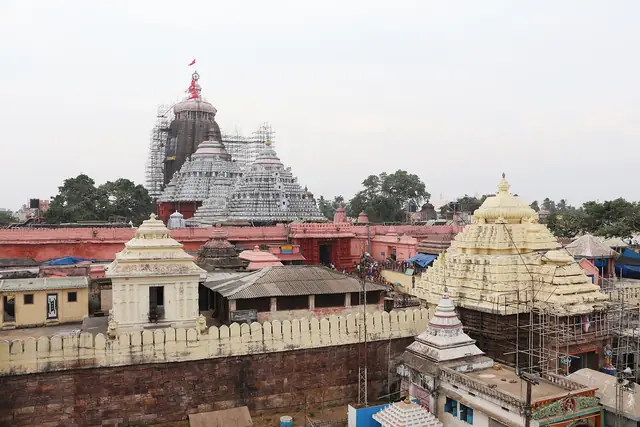
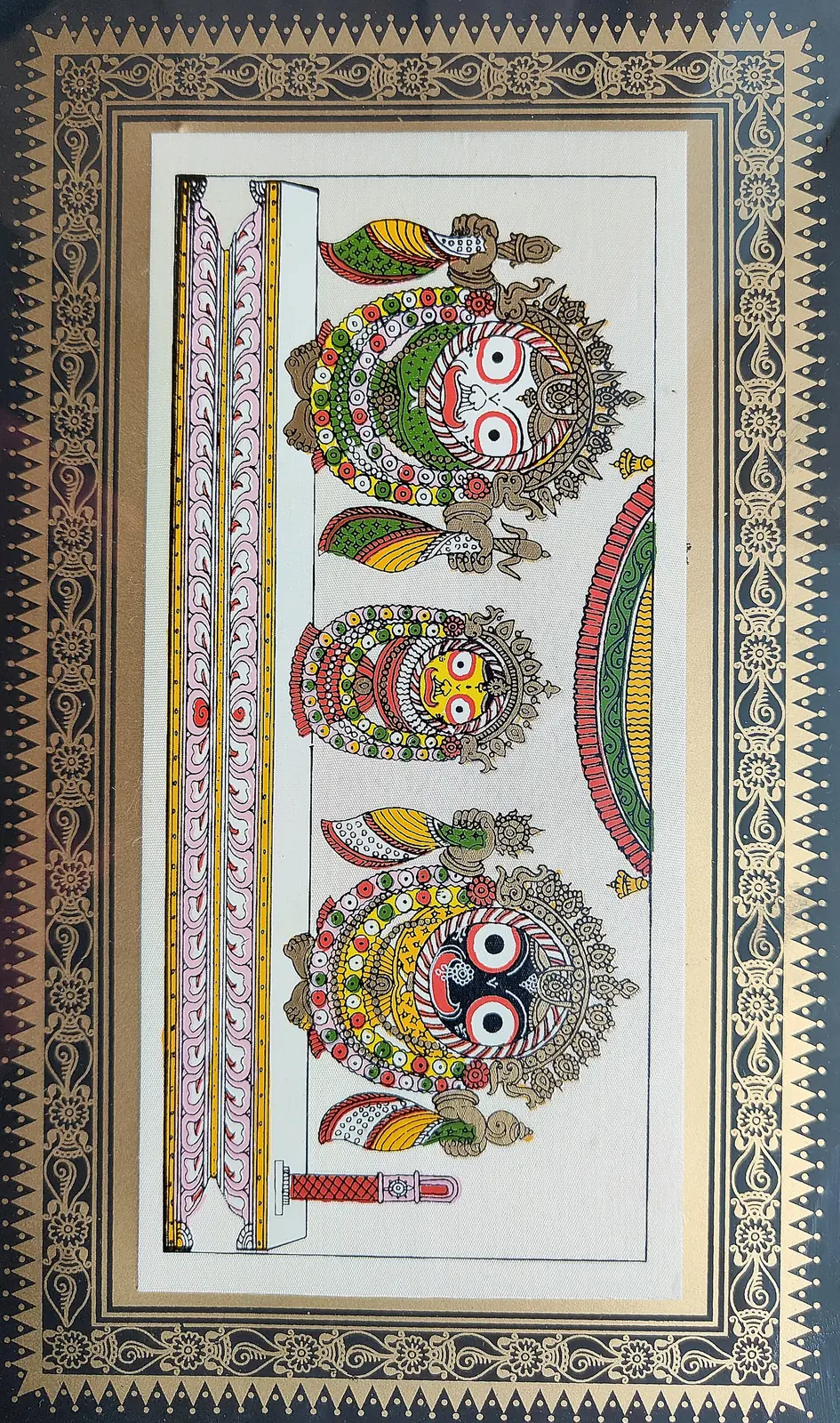
After the Snana Purnima bath in Jyeshtha, Jagannath, Balabhadra and Subhadra fall ill and stay out of sight for about a fortnight, the anasara. During those days devotees worship painted images instead, the anasara pattis, made by the chitrakars of Puri. The same families paint the wooden deities themselves when they are renewed, and paint the chariots for the Rath Yatra. The art’s life has always run with the life of the temple.
02Cloth, tamarind and conch
The patta, cloth, is stiffened with a paste of tamarind seed and coated with chalk, then polished smooth with a stone. Colours are natural: white from powdered conch shell, black from lamp soot, red from hingula, yellow from harital, and the painter makes the brushes himself. A border of flowers frames every picture. The figures have long eyes and sharp noses, and the subjects are Jagannath, Krishna’s leelas, the Dashavatara and the Ramayana. Palm-leaf engraving, tala pattachitra, is the sister craft.
03Raghurajpur
Raghurajpur, a village of coconut palms about 14 km from Puri, is a street of painters’ houses, every wall painted, every veranda a workshop. The Odissi guru Kelucharan Mohapatra was born here, and the gotipua boys still train here. Visit any house and you will be shown work in progress. In Bengal the patuas paint long scrolls, also called pats, and sing the story as they unroll them.