Cite
MLA
“Ibn Battuta.” Hindu History, 2026, https://www.hinduhistory.in/sakshi/ibn-battuta/. Accessed .
APA
Hindu History. (2026). Ibn Battuta. Retrieved , from https://www.hinduhistory.in/sakshi/ibn-battuta/
On this road, which, as we have said, extends for a two months’ march, there is not a foot of ground but is cultivated.
The route
What defines it
- 01
Qadi of Delhi under Muhammad bin Tughluq, c. 1334–1342
- 02
Malabar: twelve Hindu kings, Gates of Security, safe roads
- 03
Succession to the sister’s son on the Malabar coast
- 04
Reports the killing of Hoysala Ballala III
- 05
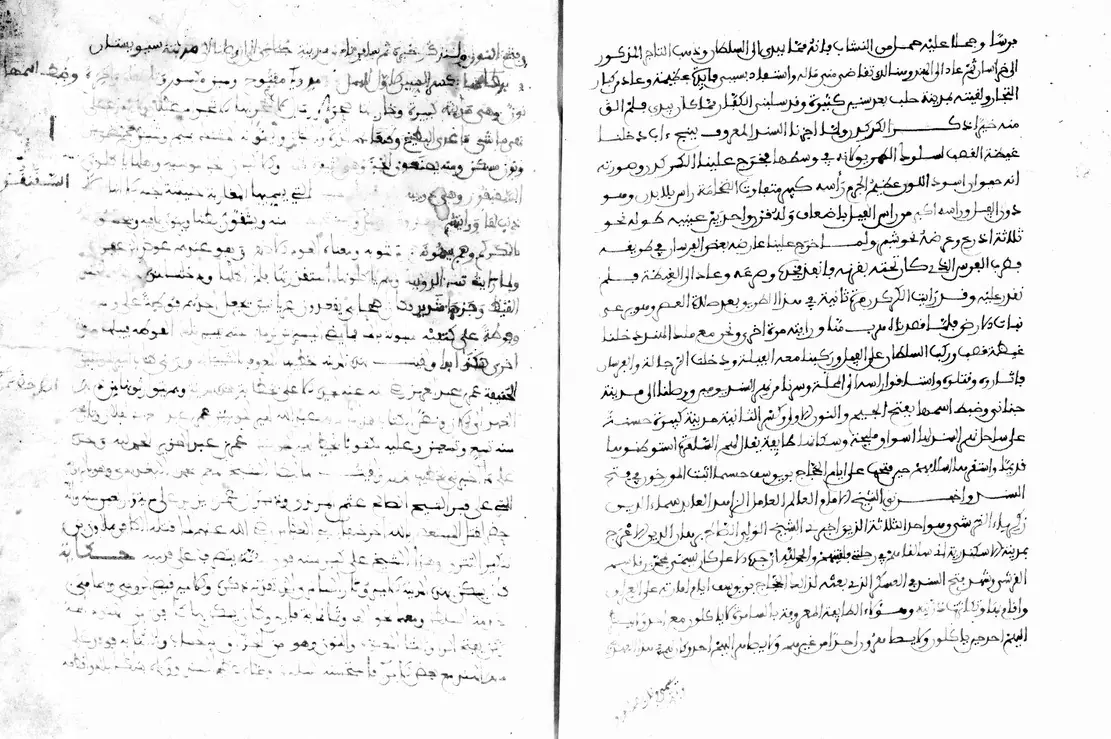
Dictated from memory in 1355
01To the court of Muhammad bin Tughluq
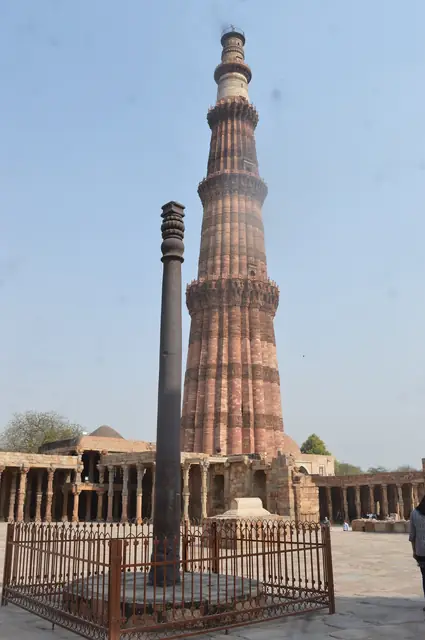
Ibn Battuta of Tangier reached the Indus in September 1333 and came to Delhi in 1334. He calls it a vast and magnificent city, with a wall that has no equal, made of four neighbouring towns, the oldest of them, he notes, built by the Hindus and taken in 1188. Muhammad bin Tughluq made him a qadi on a large salary, and he stayed about eight years, piling up debts and favours and watching the sultan’s mix of generosity and cruelty. He describes the court ceremonies, the postal runners, the famine years and the forced move of Delhi’s people to Daulatabad. In 1342 the sultan sent him as envoy to China, and his party was attacked by Hindu fighters near Kol, today’s Aligarh, where he was captured and escaped.
02The pepper coast of the Hindu kings
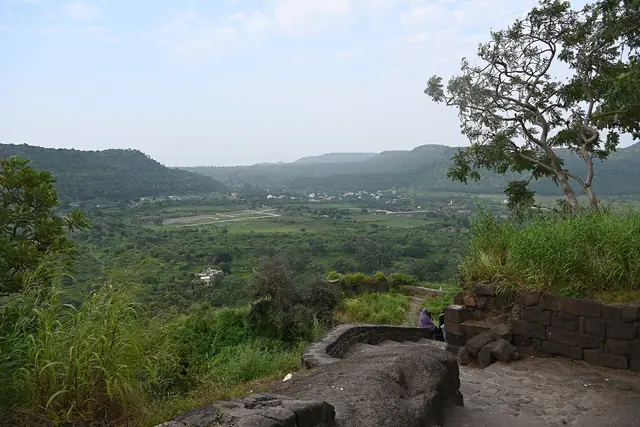
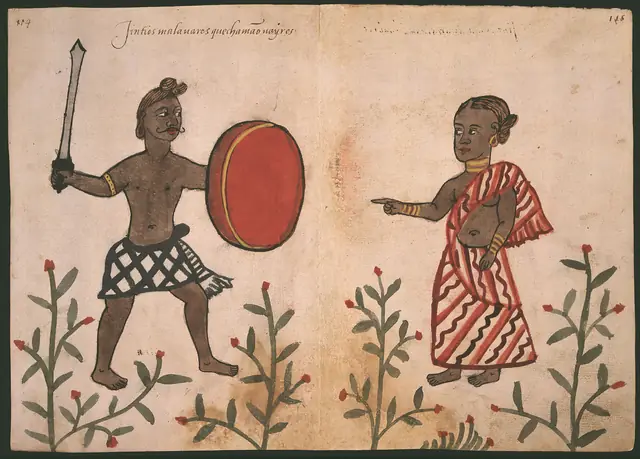
His pages on Malabar are among the best in the Rihla. The road from Goa to Quilon, two months long, runs under shade trees, with a wooden shed every half mile where a Hindu keeper gives water to travellers, pouring it into a Muslim’s hands since Muslims may not touch the vessels. Every foot of ground is cultivated, each house in its own orchard behind a palisade. He counts twelve Hindu kings on the coast, some with fifty thousand troops and some with three thousand, yet no strong king seized a weak one’s land. At each frontier stood a wooden Gate of Security, and a fugitive who reached another king’s gate was safe. Succession, he notes, went to the sister’s son. At Calicut he saw Chinese junks in the harbour, and lost his own ships there in a storm.
03Ma’bar, Bengal, and how far to trust him
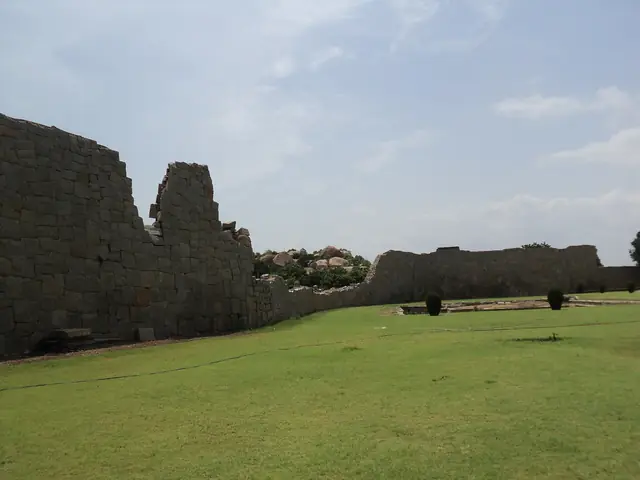
After a spell as qadi in the Maldives he crossed in 1344 to Ma’bar, the breakaway sultanate of Madurai, whose ruler was his brother-in-law; he reports the killing of the Hoysala king Ballala III by that sultan’s army and the plague in its camp. In 1345–46 he was in Bengal, at Sonargaon and in the hills of Kamaru to see a Sufi, before sailing east. He dictated all this in Fez in 1355 to Ibn Juzayy, who polished it and borrowed descriptions from earlier travellers for some other lands. Dates slip, and some sections elsewhere are doubted. The India chapters hold up better: Ziauddin Barani’s Persian history confirms the sultan’s character and the Daulatabad move. His lens is a Maliki jurist’s, who calls Hindus infidels and praises raids against them, yet he records their honesty, safe roads and charity without being asked.
In the texts
- Tuhfat al-Nuzzar, the Rihla (dictated 1355)
- Translations by H. A. R. Gibb (1929; Hakluyt Society 1958–94) and Mahdi Husain (1953)