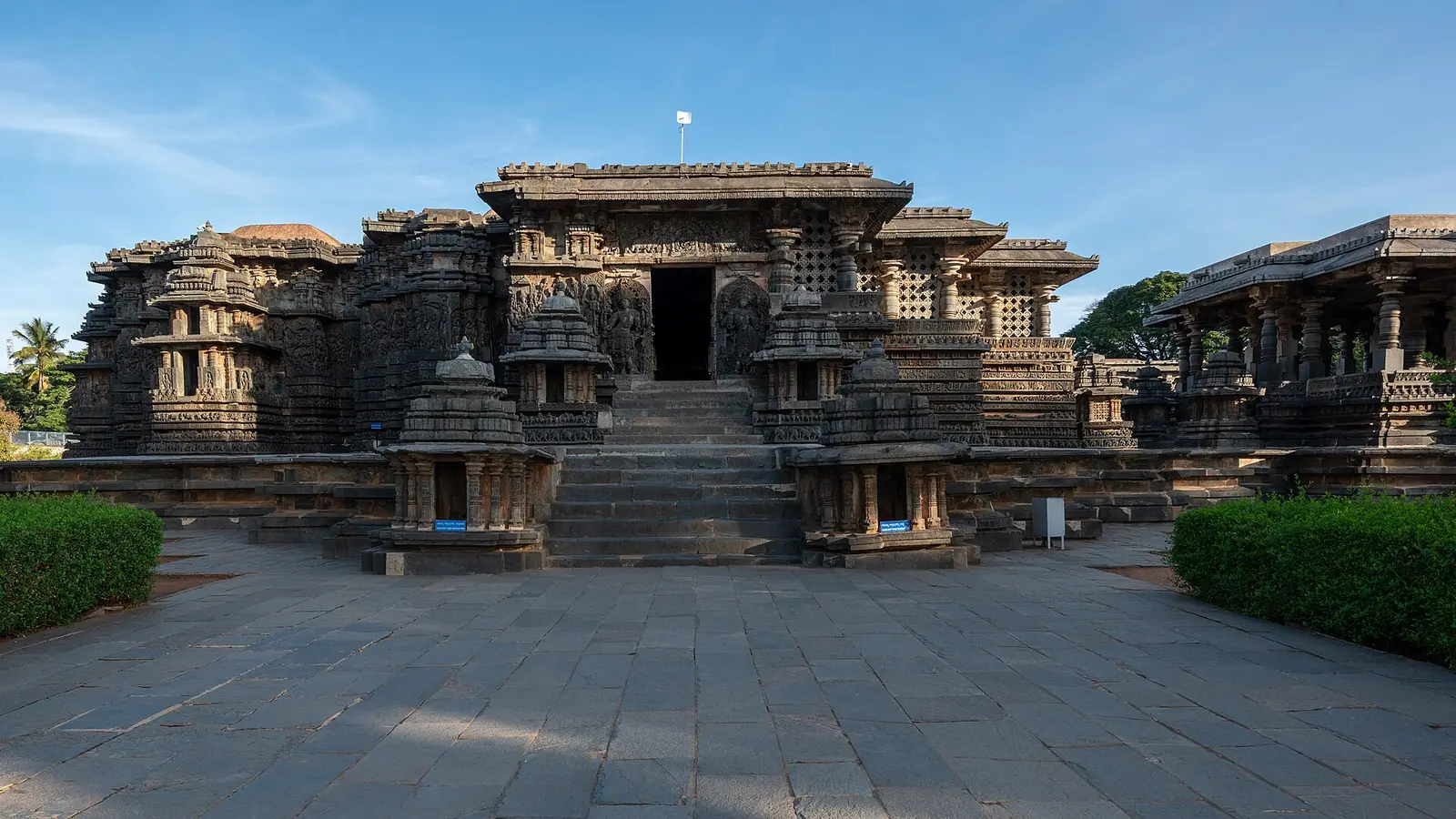
01Two lingas, two Nandis
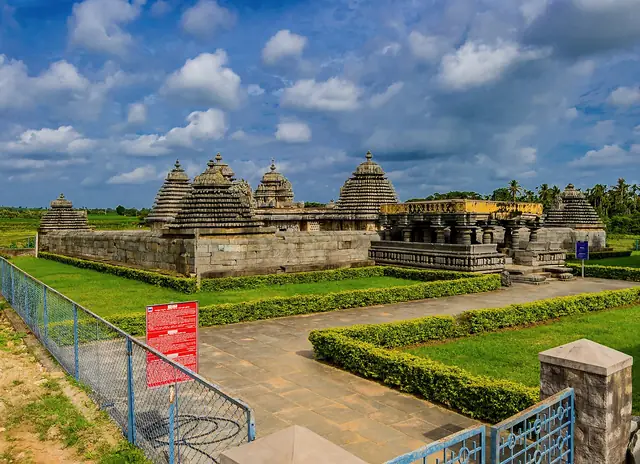
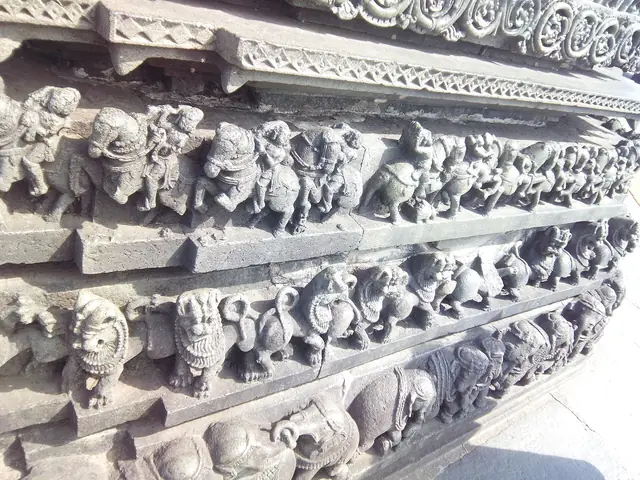
The temple was built in the reign of Vishnuvardhana by an officer named Ketamalla, and work went on for decades without the towers ever being finished. It has two sanctums side by side, one named for the king as Hoysaleshvara and one for Queen Shantala as Shantaleshvara, each with its own Nandi in a pavilion in front. Around the star-shaped base run eight bands, one above another: elephants for strength, lions for courage, scrolls, horses, more scrolls, then whole Ramayana and Mahabharata scenes, makaras and hamsas. Above them stand gods in hundreds: Shiva and Parvati on Kailash with Ravana shaking the mountain, Krishna lifting Govardhan, Gajasurasamhara.
021311 and 1326
In February 1311 Alauddin Khalji’s general Malik Kafur reached Dorasamudra. Amir Khusrau, Alauddin’s court poet, records in the Khaza’in ul-Futuh that Ballala III submitted, gave up his treasure and elephants, and that the temples of the city were plundered. Ballala recovered and ruled on, but in 1326–27 an army of Muhammad bin Tughluq came again and the capital was sacked a second time. The Hoysalas moved their seat to Tiruvannamalai, and Ballala III was killed fighting the Madurai Sultanate in 1343. Many images here have broken noses and hands; much of the surrounding city is gone. What stands still holds the finest Hoysala carving anywhere, and the ASI museum on the grounds keeps loose sculpture.
The life of this place
- c. 1121Construction begins under Vishnuvardhana.
- February 1311Malik Kafur’s army reaches Dorasamudra; Ballala III submits and the temples are plundered.
- 1326–27Muhammad bin Tughluq’s army sacks the capital again.
- 1343Ballala III is killed fighting the Madurai Sultanate; the Hoysala line ends soon after.
- 2023UNESCO lists the Sacred Ensembles of the Hoysalas.
About 30 km from Hassan. The Jain basadis and the Kedareshvara temple are a short walk away.