Cite
MLA
“The Periplus of the Erythraean Sea.” Hindu History, 2026, https://www.hinduhistory.in/sakshi/periplus-erythraean-sea/. Accessed .
APA
Hindu History. (2026). The Periplus of the Erythraean Sea. Retrieved , from https://www.hinduhistory.in/sakshi/periplus-erythraean-sea/
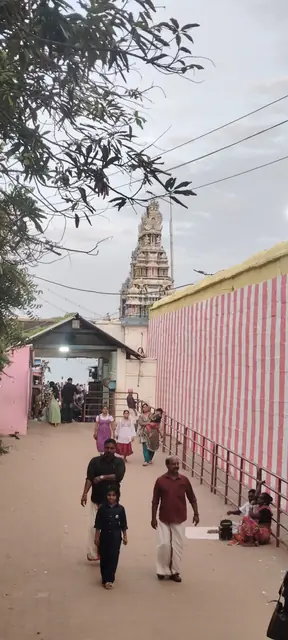
hither come those men who wish to consecrate themselves for the rest of their lives, and bathe and dwell in celibacy; and women also do the same; for it is told that a goddess once dwelt here and bathed
The route
What defines it
- 01
Monsoon sailing from Egypt in July
- 02
Barygaza (Bharuch), with Ujjain and Paithan behind it
- 03
Muziris of the Chera king, pepper for Roman coin
- 04
Pilgrims bathing at Comari for the goddess
- 05
Pandya pearl fisheries at Colchi (Korkai)
01A merchant’s handbook
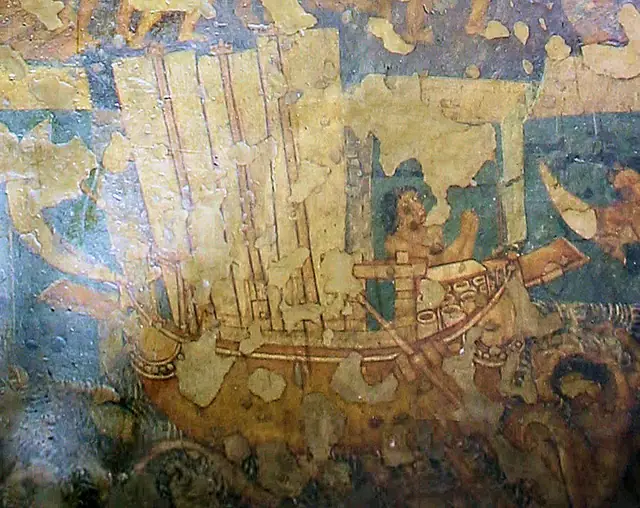
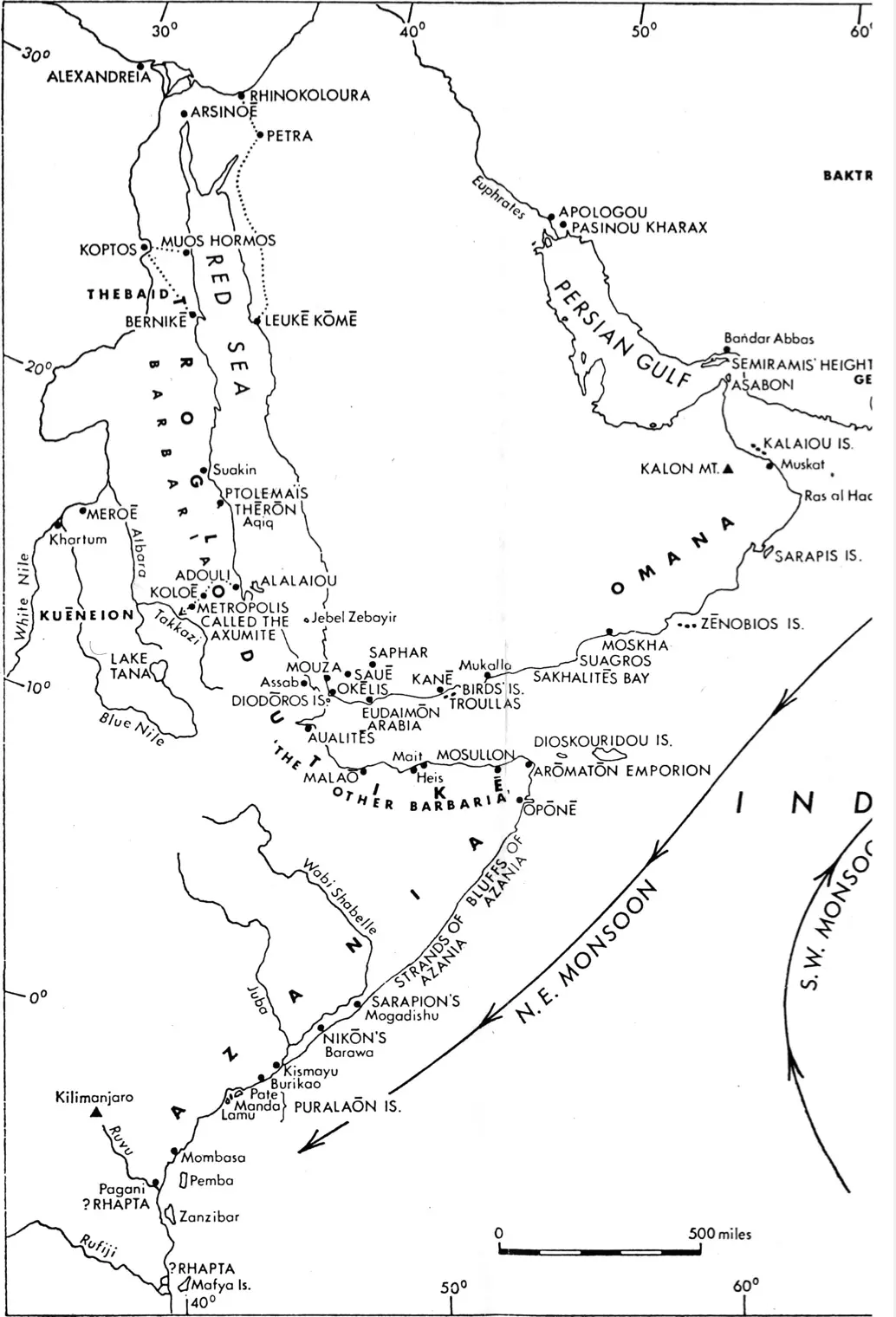
The Periplus runs to sixty-six short sections and reads like notes kept by a man who had made the voyage and wanted others to make money from it. It names each harbour, what the local king is called, which goods sell and which do not, and when to sail. Ships for Malabar, it says, left Egypt about the month of July, Epiphi, to catch the monsoon. The author never gives his name. The text survives in a single Byzantine manuscript of the tenth century, now at Heidelberg, with a later copy in London. W. H. Schoff published the standard English version in 1912, and Lionel Casson a fresh translation with commentary in 1989.
02Barygaza and the cities of the Deccan
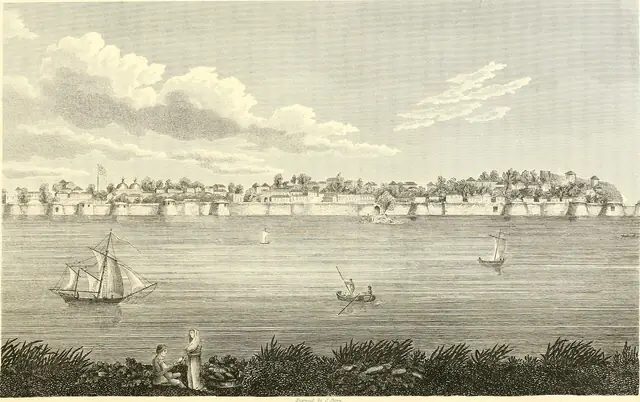
Barygaza, today’s Bharuch on the Narmada, is the great mart of the north-west. Local pilots meet the ships and tow them in through the tides. The author notes that old silver drachmas of the Greek kings Apollodotus and Menander still passed in the bazaar there. Goods came down to Barygaza from Ozene, which is Ujjain, ‘formerly a royal capital’, and from two inland cities of the Deccan, Paethana, which is Paithan, and Tagara, which is Ter, sending carnelian and cloth over roadless country. Of Calliena, near Kalyan, he says it was a lawful market in the time of the elder Saraganus but had been closed to Greek ships under Sandares. Many read Saraganus as a Satakarni of the Satavahana house, though the names are uncertain.
03Muziris, pepper and the goddess at Comari
Further south lies Damirica, the Tamil country. Muziris belongs to the kingdom of Cerobothra, the Keralaputra or Chera king, and Nelcynda to the Pandian. Large ships go there for pepper grown in Cottonara and for malabathrum, and they bring a great quantity of coin. Pearls, ivory, silk cloth, spikenard from the Ganges, diamonds and sapphires go out. At Comari, the cape, the author records men and women who come to bathe and live in celibacy for the rest of their lives, ‘for it is told that a goddess once dwelt here and bathed’. That is the earliest outside notice of Devi Kanyakumari’s tirtha. Beyond lie the Pandya pearl fisheries at Colchi, worked by condemned criminals, then Camara, Poduca and Sopatma on the eastern coast.
04How far to trust it
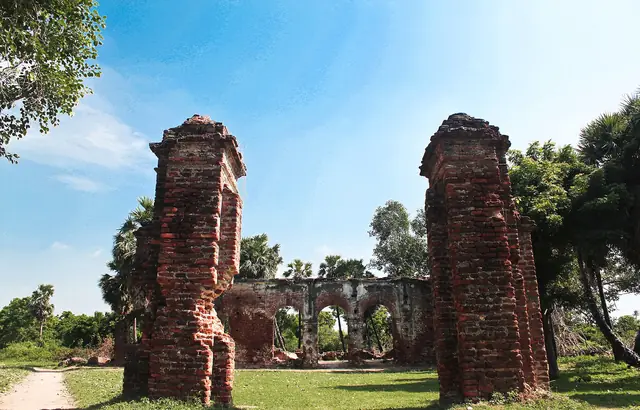
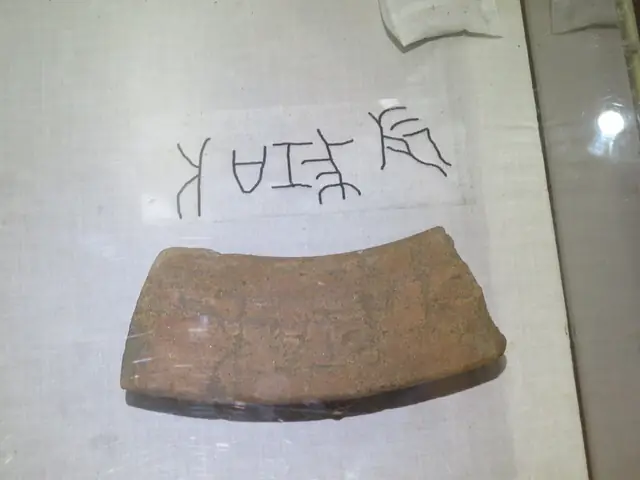
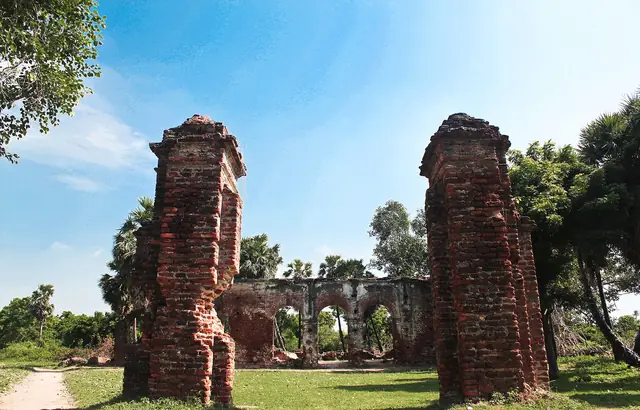
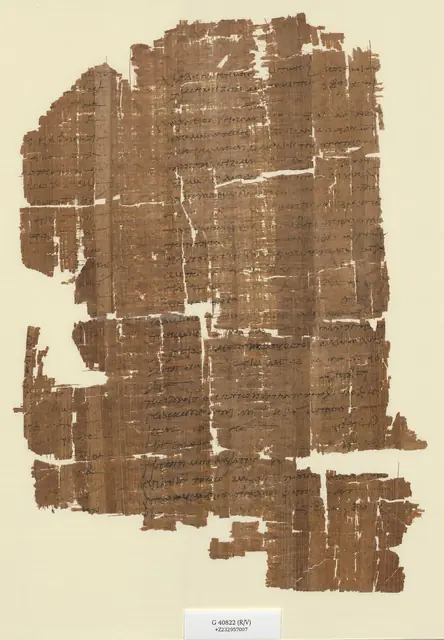
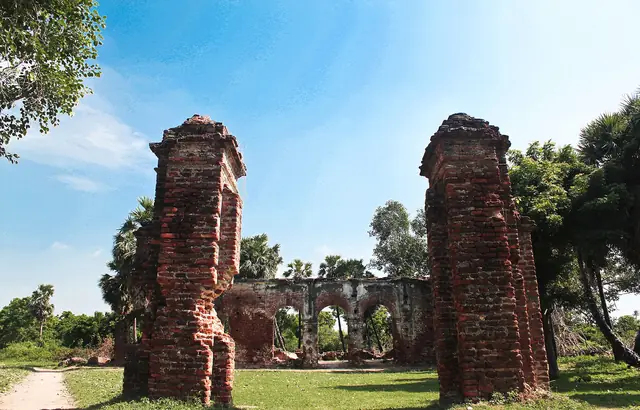
For the west coast the author writes as one who was there, and the finds agree. At Arikamedu near Puducherry, likely his Poduca, Mortimer Wheeler’s 1945 dig found Roman amphorae and red Arretine ware. At Pattanam near Kodungallur, excavations since 2007 have turned up Mediterranean pottery in quantity, and many scholars place Muziris there. A papyrus in Vienna of the second century records a loan for a cargo shipped from Muziris on the ship Hermapollon. Beyond Cape Comorin his notes thin out into hearsay, and the Ganges, the golden land of Chryse and the far north are reported, not seen. His royal names, Saraganus, Sandares, Nambanus, are Greek ears catching Indian titles, and matching them to Satavahana or Kshaharata kings is still argued.
In the texts
- Periplus Maris Erythraei (Heidelberg, Cod. Pal. graec. 398)
- Translations by W. H. Schoff (1912) and Lionel Casson (1989)