01The prince of Kapilavastu
He was born in the Lumbini grove to Raja Shuddhodana and Mahamaya. Centuries later Ashoka came to the spot in the twentieth year of his reign and set up a pillar that still stands. It says, in Brahmi, that the Buddha Shakyamuni was born here, and that the village of Lumbini was freed of tax and made to pay only an eighth share. Siddhartha married Yashodhara and had a son, Rahula. The Pali texts say that sights of an old man, a sick man and a corpse, and then a calm wandering ascetic, turned him from the palace. He left at night and spent six years in hard austerities.
02Bodh Gaya and Sarnath
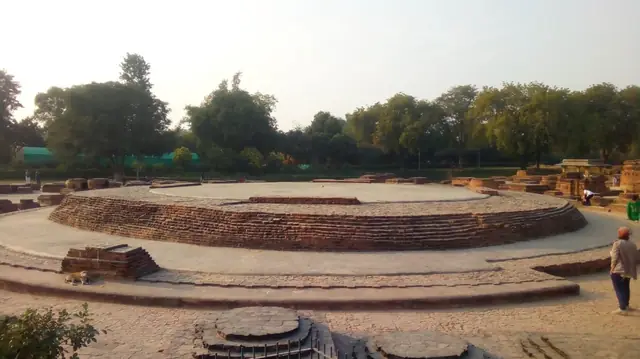
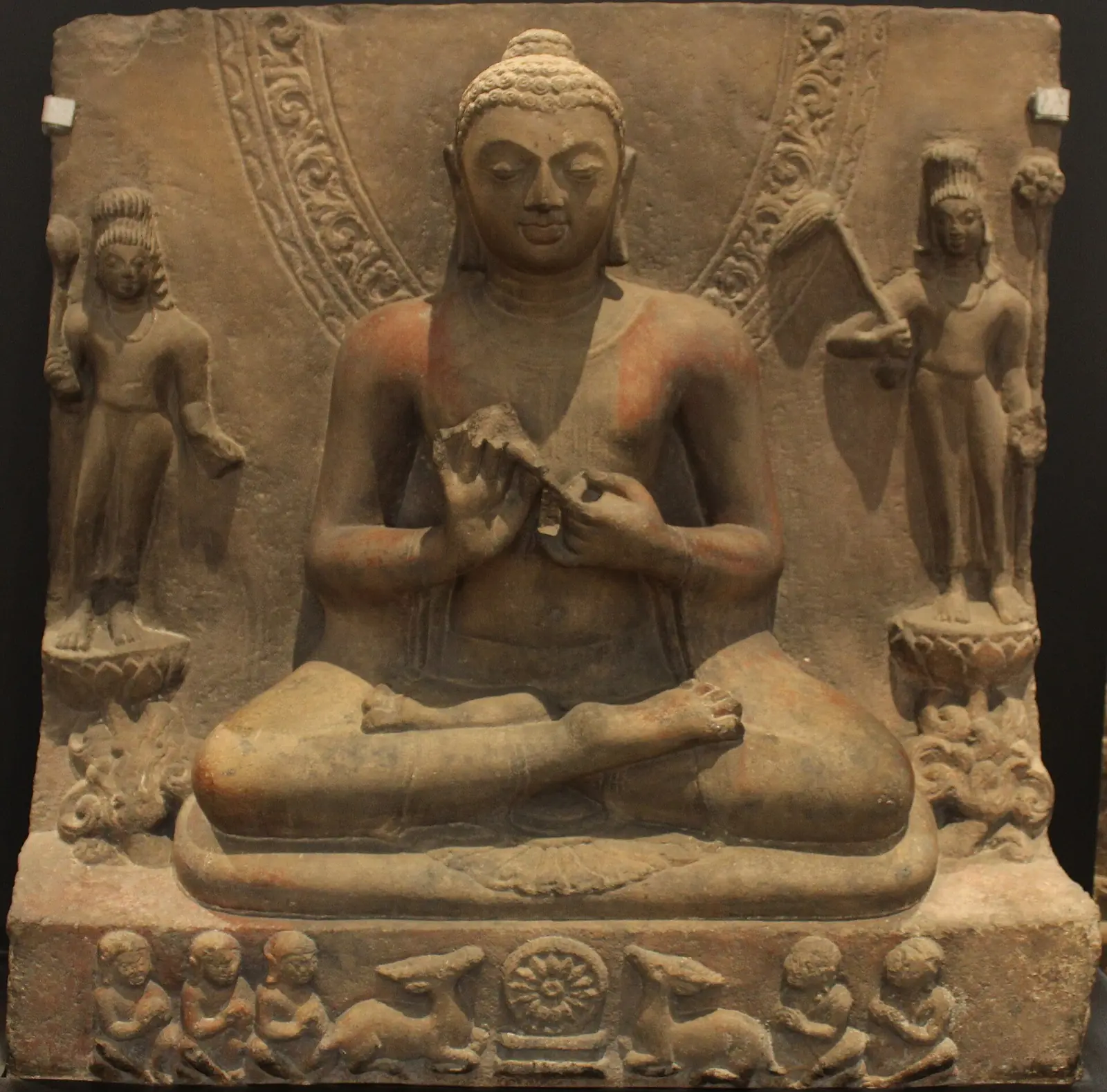
Giving up starvation as a dead end, he took a bowl of rice and milk from Sujata and sat under a pipal tree on the Niranjana river at Uruvela, now Bodh Gaya. There, on a full-moon night of Vaishakha, he attained bodhi. At the deer park of Isipatana, now Sarnath, he gave his first sermon to five former companions: the four noble truths and the middle way between indulgence and self-torment. The Sangha grew from them. Bimbisara of Magadha gave the Venuvana grove at Rajagriha; the merchant Anathapindika bought the Jetavana at Shravasti for the monks.
03Kushinagar, and the dates
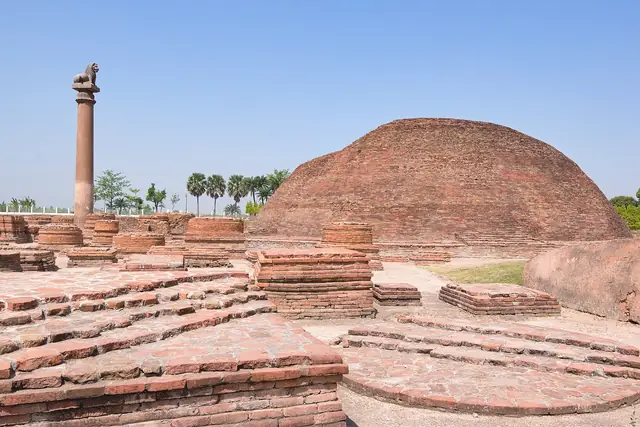
At eighty, the Mahaparinibbana Sutta tells, he lay down between two sal trees at Kushinagar and passed into parinirvana, telling the monks to strive on with diligence. His relics were divided among eight claimants and enshrined in stupas. The year is still argued. The figure of c. 563–483 BCE is the one most often printed in India; the Sri Lankan chronicles imply an earlier date; many historians now place his death around 400 BCE. Vaishakha Purnima, Buddha Purnima, marks his birth, bodhi and parinirvana together.
“Hatred is never appeased by hatred in this world; by non-hatred alone is hatred appeased. This is an eternal law.”
Dhammapada 5