Cite
MLA
“Ma Huan.” Hindu History, 2026, https://www.hinduhistory.in/sakshi/ma-huan/. Accessed .
APA
Hindu History. (2026). Ma Huan. Retrieved , from https://www.hinduhistory.in/sakshi/ma-huan/
The king of the country and the people of the country all refrain from eating the flesh of the ox.
The route
What defines it
- 01
Three voyages with Zheng He, 1413–1433
- 02
Calicut, ‘the great country of the Western Ocean’
- 03
King and people abstain from beef
- 04
Prices sealed with a hand-clasp, counting on fingers and toes
- 05
Calls the Hindu king a Buddhist
01Interpreter to the treasure fleet
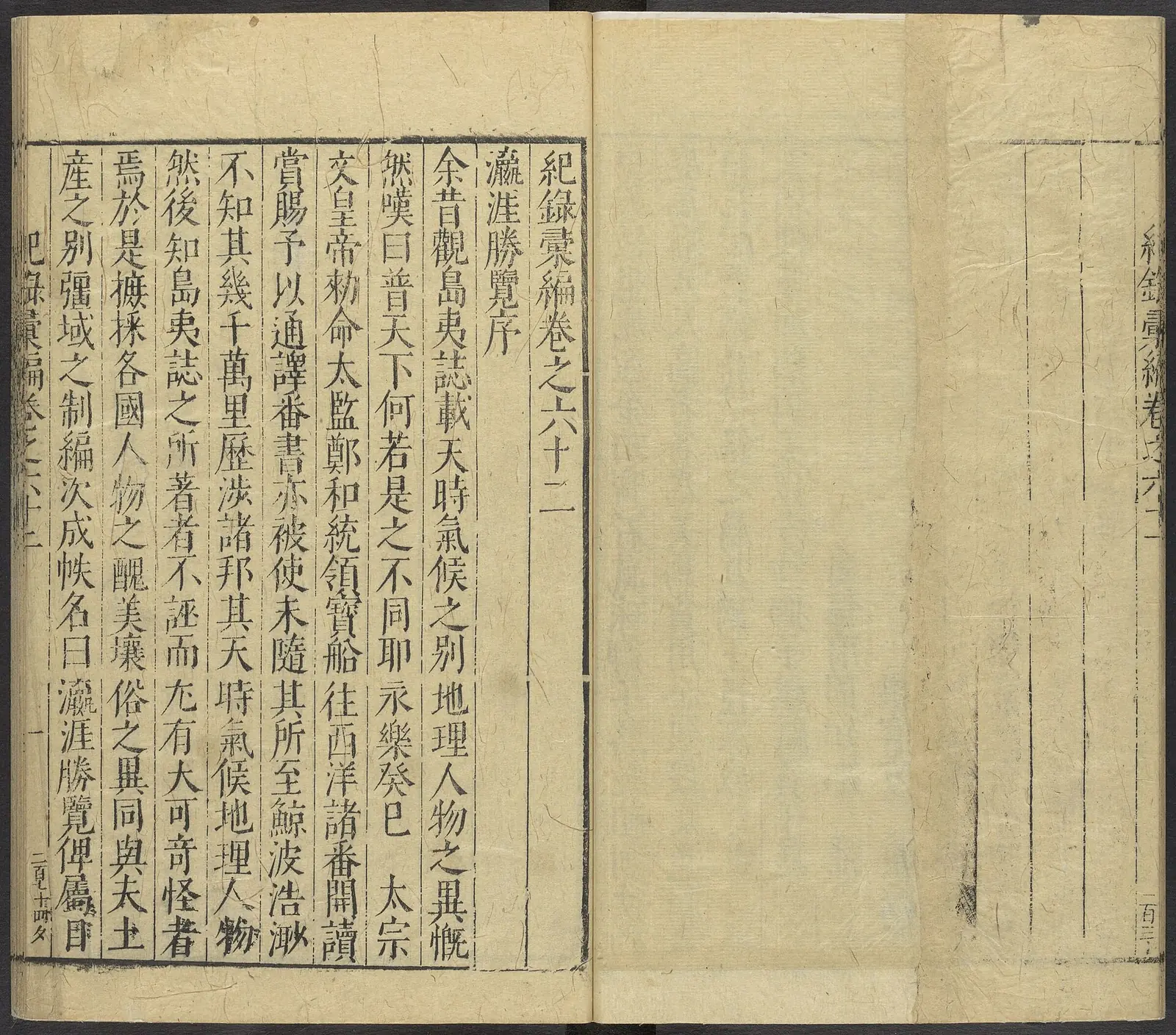
Ma Huan came from Kuaiji in Zhejiang and knew Arabic and Persian, which made him useful to the eunuch admiral Zheng He. He sailed on the fourth voyage, which left in 1413, and on the sixth and seventh, the last of them ending in 1433. On the seventh, J. V. G. Mills notes, the fleet stayed only four days at Calicut, from 10 to 14 December 1432. His book, the Yingya shenglan, ‘The Overall Survey of the Ocean’s Shores’, was drafted in 1416 and finished in 1451. It has short chapters on Cochin, Calicut, Little Quilon, Bengal and Ceylon among some twenty countries. Mills’s annotated English translation came out from the Hakluyt Society in 1970.
02Calicut: the king who would not eat beef
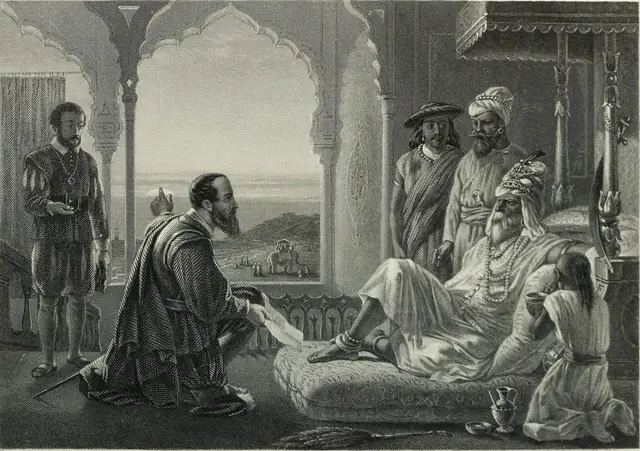
Ma Huan calls Calicut ‘the great country of the Western Ocean’. Zheng He had come there in 1407 with an imperial patent for its king and set up a stone saying that the people, though a hundred thousand li away, were happy and prosperous with customs like China’s. The king, he writes, is a Nan-k’un man who venerates the elephant and the ox; he and his people do not eat beef, while his two great chiefs are Muslims who do not eat pork, and an old compact between king and Muslims has each respect the other’s rule. Every dawn, he says, the king bathes an image and has the temple floor smeared with cow-dung paste, and wears ash from burnt cow-dung on his forehead. The people he calls honest and trustworthy.
03A hand-clasp market, and a misread faith
The best of the chapter is the market. When a treasure ship arrived, the king’s chief and a Chetti broker sat with the Chinese commander over the account books; prices were fixed with a hand-clasp and a spoken oath never to go back on them, and fixing the price of pearls and corals could take one to three months. They reckoned, he says, with hands, feet and twenty digits, without an abacus, and never made a mistake. The king struck a gold coin he calls pa-nan, the fanam, and a small silver tar. His weakness is religion. He calls the king a firm Buddhist and the temple image ‘Buddha’, and Mills rightly notes the king was a Hindu; the name Ma Huan gives the image may be a garbled Narayana. He even tells a Quranic story of Moses and the golden calf as if it explained cow veneration in Kerala, clearly picked up from Arab informants.
In the texts
- Yingya shenglan, The Overall Survey of the Ocean’s Shores (1416–1451)
- Translation by J. V. G. Mills (Hakluyt Society, 1970)