01Ashoka’s pillar
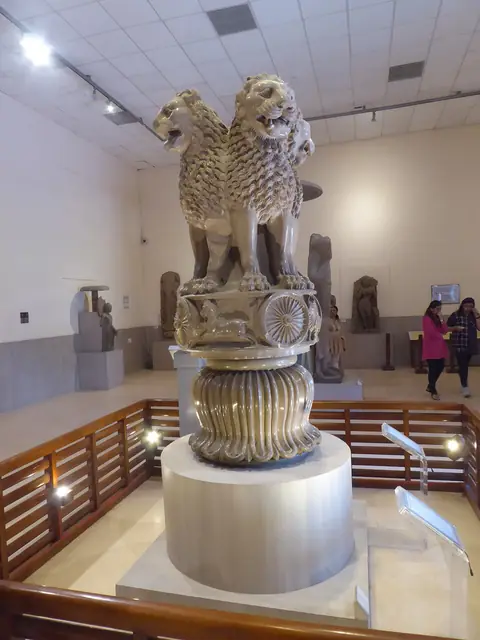
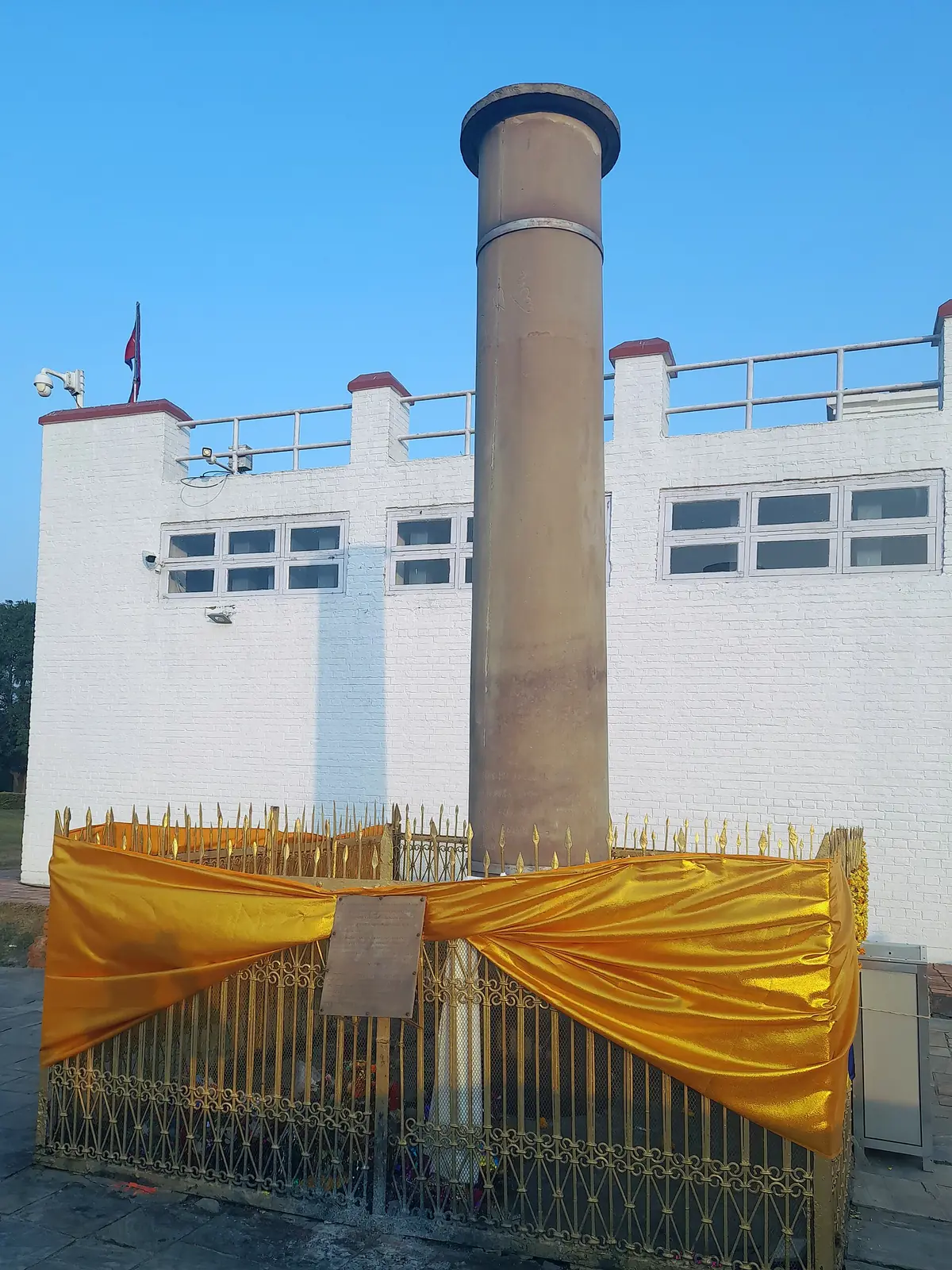
The Buddhist texts say Mayadevi was on her way from Kapilavastu to her parents’ home at Devadaha when the child was born under a sal tree in the Lumbini garden. Ashoka came on pilgrimage in the twentieth year after his consecration, about 249 BCE. The Brahmi inscription on his pillar says that he came and worshipped because the Buddha Shakyamuni was born here, set up a stone pillar, and made the village of Lumbini free of tax, paying only an eighth share of its produce. Xuanzang in the seventh century saw the pillar broken by lightning. It was lost under the jungle until December 1896, when Khadga Shumsher Rana and Alois Führer uncovered it and read the inscription.
02The Maya Devi temple
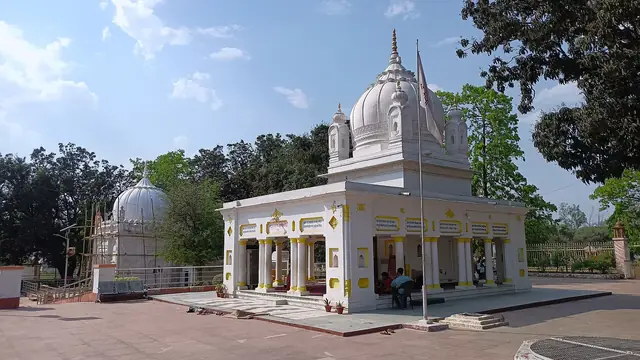
Excavations in the 1990s under the old Maya Devi shrine reached brick temples going back to Maurya times and a marker stone that is venerated as the exact spot of the birth; the present white temple was built over them in 2003, beside the Pushkarini pond where Mayadevi is said to have bathed. Lumbini became a World Heritage Site in 1997. For Hindus the Buddha is honoured in many Dashavatara lists as the ninth avatar of Vishnu; for Buddhists across Asia this is the first of the four great places of pilgrimage, with Bodh Gaya, Sarnath and Kushinagar.
The life of this place
- c. 249 BCEAshoka visits and sets up his pillar.
- 7th centuryXuanzang sees the pillar broken by lightning.
- December 1896The pillar and its inscription are uncovered.
- 1997Lumbini is inscribed as a World Heritage Site.
- 2003The new Maya Devi temple opens over the excavated shrines.
Lumbini is about 25 km from Bhairahawa, across the border from Sonauli in Uttar Pradesh; Indian citizens need no visa.