01Taksha’s city
The Valmiki Ramayana tells in the Uttara Kanda that Bharata conquered the Gandharvas of the Sindhu country and set his two sons over it: Taksha at Takshashila, Pushkala at Pushkalavati. The Mahabharata opens here too. Janamejaya held his sarpa-satra, the snake sacrifice, at Takshashila, and at that yajna Vaishampayana recited the war of the Kurus as he had heard it from Maharshi Vyasa. In later centuries the name meant one thing across Bharat: teachers. Students came at sixteen to live with a guru and learn the Vedas, grammar, archery, law or medicine, paying the fee or serving in its place.
02Teachers and pupils
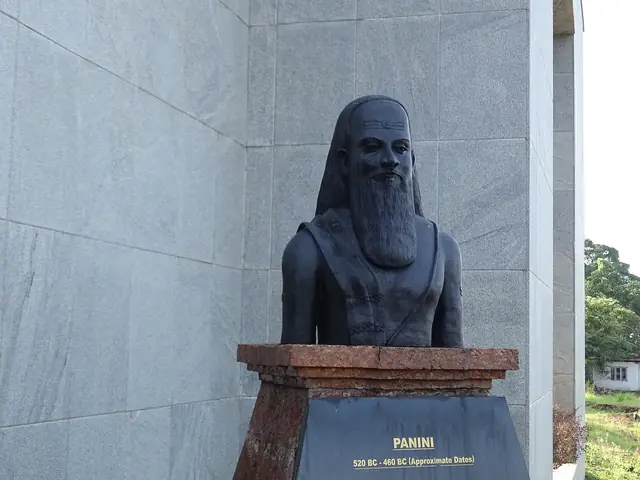
Chanakya, author of the Arthashastra, is remembered as a teacher of Takshashila, and the Buddhist and Jain traditions both bring the young Chandragupta to him there. The Pali Vinaya tells of Jivaka, physician to King Bimbisara and to the Buddha, who studied medicine at Takshashila for seven years; at the end his teacher sent him out to find a plant with no healing use, and he came back saying he had found none. Panini, the grammarian, came from Shalatura in the same country. Takshashila was never one campus with a single gate like Nalanda. It was a city full of teachers, each with his own pupils.
03Three cities in the ground
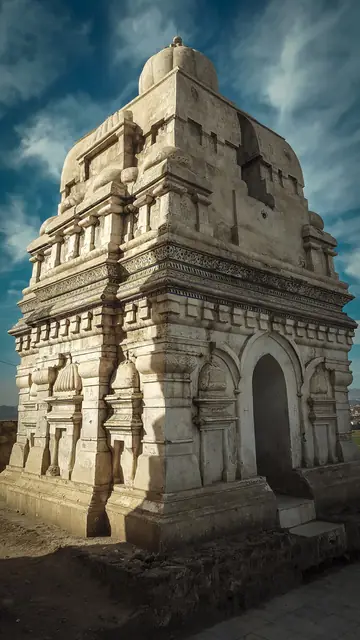
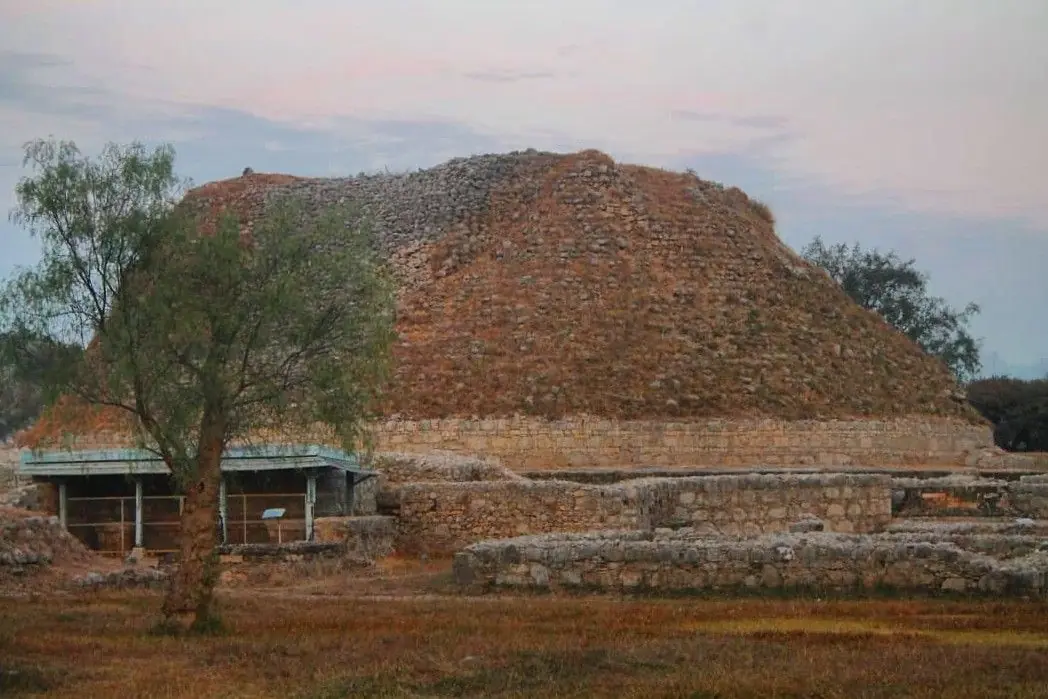
John Marshall dug here from 1913 to 1934. The Bhir Mound is the oldest city, of the Achaemenid and Maurya years. Sirkap, laid out on a grid in the 2nd century BCE by the Indo-Greeks and rebuilt under the Shakas and Parthians, has a shrine with a double-headed eagle and an apsidal temple. Sirsukh is the Kushan city. Around them stand the Dharmarajika stupa and the monasteries of Jaulian and Mohra Moradu. When Faxian came c. 405 CE the monasteries were full. When Xuanzang came c. 630 the country was in decline and most monasteries lay ruined, after the Huna wars of the late 5th and 6th centuries.
The life of this place
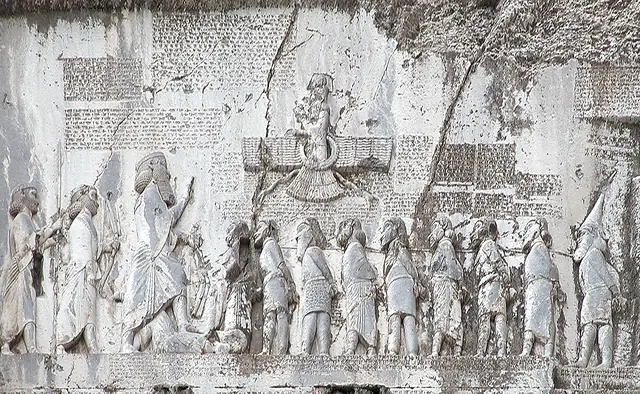
- c. 518 BCEGandhara, with Takshashila, is counted among the provinces of the Persian king Darius I in his Behistun inscription.
- 326 BCEKing Ambhi of Takshashila submits to Alexander and joins him against Porus.
- 3rd century BCEUnder the Mauryas Takshashila is a provincial capital; the Ashokavadana says Ashoka was sent to put down a revolt there.
- 2nd century BCEThe Indo-Greeks build the new city of Sirkap.
- c. 405 CEFaxian visits and finds the monasteries flourishing.
- c. 630 CEXuanzang finds the city declined and most monasteries in ruins after the Huna wars.
- 1913–1934John Marshall excavates the three cities and the stupas.
- 1980Taxila is inscribed as a UNESCO World Heritage Site.
About 35 km north-west of Islamabad. The Taxila Museum beside the sites holds the finds from Marshall’s digs.