Cite
MLA
“Domingo Paes.” Hindu History, 2026, https://www.hinduhistory.in/sakshi/domingo-paes/. Accessed .
APA
Hindu History. (2026). Domingo Paes. Retrieved , from https://www.hinduhistory.in/sakshi/domingo-paes/
What I saw from thence seemed to me as large as Rome, and very beautiful to the sight
The route
What defines it
- 01
Vijayanagara ‘as large as Rome’, the best provided city
- 02
Portrait of Krishnadevaraya and his dawn exercise
- 03
Mahanavami on the House of Victory, the Mahanavami Dibba
- 04
Copy in Paris, Portuguese MS no. 65
- 05
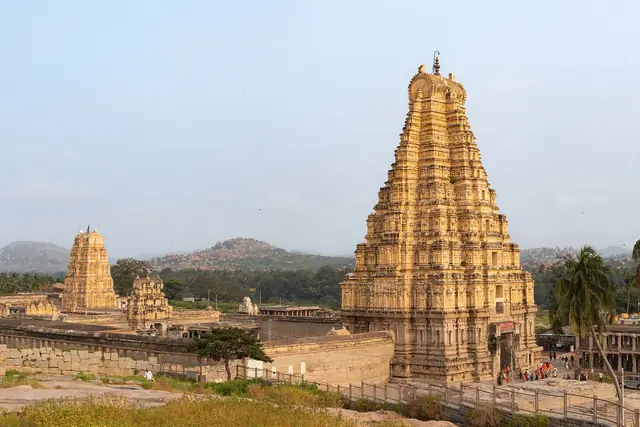
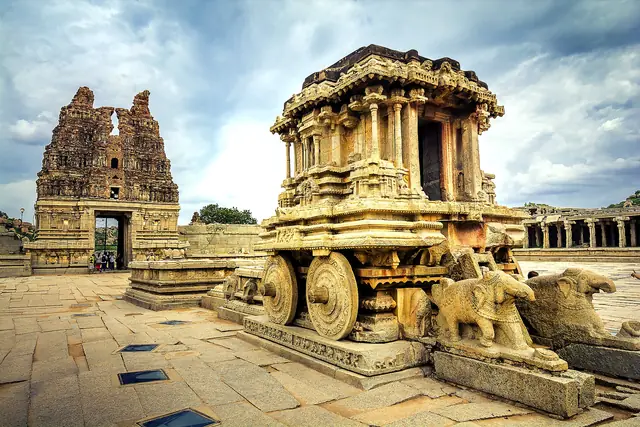
Matched closely by the ruins at Hampi
01A city ‘as large as Rome’
Paes went up to Vijayanagara from the Portuguese side of the coast, and the covering letter that sent his text to Portugal says he was at Bisnaga in the time of Crisnarao, when Figueiredo was there, which places him about 1520–22. He could not see the whole city from any one point, so he climbed a hill, and what he saw, he wrote, seemed as large as Rome. Groves and gardens filled it, conduits of water ran into its centre, and there were tanks fed from outside the first wall. The people were too many to count, the streets so full of laden oxen that one had to wait for them to pass. He calls it the best provided city in the world, with rice, wheat, gram, moong and horse-gram in store and cheap, three fowls for a small coin.
02The king before dawn
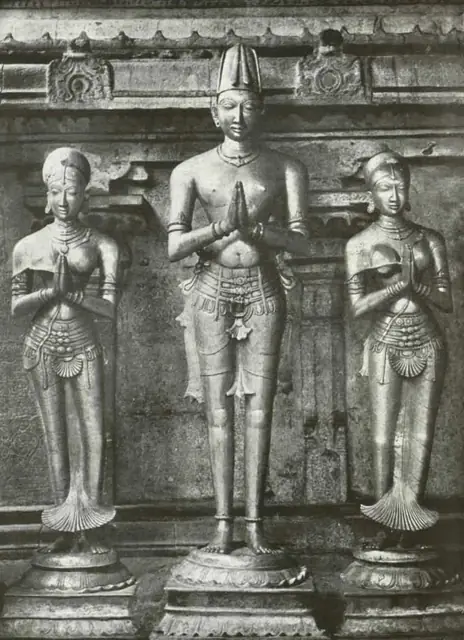
His portrait of Krishnadevaraya is the one every history repeats. The king is of medium height and fair, rather stout, with marks of smallpox on his face; the most feared and perfect king there could be, cheerful and merry, honouring foreigners and asking after their affairs, a great ruler and a man of much justice, though given to sudden rages. Every day before daylight he drinks three-quarters of a pint of gingelly oil, rubs it over his body, exercises with earthenware weights and a sword until he has sweated it out, wrestles, and rides on the plain until dawn. Then a Brahmin he holds sacred bathes him, and he goes to the temple inside the palace for his worship before hearing business. His title, Paes records, was king of kings, lord of the three seas.
03Nine days of Mahanavami
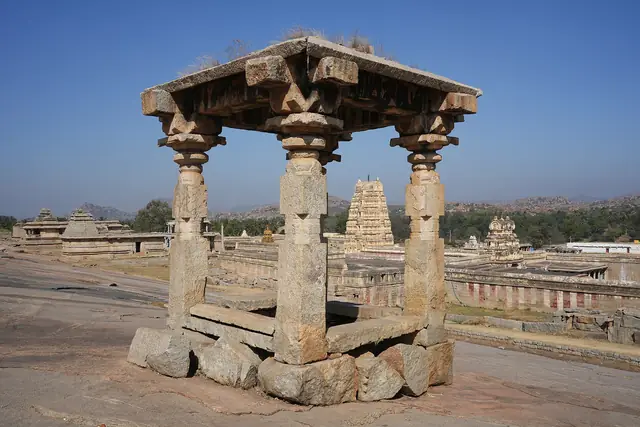
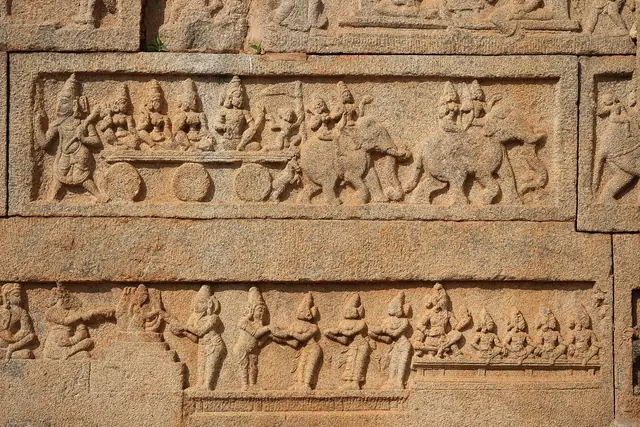
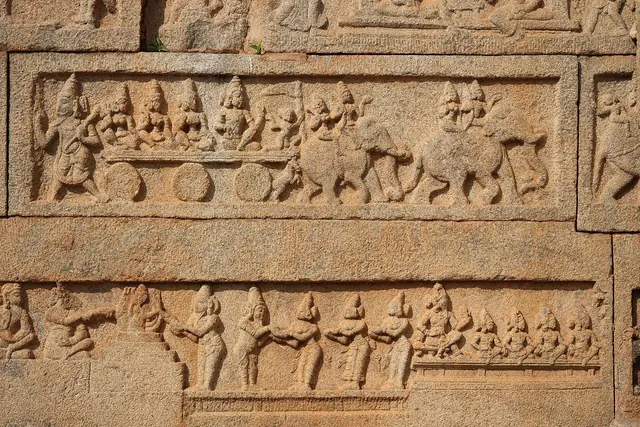
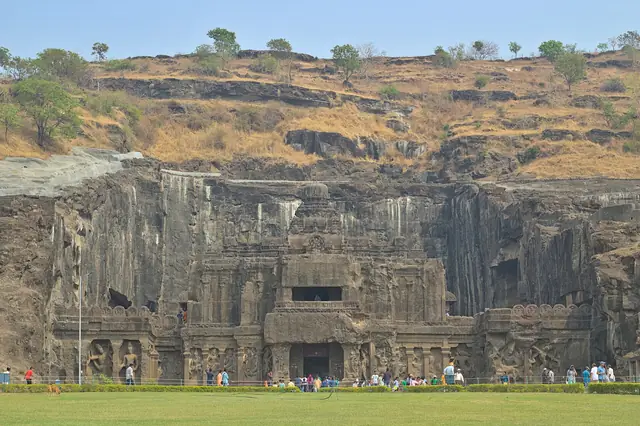
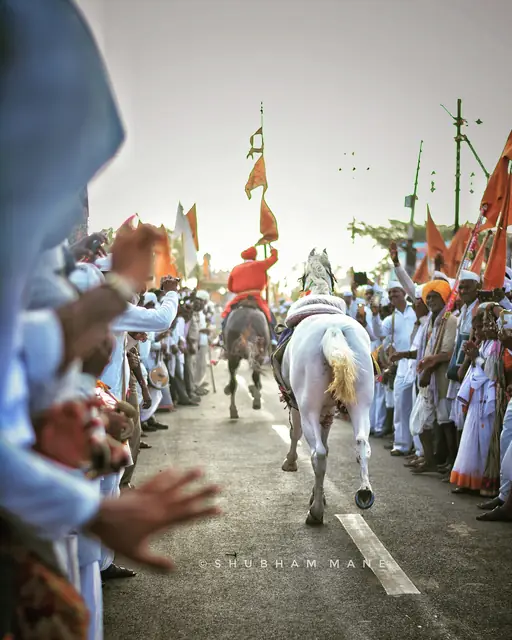
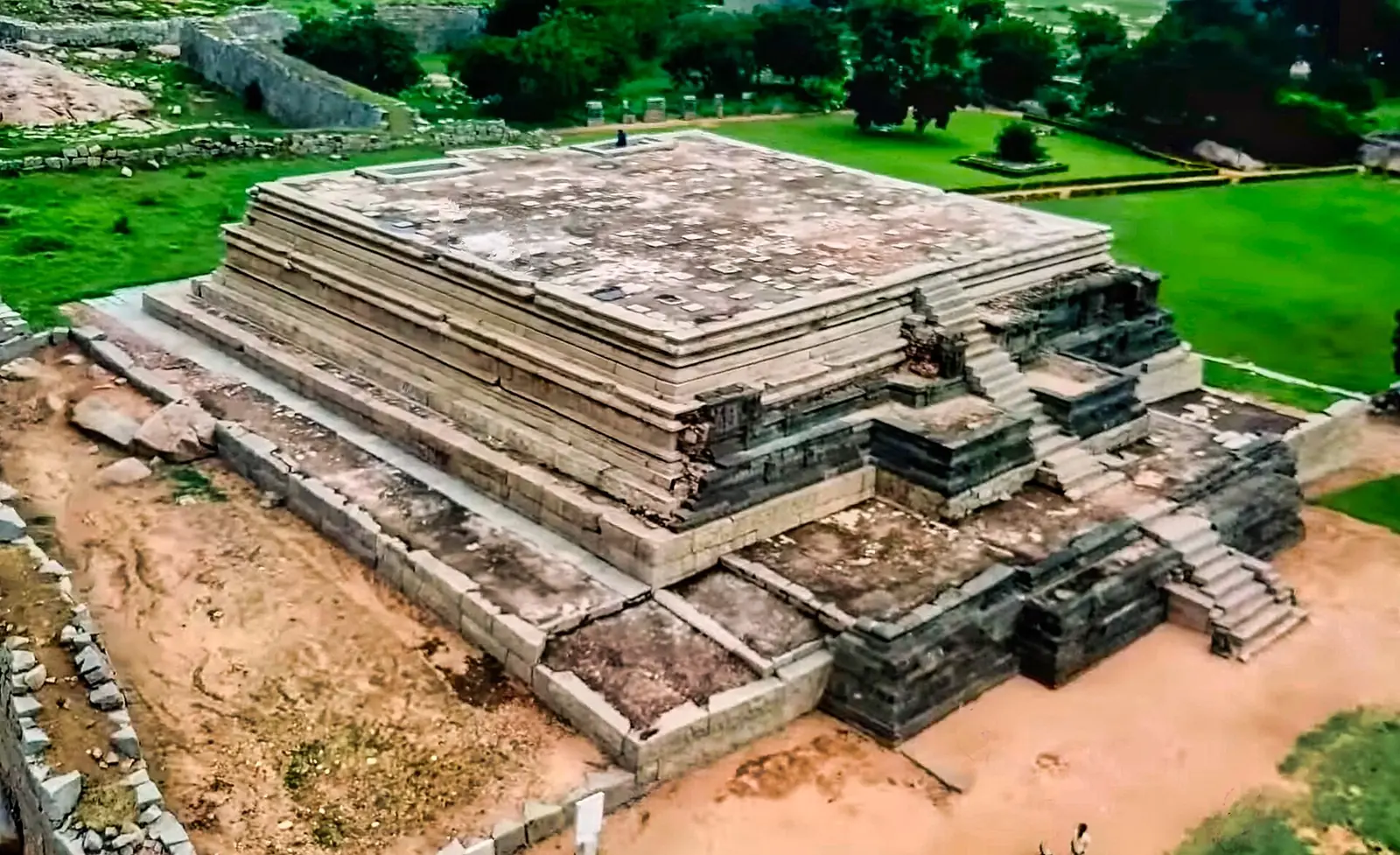
Paes gives pages to the autumn festival of nine days. It was watched from a building he calls the House of Victory, raised when the king came back from his war against Orissa, with a terrace of fine flagstones and lofty wooden stands draped in velvet for the guests. Each morning there were sacrifices and worship; each afternoon the king sat in state while wrestlers, dancing women, decked horses and elephants passed before him; in the evening rockets and fireworks, and triumphal cars. Buffaloes and sheep were sacrificed before the deity each day. The king fasted all nine days and took his meal only at night. When the festival was over he held a review of all his forces, so many that neither plain nor hill could be seen for them. That platform still stands in the royal centre at Hampi as the Mahanavami Dibba, carved with friezes of hunts, horses, musicians and dancers.
04How good a witness
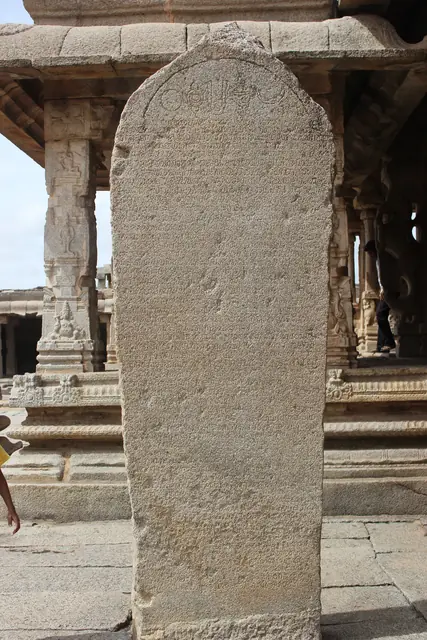
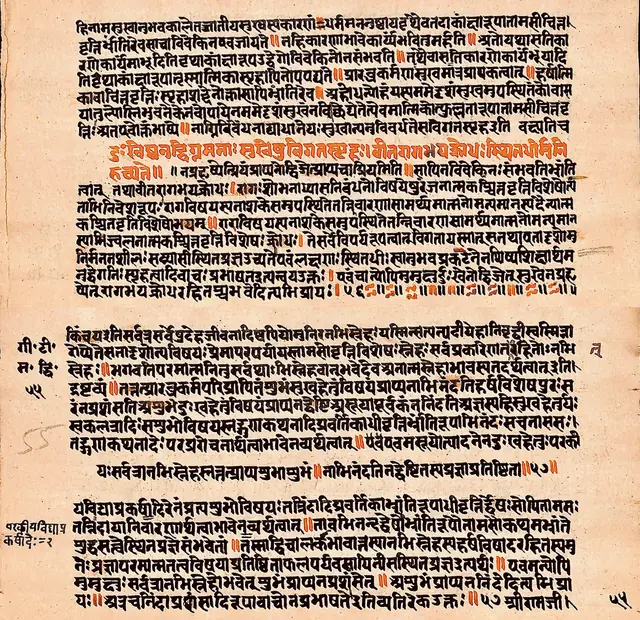
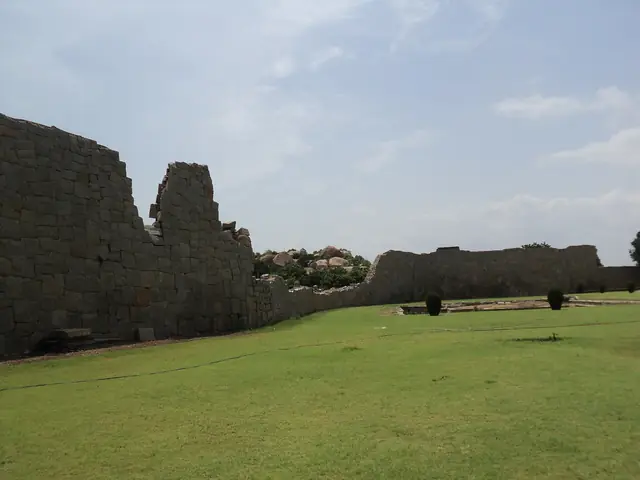
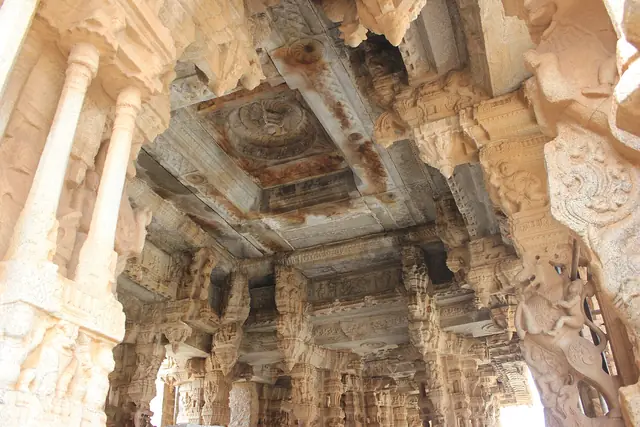
Paes’s text and Nuniz’s survive only as copies in one volume in the Bibliothèque Nationale in Paris, Portuguese manuscript no. 65, published by David Lopes in 1897 and put into English by Robert Sewell in A Forgotten Empire in 1900. Paes was a foreigner and a Christian who calls the gods idols and the temples pagodas, and he exaggerates crowds. But his physical descriptions hold. The fortifications, gateways, tanks, the platform and the temple streets he walked through have been mapped by the Vijayanagara Research Project since the 1980s and match him closely, and Krishnadevaraya’s own inscriptions confirm the Orissa campaign that he says the House of Victory celebrated. He is, with Abdur Razzaq, the reason we can picture Vijayanagara alive.
In the texts
- Narrative of Domingos Paes (c. 1520–22)
- Robert Sewell, A Forgotten Empire (Vijayanagar) (1900)