Cite
MLA
“Afanasy Nikitin.” Hindu History, 2026, https://www.hinduhistory.in/sakshi/afanasy-nikitin/. Accessed .
APA
Hindu History. (2026). Afanasy Nikitin. Retrieved , from https://www.hinduhistory.in/sakshi/afanasy-nikitin/
land is overstocked with people; but those in the country are very miserable, whilst the nobles are extremely opulent and delight in luxury.
The route
What defines it
- 01
Landed at Chaul with a stallion for sale
- 02
Pressed to convert at Junnar
- 03
Bidar: poor countryside, rich nobles, Mahmud Gawan’s power
- 04
Pilgrimage with Hindus to Parvat, probably Srisailam
- 05
Dates disputed: 1469–72 or 1471–74
01A stallion and a forced choice at Junnar
Afanasy Nikitin left Tver on the Volga with other Russian merchants, lost his goods to robbers near Astrakhan, and went on through Persia to Hormuz, where he heard that horses fetched high prices in India. He sailed with a stallion and landed at Chaul on the Konkan coast. At Junnar, a fort he says stands on a stony rock that no human hand built, the governor Asad Khan took his horse and told him he would get it back with a thousand gold pieces if he accepted Islam; if not, the khan would keep the horse and take a thousand gold pieces from him besides. He was given four days. A Khorasani named Khoja Muhammad pleaded for him, and the horse was given back. Nikitin went on to Bidar, the Bahmani capital, sold the stallion, and stayed. He called himself Khoja Yusuf Khorasani among Muslims, and lived, he says sadly, between two faiths.
02Bidar, and the pilgrimage to Parvat
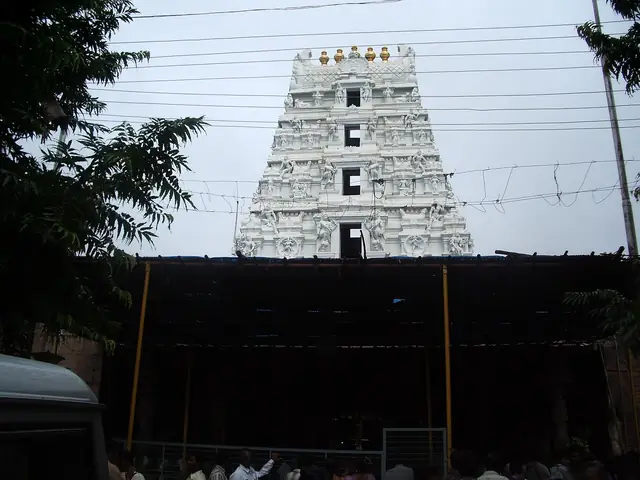
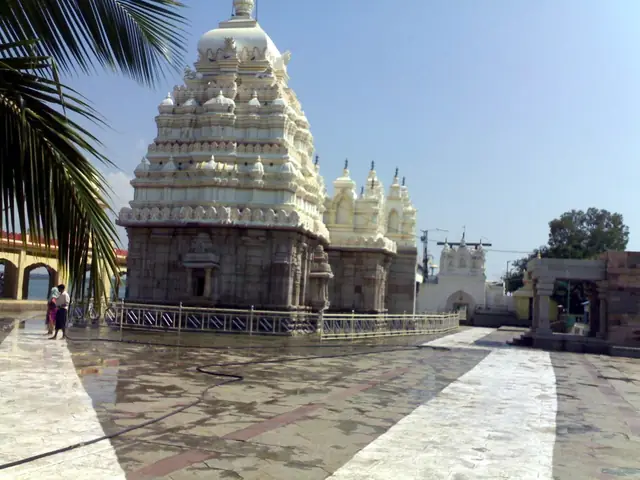
Of Bidar he writes that the land is overstocked with people, the countryfolk very poor and the nobles extremely rich, carried about on silver beds with gold-trapped horses before them. The real power lay with Khorasani nobles such as Melik-Tuchar, the Malik-ut-Tujjar, which was the title of the minister Mahmud Gawan. Once the Hindus of Bidar learned he was a Christian, he says, they hid nothing from him. They told him there were eighty-four creeds, that no one of one creed would eat, drink or marry with another, and that none ate beef. With them he walked a month to Parvat, which he calls their Jerusalem, for a five-day fair. He saw people shave their heads there, an immense stone figure with a monkey-like face, its right hand raised and a sword in the left, and before it a huge bull carved in black stone and gilded, whose hoof people kissed and hung with flowers.
03An honest diary with uncertain dates
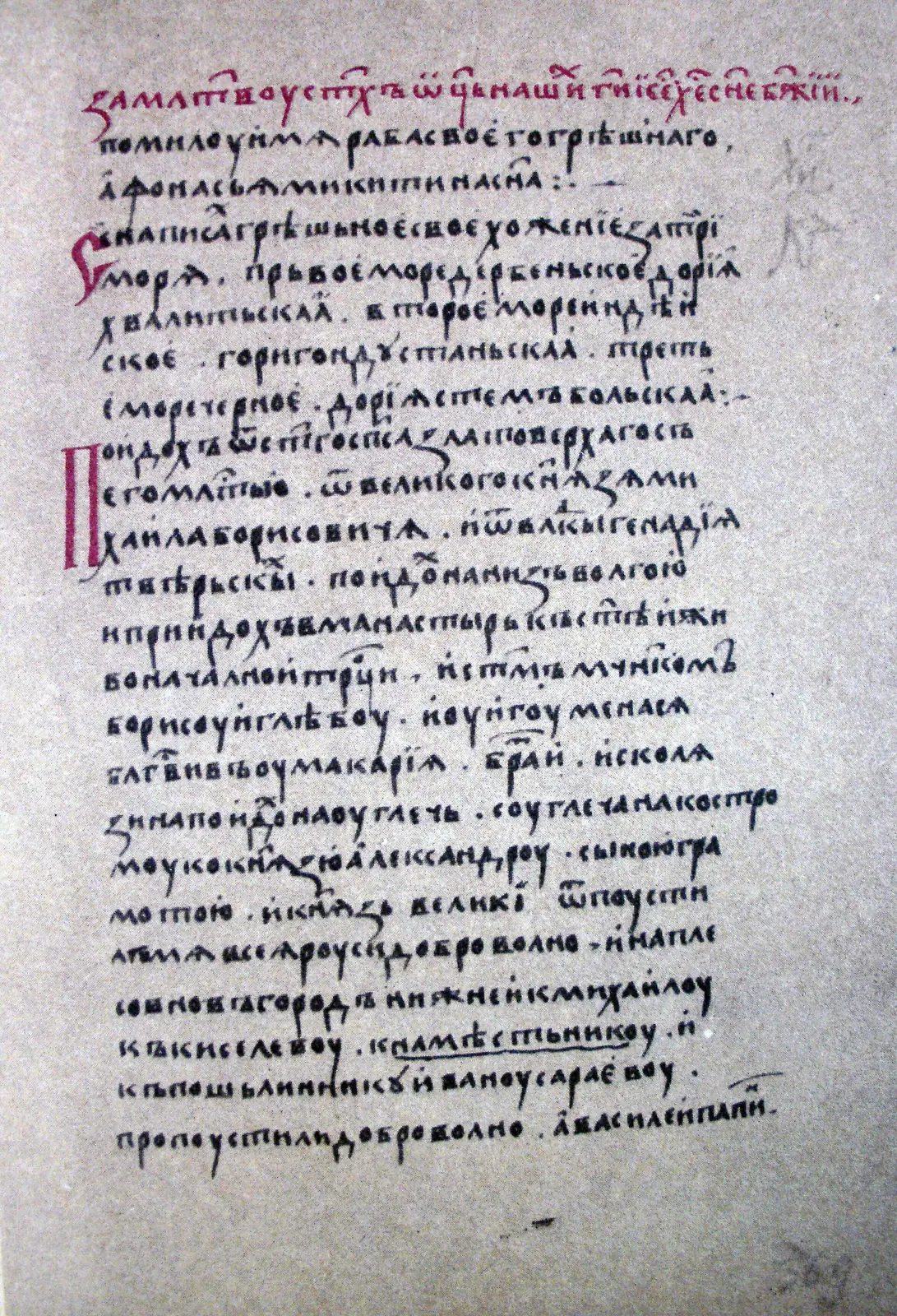
Nikitin is not a learned observer. He calls every image ‘but’, the Persian word for idol, and makes Hindus say they believe in Adam, which is his own frame forced on what he heard. His figures for armies and pilgrims are wild. But he is candid, he records prices and distances in kos, and he has no court to flatter. His Parvat is usually identified with Srisailam, the Shri Parvata of the Mallikarjuna jyotirlinga, though the monkey-faced figure has made some think of a shrine of Hanuman, and the identification is not settled. The dates are disputed too. The traditional reckoning puts him in India from about 1469 to 1472; L. S. Semyonov in the 1980s argued, from the feasts he mentions, for 1471 to 1474. He died near Smolensk on the way home, and his notebook reached Moscow.
In the texts
- Khozhenie za tri morya, Going beyond Three Seas
- English by Count Wielhorsky in R. H. Major, India in the Fifteenth Century (1857)