01Pampapati
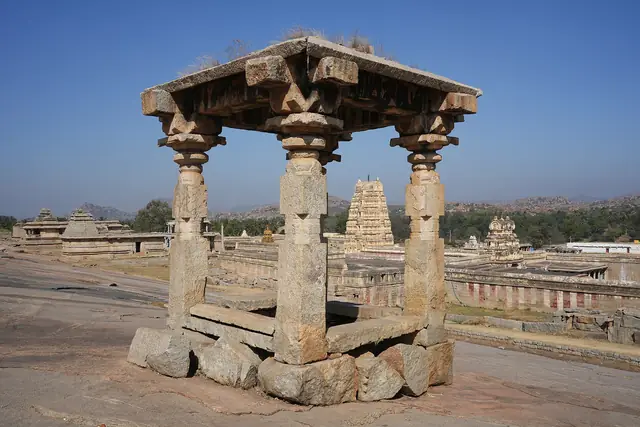
Pampa did tapas on Hemakuta hill, and Shiva came to her as Virupaksha and married her; the river took her name and the place became Pampa Kshetra. Worship here is older than the empire, and the small shrines of Hemakuta hill above the temple carry an earlier style of stone. The Sangama, Saluva and Tuluva kings adopted Virupaksha as their own deity, and their copper-plate grants end with his name in Kannada letters. Every year the kalyana of Pampa and Virupaksha is celebrated, and in spring the temple car is pulled down the long bazaar street that runs east from the gate.
02Krishnadevaraya’s hall
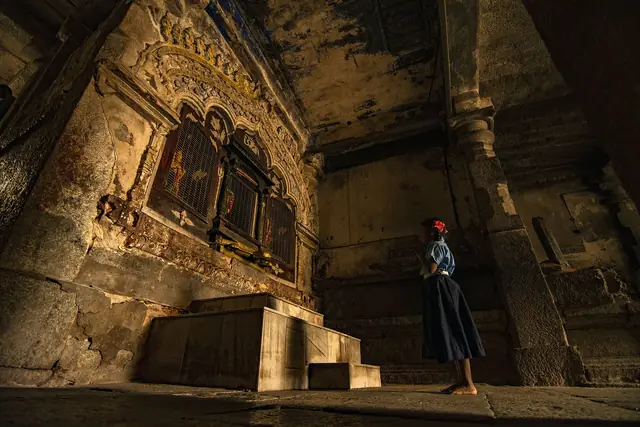
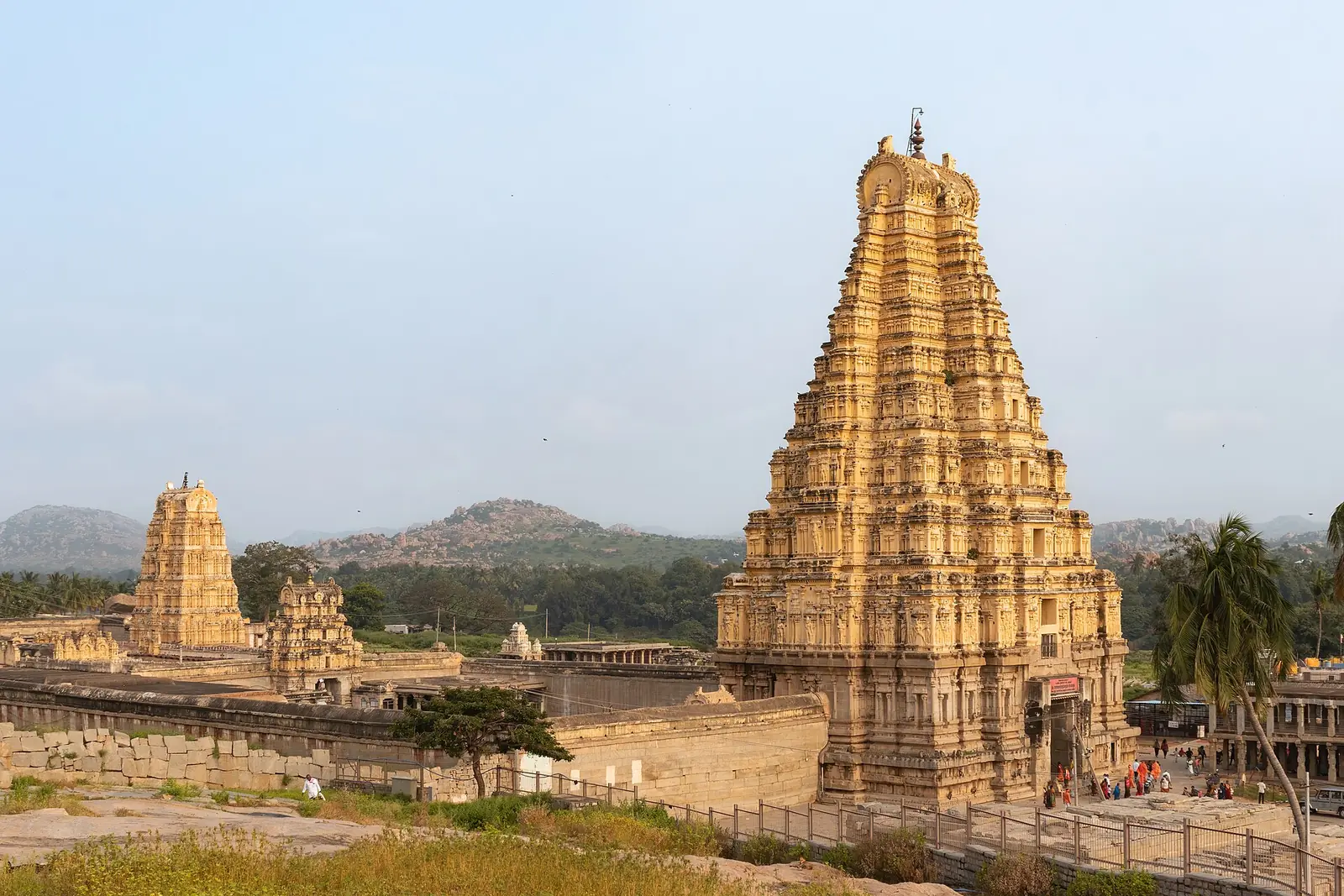
Krishnadevaraya was crowned in 1509, and an inscription of 1510 records that he built the ranga mandapa, the pillared hall before the sanctum, and the eastern gopuram, to mark his accession. The hall has rearing yali pillars and a ceiling painted with scenes of Shiva’s kathas and the marriage of Pampa. The great east gopuram rises about 50 m, nine storeys of brick and plaster on a stone base. After Talikota the invaders spent their fury elsewhere, and the temple has been in unbroken worship. In a dark chamber at the back, a slit in the wall throws an inverted image of the gopuram onto the opposite wall, like a pinhole camera.
The life of this place
- 1336The new capital is built around the old shrine of Pampapati.
- 1510Krishnadevaraya builds the ranga mandapa and east gopuram.
- 1565The city is sacked; the temple stays in worship.
- 1986Included in the UNESCO Group of Monuments at Hampi.
Open from early morning; the temple elephant Lakshmi blesses visitors in the courtyard. Watch the sunset from Hemakuta hill just above.