Cite
MLA
“Gopuram: the gateway tower.” Hindu History, 2026, https://www.hinduhistory.in/sthapatya/gopuram/. Accessed .
APA
Hindu History. (2026). Gopuram: the gateway tower. Retrieved , from https://www.hinduhistory.in/sthapatya/gopuram/
What defines it
- 01
A passage through the base of a many-storeyed tower
- 02
Tiers diminishing in scale as they rise
- 03
A row of kalasams along the crest
- 04
Outer gates newer and taller than inner ones
01The city gate
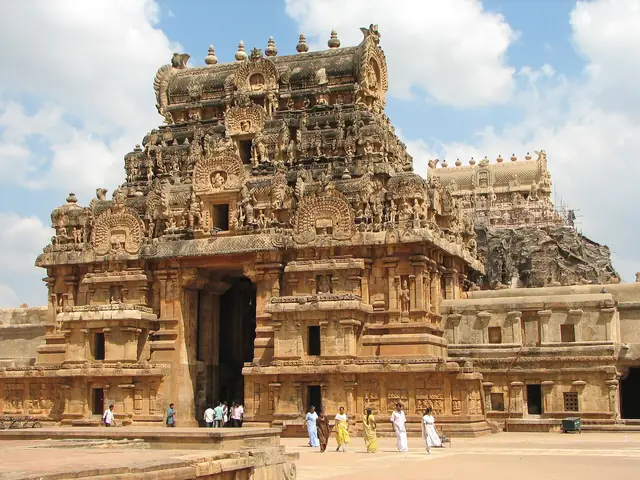
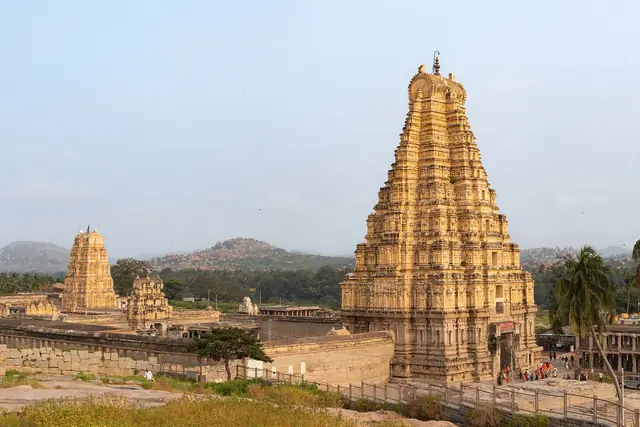
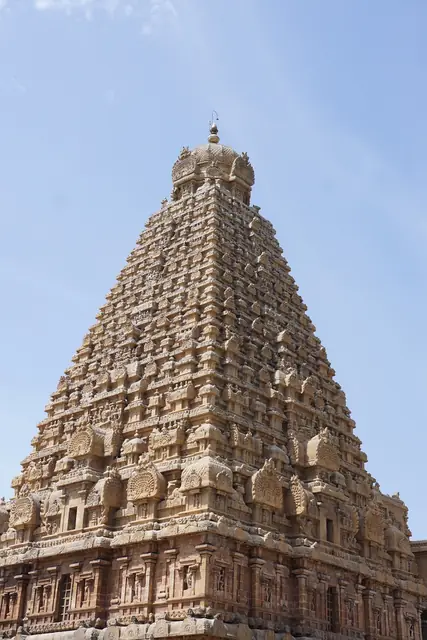
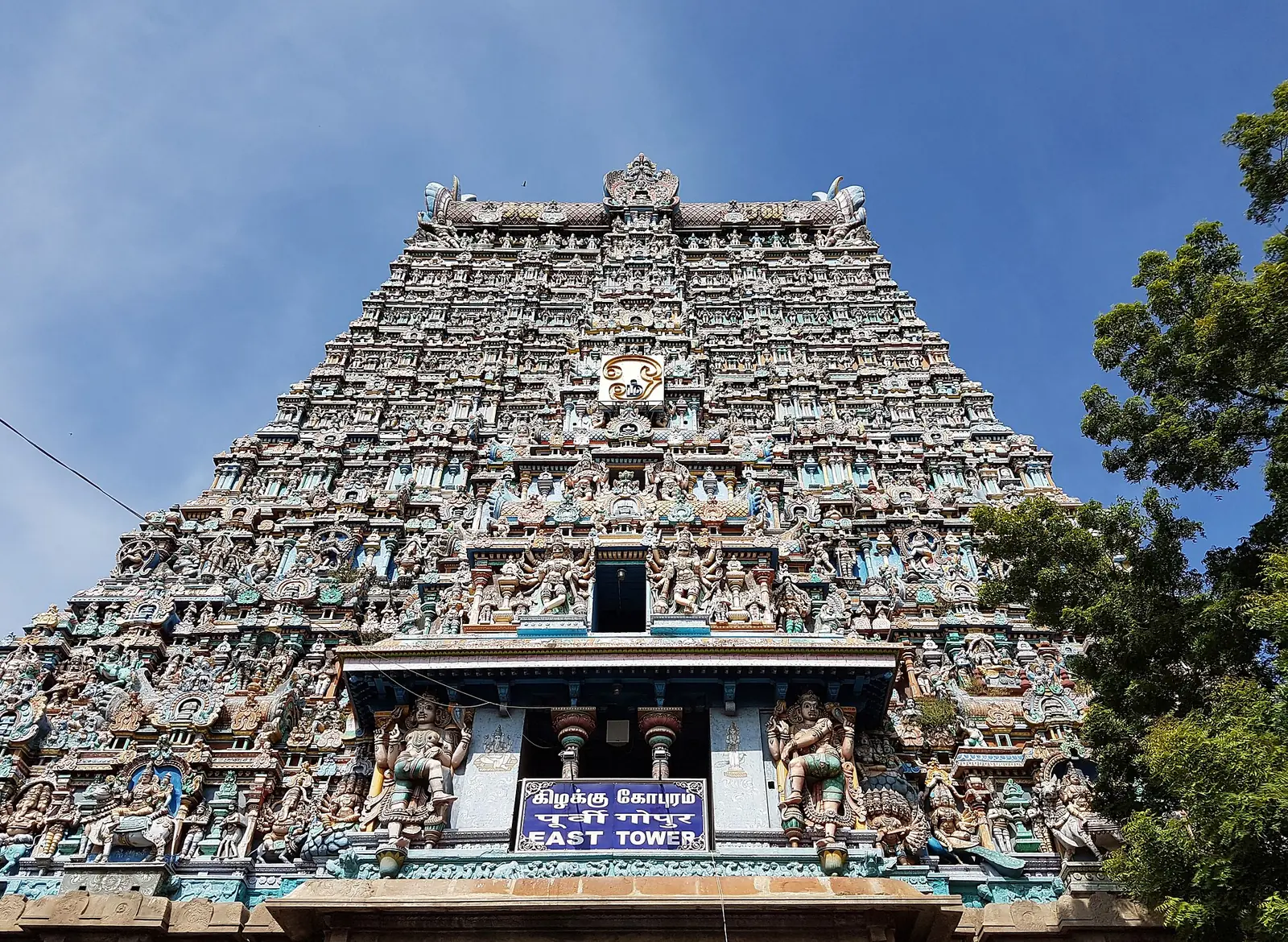
Go can mean cow or earth, and puram a city or enclosure, so gopuram first meant a city gate, and only later the gate of a temple. Its roots are traced to the Pallavas of Mamallapuram and Kanchipuram. The Cholas gave their Brihadeeswara at Thanjavur, in the 11th century, gateways in its enclosure walls, but there the vimana of the shrine still towers above everything. A gopuram is a gateway of many storeys, each tier smaller than the one below, with the passage running through its base, and it is crowned with one or more kalasams, bulbous finials of metal or stone.
02When the gate outgrew the shrine
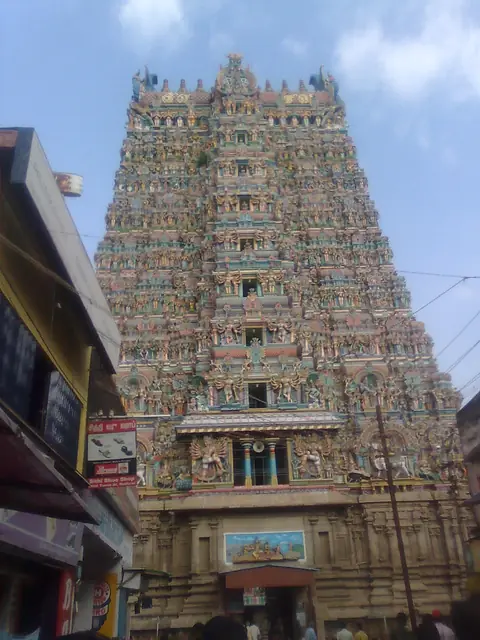
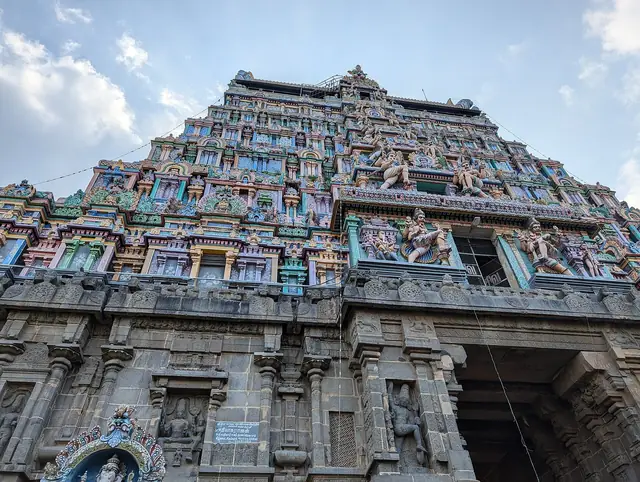
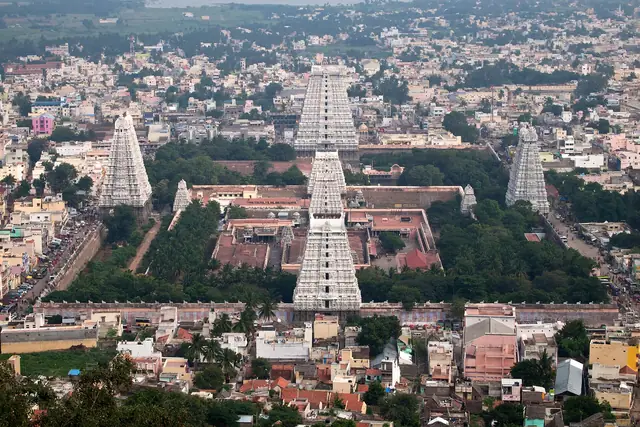
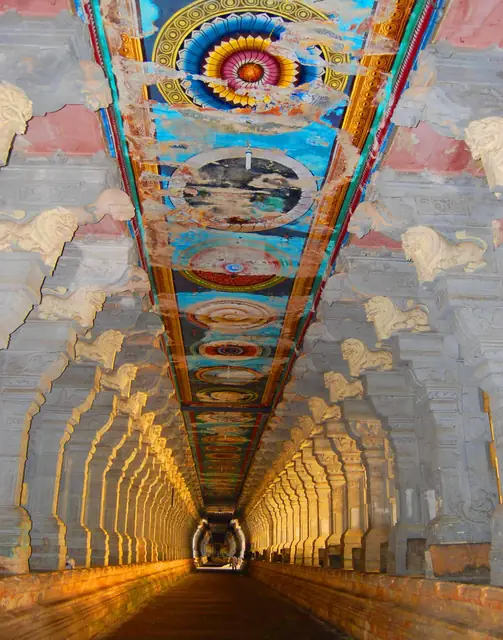
By the 12th century, under the Pandyas, the gateway had become the tallest and dominant element of a temple's exterior. The gopurams of the Nataraja temple at Chidambaram, among the earliest large ones, rose in the mid-13th century, and their passages carry the 108 karanas of the Natya Shastra carved with their verses. Between the 12th and 16th centuries, under Vijayanagara and then the Nayakas, ever more massive gopurams were built in the outer walls; Vijayanagara called the greatest of them raya gopurams. Because the outermost gates are the newest and tallest, a pilgrim at Madurai or Tiruvannamalai walks inward through gates that grow smaller, towards a sanctum that is the oldest and lowest of all.
03Srirangam's seven walls
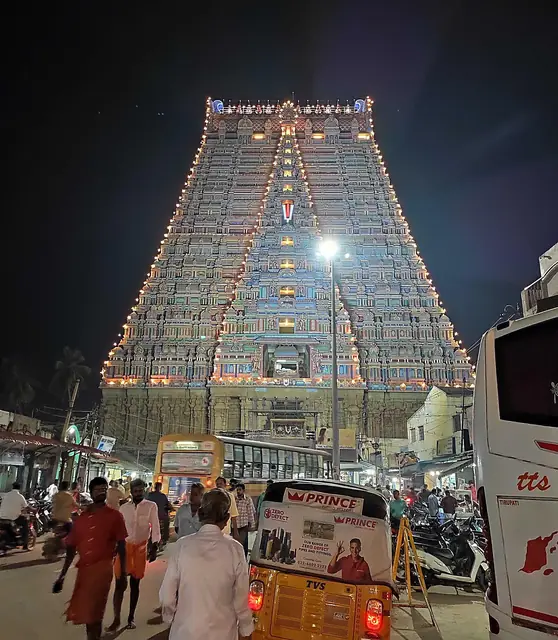
The Ranganathaswamy temple at Srirangam, on its island in the Kaveri, shows the pattern most completely. Seven concentric walls, the prakaras, enclose the shrine, and through them pass 21 gopurams, the highest at the outermost wall and the lowest at the innermost. For centuries the great southern gateway stood unfinished. Its rajagopuram was completed and consecrated on 25 March 1987, rising 73 metres, about 239.5 feet, the tallest temple gateway in India. The Meenakshi temple at Madurai, with its painted towers rising over the old city, is the other image every pilgrim carries home. In both, the gopuram is the first thing seen from the road and the last thing seen on leaving.