01The Sangama brothers
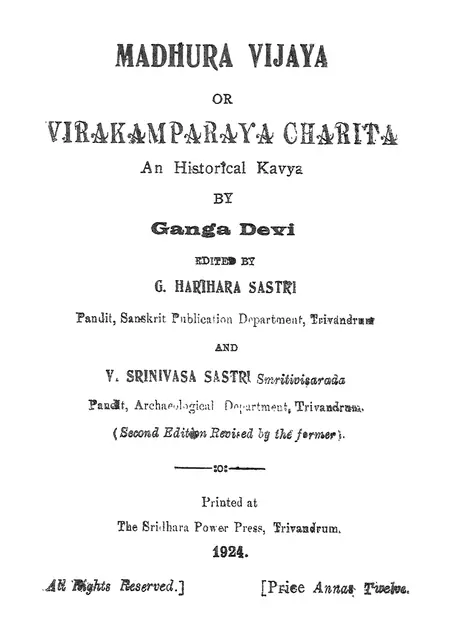
By 1336 the Sultanate had broken the Yadavas, the Kakatiyas and the Hoysalas. Harihara and Bukka, sons of Sangama, founded a new city across the river from the Pampa tirtha, under Hemakuta hill. The Sringeri tradition gives the guiding role to Vidyaranya, later the Shankaracharya of Sringeri; his brother Sayana wrote the Veda commentaries that are still read. Bukka’s son Kumara Kampana marched south and ended the Madurai Sultanate around 1371; his queen Gangadevi wrote the Madhuravijayam about it.
02A city of a million
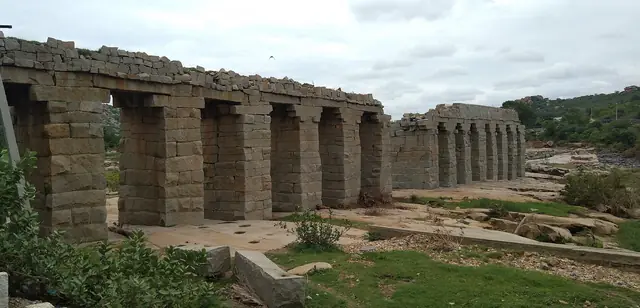
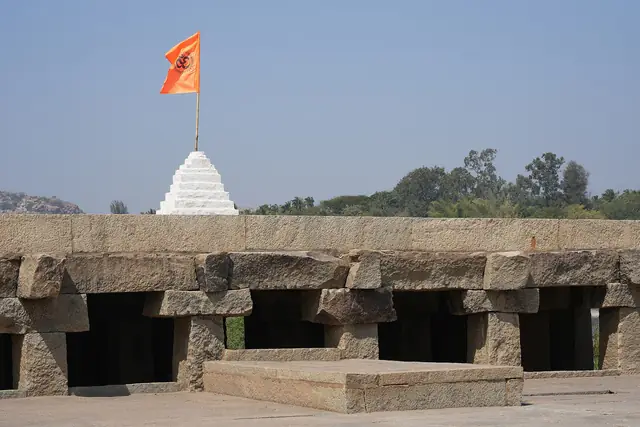
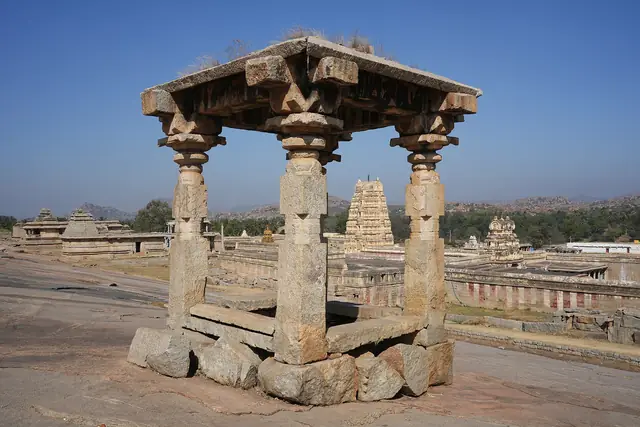
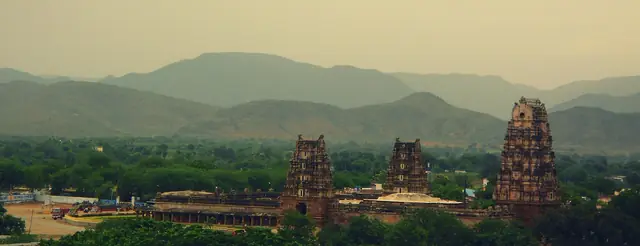
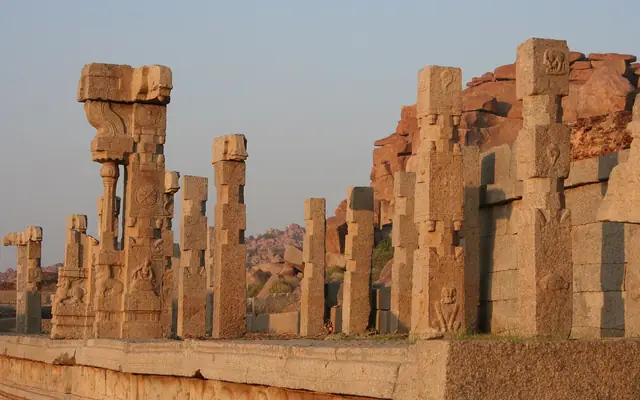
Devaraya II brought Turkic horse-archers into his army and fought the Bahmanis along the Raichur doab. Visitors left full accounts. The Italian Niccolò de’ Conti came around 1420, the Persian envoy Abdur Razzaq in 1443, the Portuguese Domingo Paes around 1520. Paes wrote that the city was as large as Rome and the best provided in the world. Seven rings of walls, bazaars of rubies and horses, the Mahanavami festival on its great stone platform: all are in their pages and can still be traced on the ground.
03Saluva and Tuluva
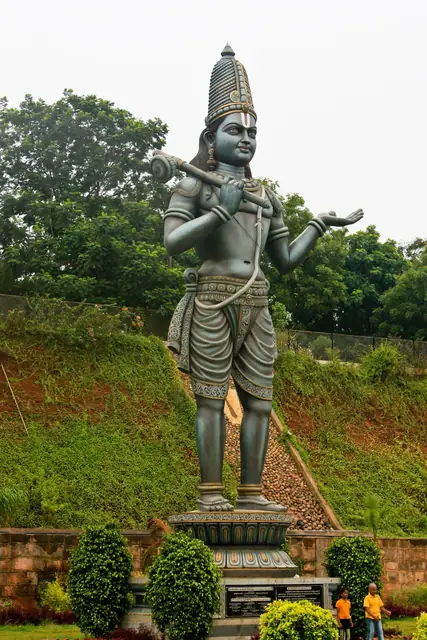
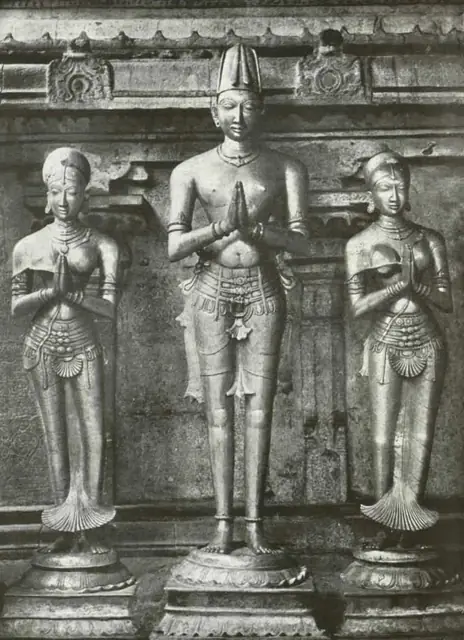
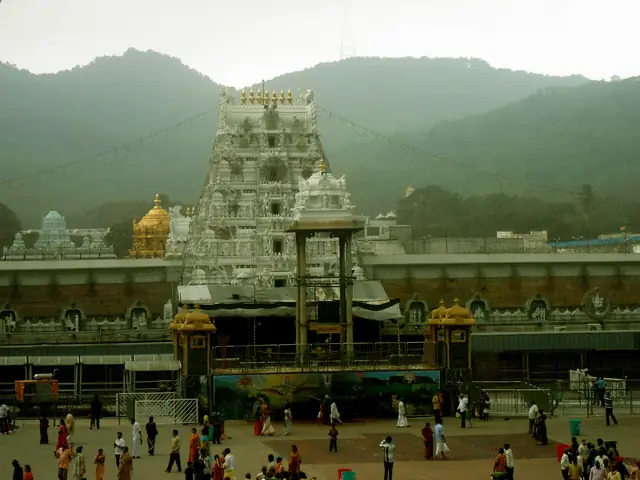
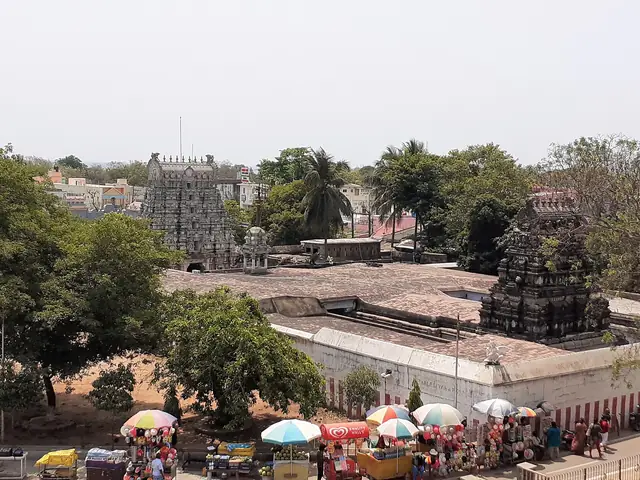
When the Sangama line weakened, the general Saluva Narasimha took the throne in 1485 to save the kingdom. The Tuluva brothers followed. Krishnadevaraya, crowned in 1509, beat the Bahmani successor states, took Raichur in 1520, and pushed the Gajapatis back to the Godavari. He wrote the Telugu poem Amuktamalyada on Andal, kept eight poets, the Ashtadiggajas, at court, and gave jewels and towers to Tirumala, where bronze images of him and his two queens stand to this day.
04Talikota, 1565
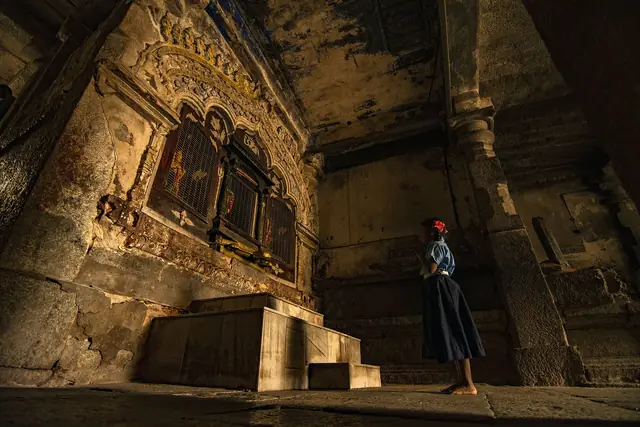
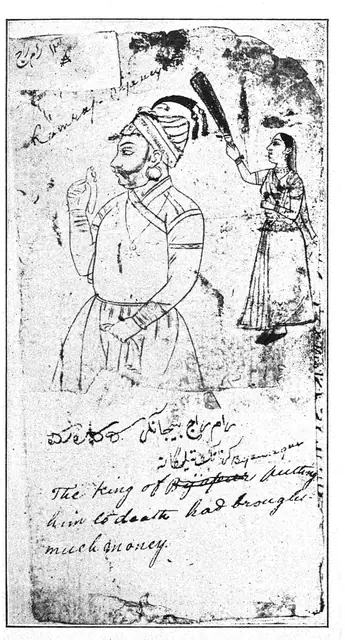
Under the weak Sadashiva, real power lay with Aliya Rama Raya, Krishnadevaraya’s son-in-law. He played the Deccan sultans against each other until four of them, Bijapur, Ahmadnagar, Golconda and Bidar, combined. In January 1565, near Talikota, the Vijayanagara army was winning when two Muslim commanders in its service changed sides; Rama Raya was captured and beheaded. The sultans’ armies then sacked the capital for months. The ruined temples and broken images of Hampi are what that sack left.
05The Aravidu years
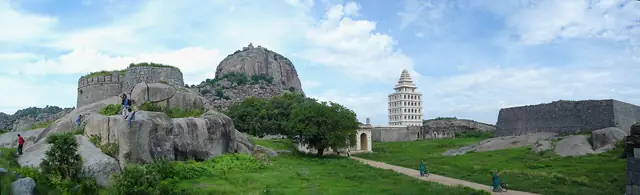
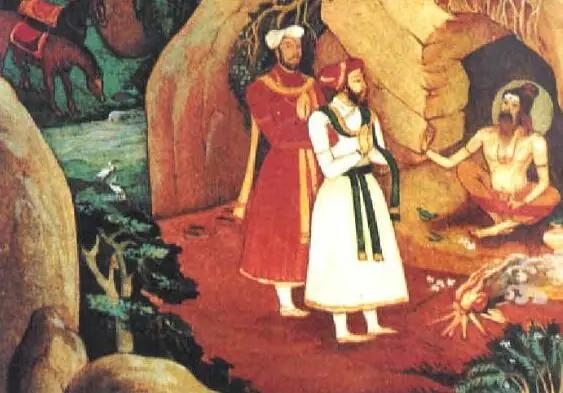
Rama Raya’s brother Tirumala carried the treasury south and founded the Aravidu line at Penukonda. Venkata II ruled from Chandragiri for nearly thirty years and kept the Nayakas of Madurai, Thanjavur and Mysore loyal for a time. In 1639, under Venkata III, a local chief granted the English the strip of coast where they built Fort St George, Madras. Sriranga III lost his last lands to Bijapur and Golconda by 1646 and died in exile. The Nayaka kingdoms that had grown under Vijayanagara carried on its temples and its customs.
The rulers
- 1Harihara I (Sangama)Founder1336–1356
- 2Bukka Raya I (Sangama)Madurai Sultanate ended in his reign1356–1377
- 3Harihara II (Sangama)First to take full imperial titles1377–1404
- 4Deva Raya I (Sangama)1406–1422
- 5Deva Raya II (Sangama)Abdur Razzaq’s visit, 14431424–1446
- 6Mallikarjuna (Sangama)1446–1465
- 7Virupaksha Raya II (Sangama)1465–1485
- 8Saluva Narasimha (Saluva)General who took the throne1485–1491
- 9Immadi Narasimha (Saluva)1491–1505
- 10Vira Narasimha (Tuluva)1505–1509
- 11Krishnadevaraya (Tuluva)Raichur 1520; Amuktamalyada1509–1529
- 12Achyuta Deva Raya (Tuluva)Achyutaraya temple, Hampi1529–1542
- 13Sadashiva Raya (Tuluva)Aliya Rama Raya held power1542–1570
- 14Tirumala Deva Raya (Aravidu)Moved to Penukonda1570–1572
- 15Sriranga I (Aravidu)1572–1586
- 16Venkata II (Aravidu)Ruled from Chandragiri1586–1614
- 17Venkata III (Aravidu)1632–1642
- 18Sriranga III (Aravidu)Last emperor; died in exile1642–1646
What they left
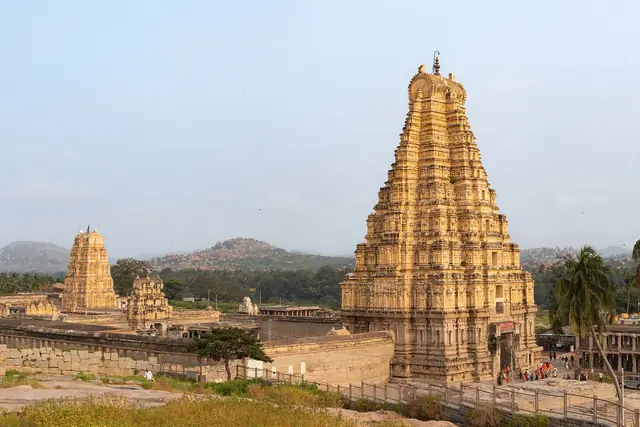
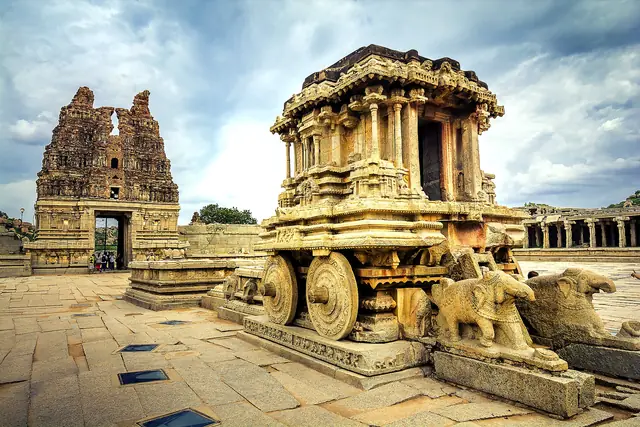
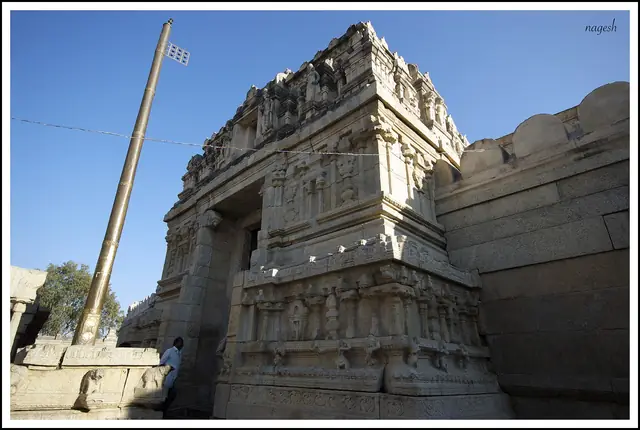
- The ruins of Hampi, a UNESCO World Heritage Site: Virupaksha, Vitthala, Hazara Rama and the royal centre
- Sayana’s commentaries on the four Vedas
- Krishnadevaraya’s Amuktamalyada and the Telugu poets of his court
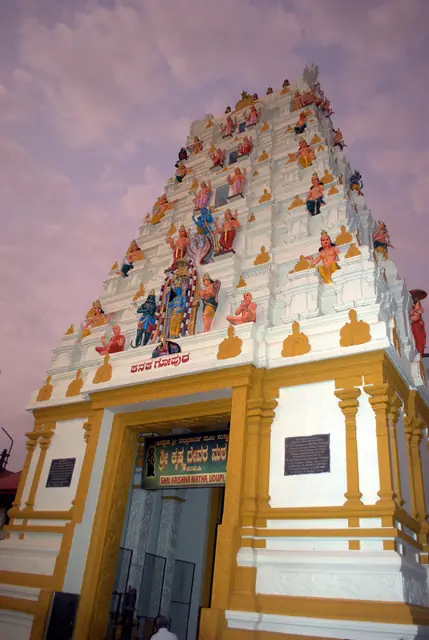
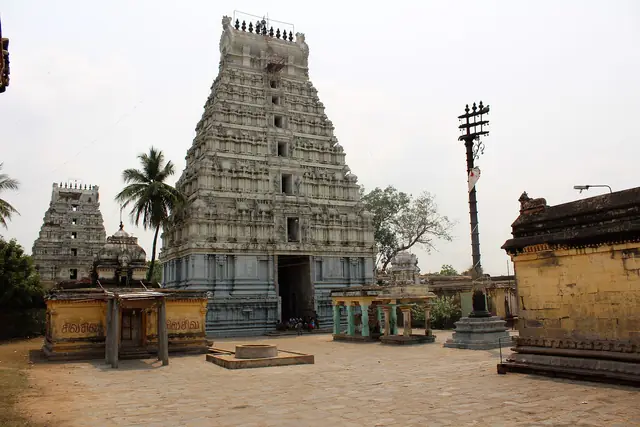
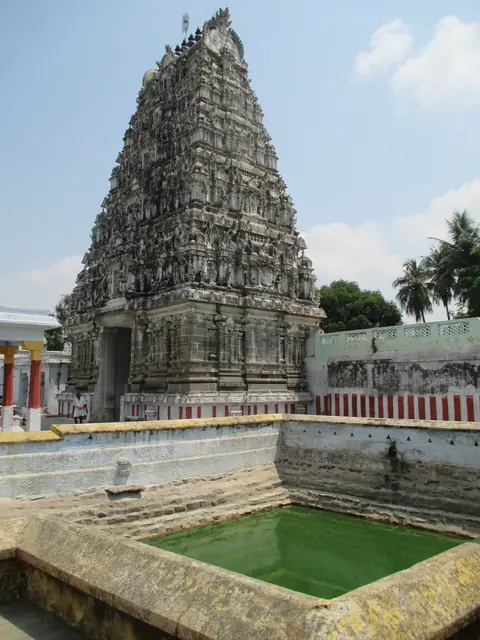
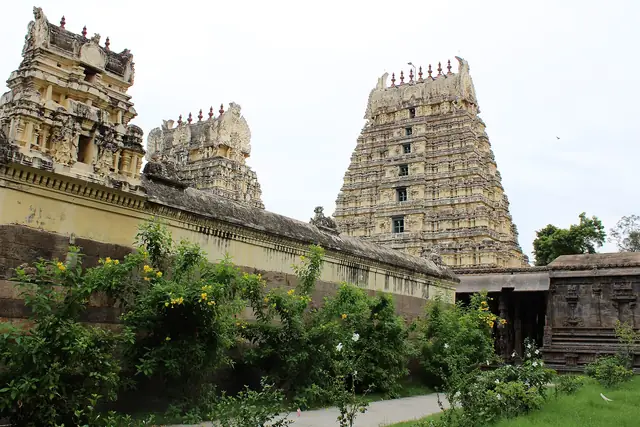
- Raya gopurams on temples across the south, at Tirumala, Kanchi, Srisailam and Chidambaram
- The Mahanavami festival, ancestor of the Mysore Dasara