Cite
MLA
“Fernão Nuniz.” Hindu History, 2026, https://www.hinduhistory.in/sakshi/fernao-nuniz/. Accessed .
APA
Hindu History. (2026). Fernão Nuniz. Retrieved , from https://www.hinduhistory.in/sakshi/fernao-nuniz/
the prodigy meant that this would be the strongest city in the world, and that it would never be captured by his enemies, and would be the chief city in the kingdom
The route
What defines it
- 01
Three years at Vijayanagara as a horse-trader
- 02
Founding katha of the hare and the sage Vidyaranya
- 03
Only detailed account of the battle of Raichur, 1520
- 04
Nayaka land-and-troops system described
- 05
Early dates and names muddled
01A chronicle of the Rayas
Nuniz, the covering letter says, was at Bisnaga for three years trading in horses, which did not pay, and his chronicle was sent from there about 1537, in the reign of Achyuta Raya, whom he calls Achetarao, ‘who now reigns’. He did not see most of what he tells. He wrote down the history of the kings as it was told at the capital: an invasion by the king of Delhi, the founding of the city, then a line of rulers with Portuguese-ears names, Dehorao, Bucarao, Pureoyre Deorao, down to Crisnarao and his brother Achyuta. Then he adds what he could see or ask about himself: the revenue system, under which great nayakas held lands and kept troops for the king, the king’s horses bought from Hormuz, the Brahmins, festivals and customs of the court.
02The hare that turned on the hounds
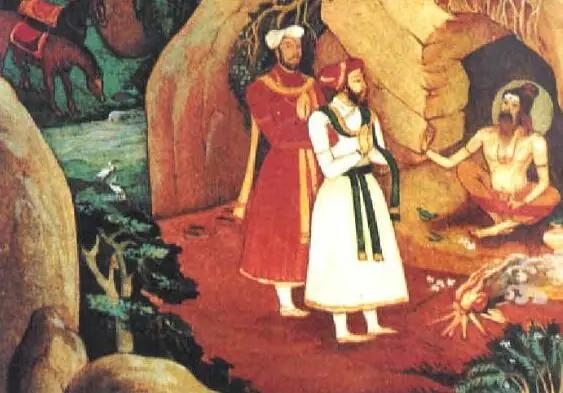
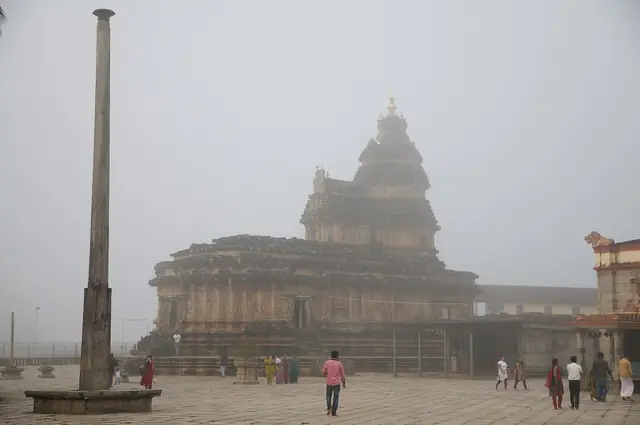
His fourth chapter tells how the city was built. The king, hunting across the river from Anegondi, saw a hare turn on his hounds and bite them, hounds that had brought down a tiger and a lion. Taking it for a sign, he went back and met on the river bank a holy man, who came to see the place and told him to build there, for it would be the strongest city in the world and never be taken by its enemies. The king did so and named it after the sage, whom Nuniz calls Vydiajuna, and Sewell reads as Vidyaranya. After the sage died the king raised a great temple in his memory, and every king of Bisnaga, Nuniz says, entered that house before his own on the day he was crowned. The katha of the hare is still told at Hampi.
03Raichur, and the chronicle’s faults
The heart of the chronicle is Krishnadevaraya’s war of 1520 for Raichur against Ismail Adil Shah of Bijapur: the vast camp, the near rout and rally, the fall of the fort, the spoil of four thousand Hormuz horses and a hundred elephants, and the king’s nod to Cristóvão de Figueiredo and his Portuguese musketeers. Sewell notes it is the only detailed account of that battle. Its weaknesses are plain. The dates of the early kings are muddled, it opens with a ‘year 1230’ that does not fit, several names cannot be matched to the inscriptions, and the story of the founder’s line does not agree with the Sangama copper plates. Scholars also debate how far Vidyaranya was involved in the founding itself, since the inscriptions link him most clearly with Harihara II. Read Nuniz for the 1520s and 1530s, and for what Vijayanagara said about itself.
In the texts
- Chronicle of Fernão Nuniz (c. 1535–37)
- Robert Sewell, A Forgotten Empire (Vijayanagar) (1900)