What it says
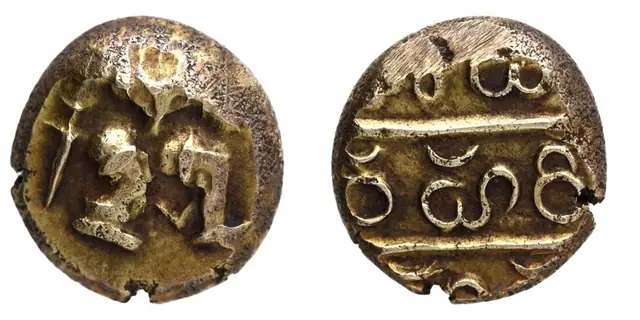
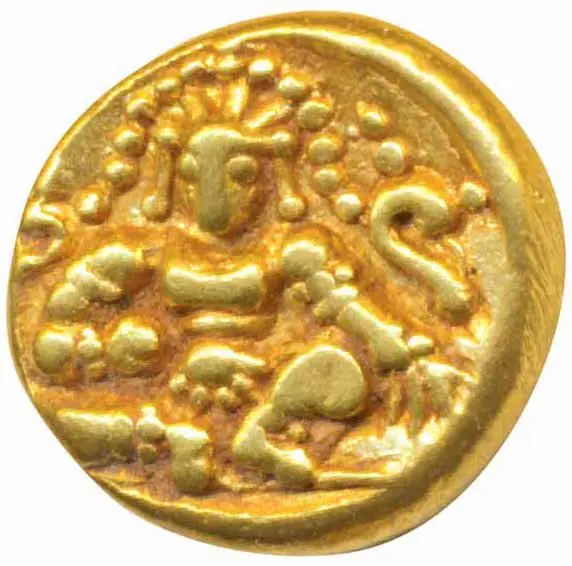
The coin weighed about 3.4 g, the old gadyana weight. Harihara II struck Uma-Maheshvara seated together. Krishnadevaraya’s coins show Balakrishna seated between conch and chakra, with “Sri Pratapa Krishnaraya” in Nagari on the back; later kings put Lakshmi-Narayana or Venkateshvara on theirs. Achyuta Raya used the two-headed gandabherunda.
What it proves
The varaha was the trusted gold of the south for three centuries; the companies of Europe copied it on the coast as the “pagoda”, and each issue names the deity the king served.