01Raichur and Kalinga
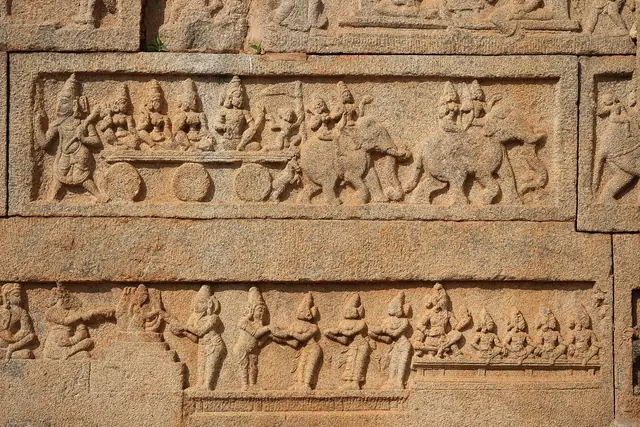
He came to the throne in 1509 and in his first years broke the yearly raid of the Bahmani confederacy at Diwani. He then turned east against the Gajapati Prataparudra of Odisha, taking Udayagiri in 1514 and Kondavidu in 1515 and advancing to Simhachalam; the war ended with a treaty and his marriage to the Gajapati’s daughter. In May 1520 he fought Ismail Adil Shah of Bijapur for Raichur. The Portuguese horse-trader Fernão Nunes, in the city at the time, describes the vast camp, the near-rout of the first day, and the king rallying his men in person before the fort fell.
02The court at Hampi
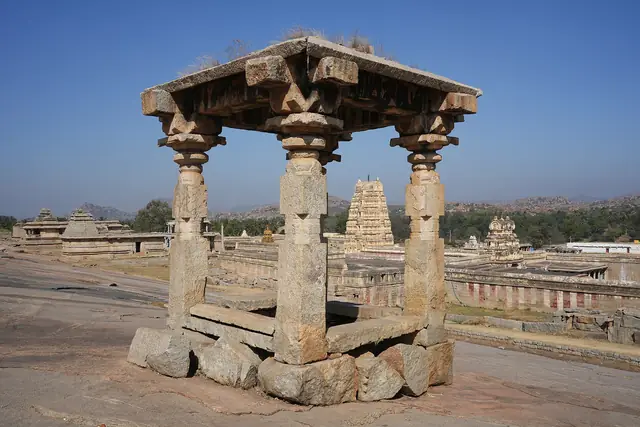
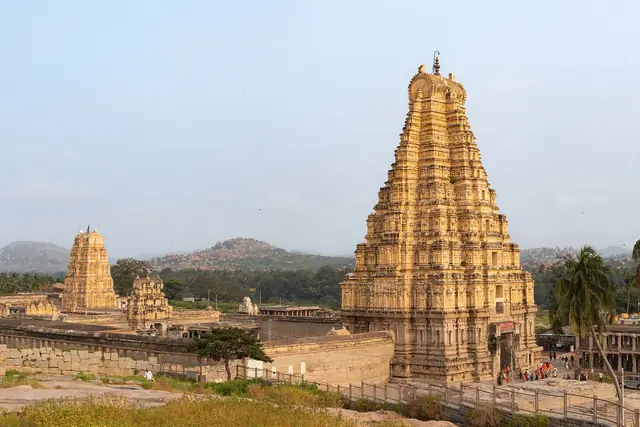
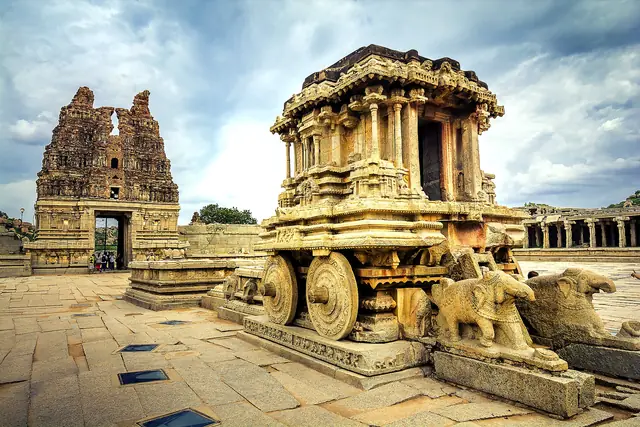
Domingo Paes, who saw Hampi around 1520, wrote that it was as large as Rome and very beautiful, with markets full of rubies and pearls, and that the king was a man of medium height, fair, with some marks of smallpox, and the most feared and perfect king that could be. Krishnadevaraya added a great mandapa and a gopuram to the Virupaksha temple in 1510, built the Krishna temple to house a murti brought from Udayagiri, and raised the Hazara Rama temple. In Telugu he wrote Amuktamalyada, the katha of Andal, and eight great poets, the Ashtadiggajas, sat at his court.
03At Tirumala
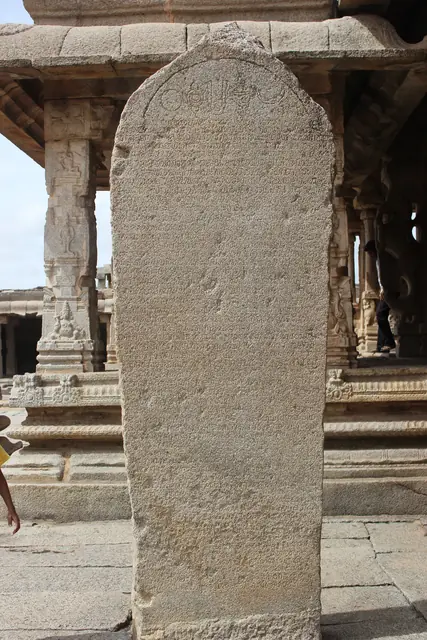
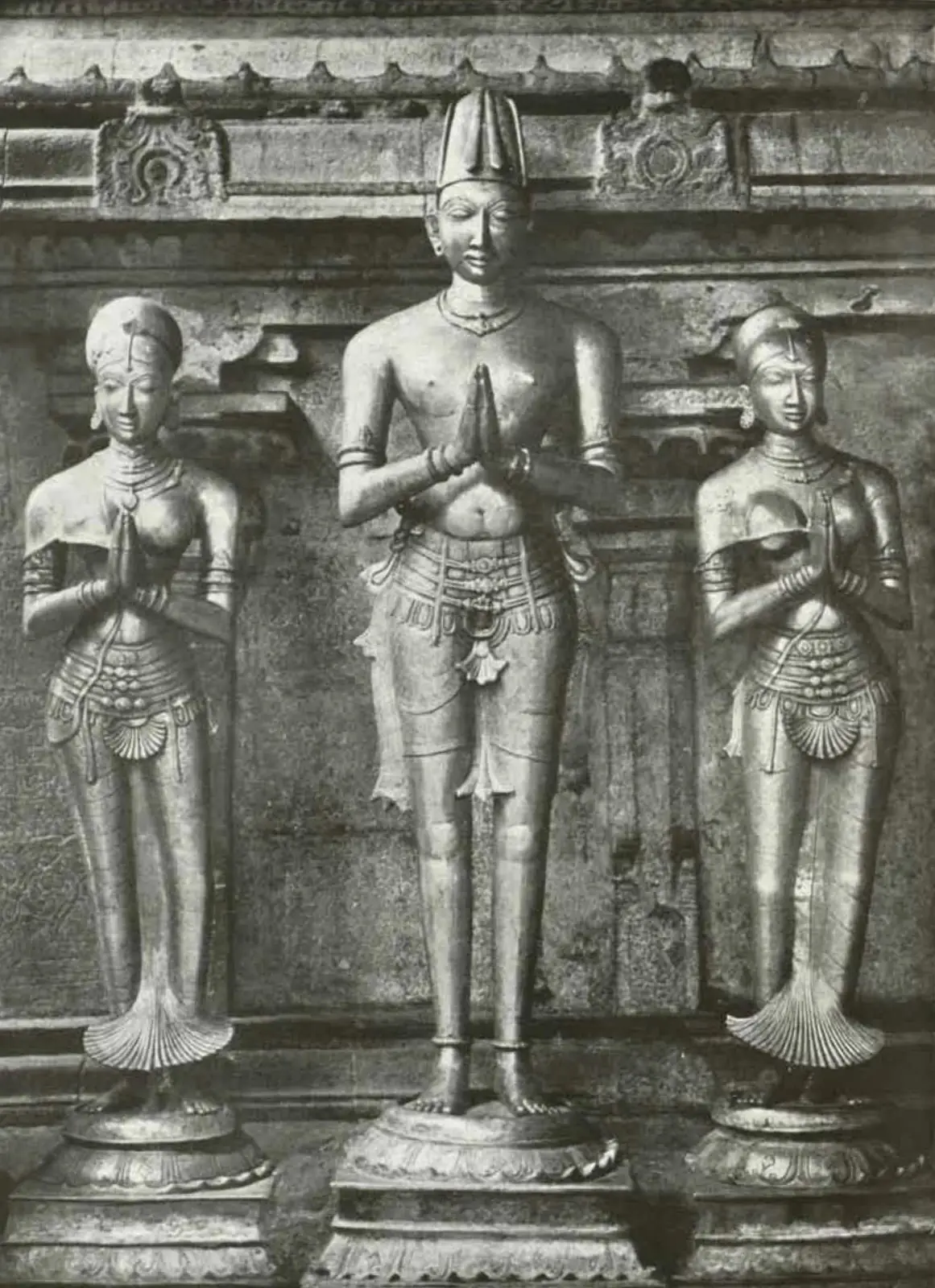
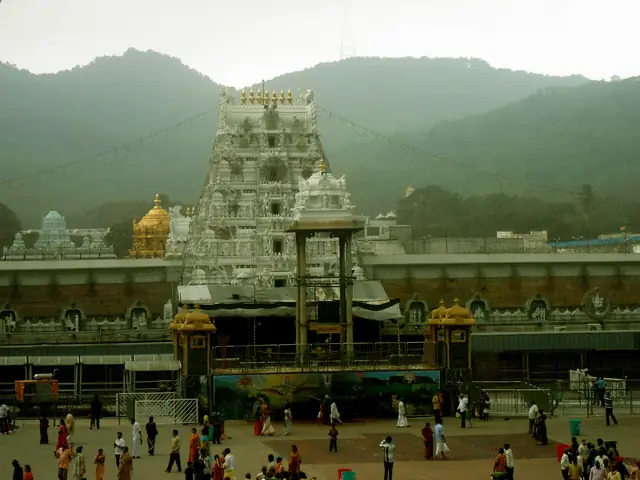
Krishnadevaraya went on pilgrimage to Tirumala again and again, and his inscriptions there record gifts of gold, jewels and villages to Sri Venkateswara, including the gilding of the vimana. Copper images of the king standing with folded hands beside his queens Chinna Devi and Tirumala Devi were set up near the entrance of the temple. He died in 1529 and was succeeded by his brother Achyuta Deva Raya.