Cite
MLA
“Mysore Painting.” Hindu History, 2026, https://www.hinduhistory.in/kala/mysore-painting/. Accessed .
APA
Hindu History. (2026). Mysore Painting. Retrieved , from https://www.hinduhistory.in/kala/mysore-painting/
What defines it
- 01
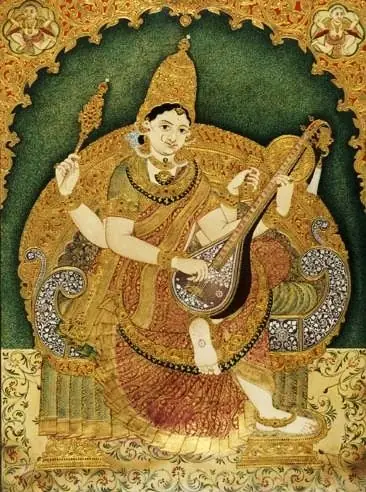
Low gesso relief with gold leaf
- 02
Muted, delicate colours
- 03
Iconography from the Sritattvanidhi
- 04
Hand-ground natural pigments
01Heirs of Vijayanagara
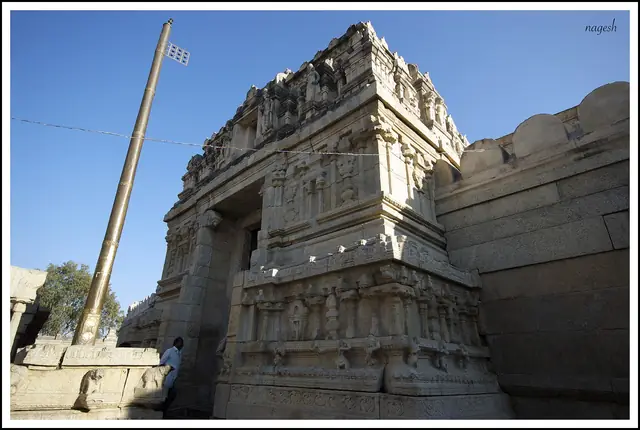
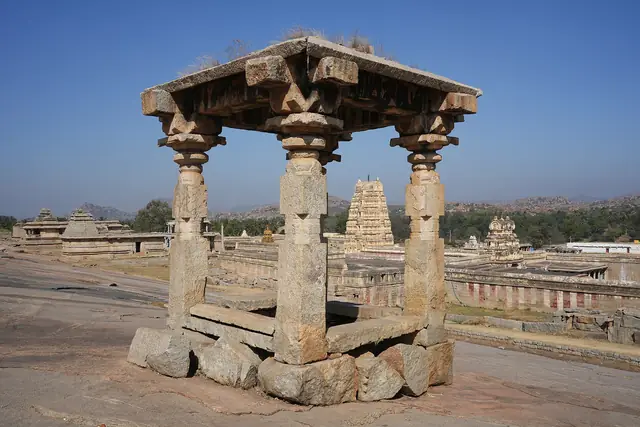
The murals of Vijayanagara, such as the ceiling of the Lepakshi temple, show where Mysore painting comes from. After 1565 painters of the empire found shelter with Raja Wodeyar at Srirangapatna, and their families stayed with the dynasty. Its golden age came under Krishnaraja Wodeyar III (r. 1799–1868), a scholar-king who had the Sritattvanidhi compiled, a great illustrated encyclopaedia of the forms of the Devatas, Navagrahas and more, with precise instructions for each.
02Gesso work, lightly
The ground is paper pasted on cloth or wood. A paste called gesso, of zinc oxide and gum, is applied thinly to raise the ornaments, and gold leaf is laid on it; the relief is much lower than in Thanjavur work. The painters ground their own colours from minerals and plants and used fine brushes of squirrel hair. Faces are delicate, the colours muted, and subjects range from Rama’s coronation and Krishna’s leelas to the goddess Chamundeshwari, guardian of the Mysore kings.
03Where to see it
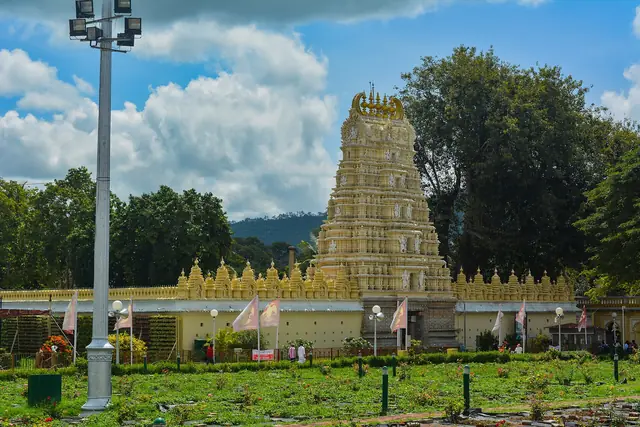
The Jaganmohan Palace art gallery in Mysuru holds the largest collection, and the walls of the Mysuru Palace itself carry painted scenes, including the Dasara procession. The Karnataka Chitrakala Parishath in Bengaluru also has old pieces and teaches the craft. During Mysuru Dasara the palace is lit at night and the paintings are part of the visit. A few families in Mysuru still paint in the old way, grinding their own colours.