Cite
MLA
“Niccolò de’ Conti.” Hindu History, 2026, https://www.hinduhistory.in/sakshi/niccolo-de-conti/. Accessed .
APA
Hindu History. (2026). Niccolò de’ Conti. Retrieved , from https://www.hinduhistory.in/sakshi/niccolo-de-conti/
Their king is more powerful than all the other kings of India.
The route
What defines it
- 01
About twenty-five years in the East, home in 1444
- 02
Vijayanagara: sixty miles round, king above all others
- 03
Lamps of Deepavali, nine days of Navaratri, saffron water in spring
- 04
Told to Poggio Bracciolini as a penance
- 05
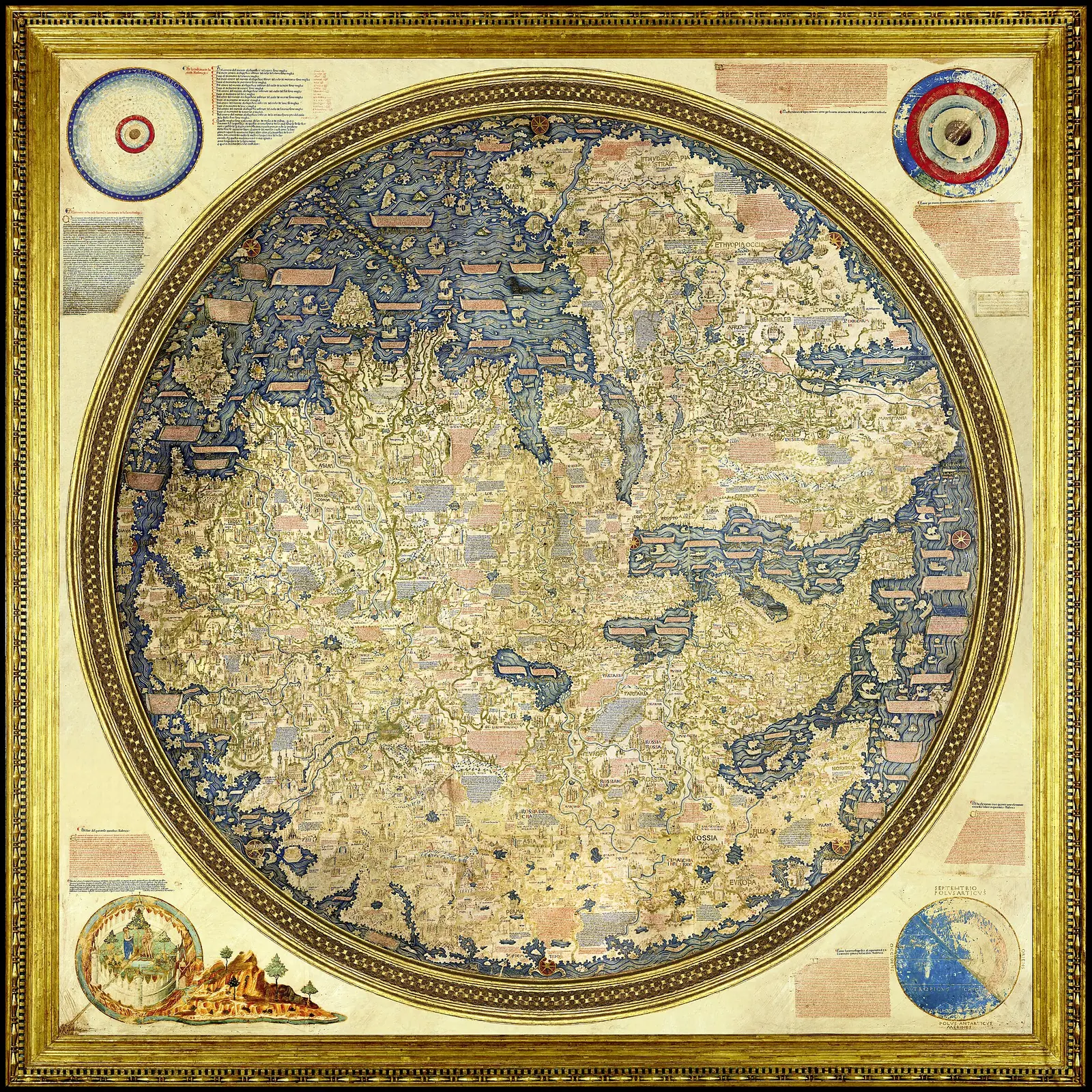
Fed into Fra Mauro’s world map
01A confession turned into a travel book
Niccolò de’ Conti, of a noble Venetian family, was trading at Damascus when he set out east around 1419. He crossed Persia, landed at Cambay, and spent years in India, Ceylon, Sumatra, Java and Burma, before coming home by the Red Sea and Cairo, where he lost his wife and two children. He reached Venice in 1444. To save his life somewhere on the way he had renounced Christianity, and he asked Pope Eugene IV for absolution. The penance set was that he tell his travels to the pope’s secretary, the humanist Poggio Bracciolini, who wrote them in Latin as part of Book IV of his De varietate fortunae. R. H. Major’s Hakluyt Society volume of 1857 gives it in English.
02Bizenegalia and its three great festivals
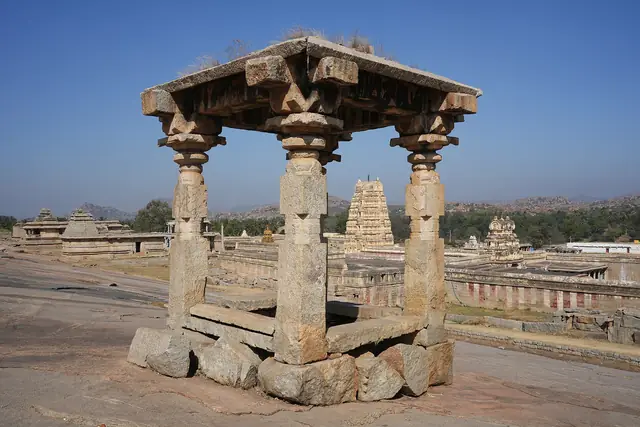
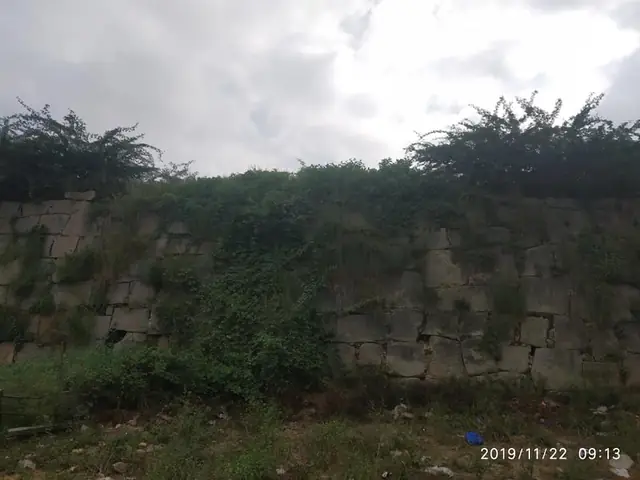
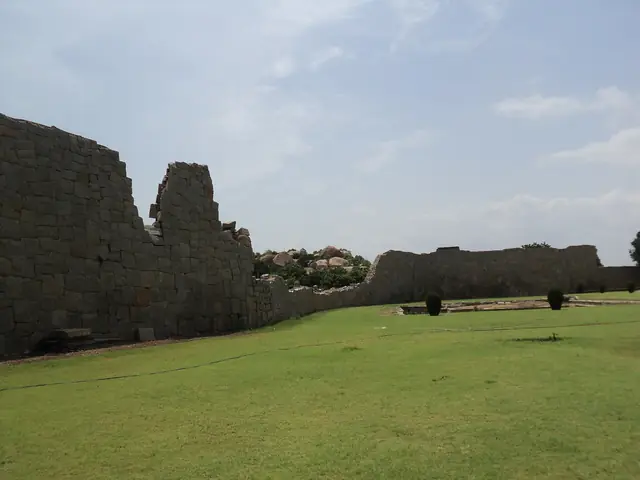
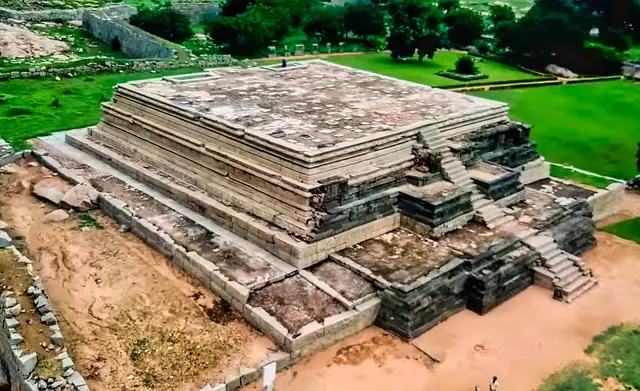
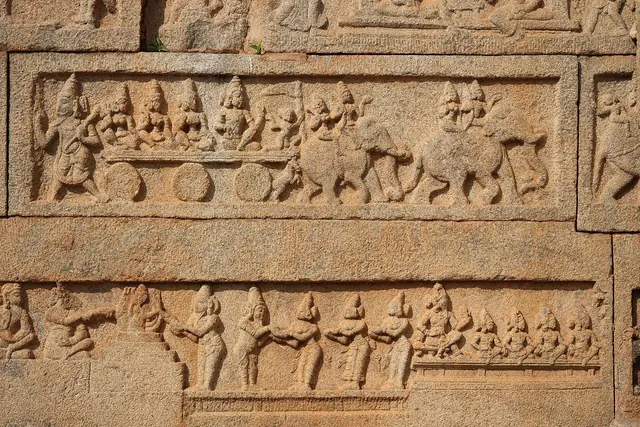
Three hundred miles inland from the coast, Conti says, lay the great city of Bizenegalia, Vijayanagara, near very steep mountains, sixty miles round, its walls carried up the hills to enclose the valleys, with ninety thousand men fit to bear arms. Its king was more powerful than all the other kings of India. Thrice a year, he says, the people kept festivals of special solemnity. At one, men and women of all ages bathed in the rivers or the sea, put on new clothes and spent three days in song, dance and feasting. At another they set innumerable oil lamps inside the temples and on the roofs and kept them burning day and night. A third lasted nine days, with tall decorated poles in the highways. On three other days people sprinkled every passer-by, the king and queen included, with saffron water, and everyone laughed.
03Secondhand Latin, and what it is worth
Conti never wrote a word himself. What we read is Poggio’s Latin, shaped for a humanist audience, then Englished from a Portuguese and Italian tradition. Numbers swell in the telling, as in the twelve thousand wives of the king, and the self-sacrifices before the temple car at Vijayanagara are given in their most lurid form. Even so, the festivals are recognisable: the lamps are Deepavali, the nine days are Navaratri, the Mahanavami that Abdur Razzaq saw a few years later, and the saffron water is the spring play of colours. His Mylapore with its Nestorian Christians at the tomb of St Thomas, and Cahila, Kayal, where pearls were fished, agree with other reports. His information also went into Fra Mauro’s great world map at Venice, finished about 1450.
In the texts
- Poggio Bracciolini, De varietate fortunae, Book IV (c. 1448)
- English in R. H. Major, India in the Fifteenth Century (1857)