Cite
MLA
“Megasthenes and the Indika.” Hindu History, 2026, https://www.hinduhistory.in/sakshi/megasthenes-indika/. Accessed .
APA
Hindu History. (2026). Megasthenes and the Indika. Retrieved , from https://www.hinduhistory.in/sakshi/megasthenes-indika/
those who were in the camp of Sandrakottos, wherein lay 400,000 men, found that the thefts reported on any one day did not exceed the value of two hundred drachmae
The route
What defines it
- 01
Pataliputra: 80 by 15 stadia, 570 towers, 64 gates
- 02
Seven classes of Indian society
- 03
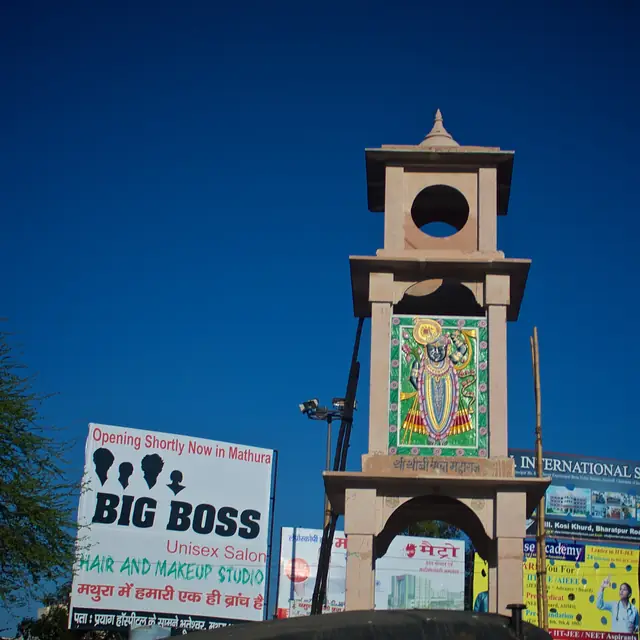
Herakles of the Sourasenoi at Methora (Mathura)
- 04
Wooden palisade later found at Bulandi Bagh
- 05
Known only from quotations in later authors
01A Greek at the Mauryan court
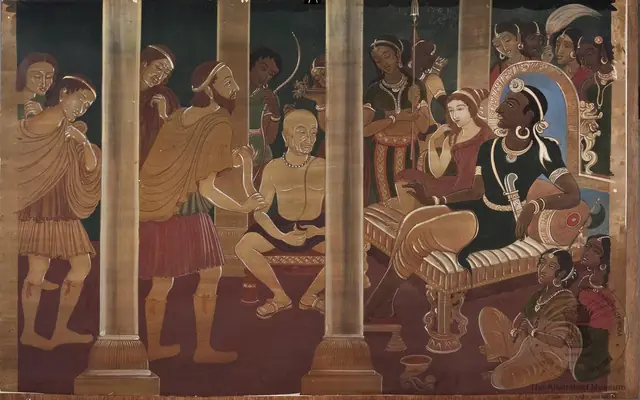
After the war of about 303 BCE, Seleucus Nicator gave up the lands west of the Indus and made a treaty with Chandragupta Maurya, whom the Greeks called Sandrokottos. Megasthenes had been living with Sibyrtios, the satrap of Arachosia, and was sent on from there to Palimbothra, which is Pataliputra. Arrian says he often visited the king. Out of what he saw and heard he wrote the Indika in four books. No copy survives. In 1846 the German scholar E. A. Schwanbeck gathered every quotation he could find in later Greek and Latin writers, and J. W. McCrindle put them into English in 1877. Every sentence of Megasthenes we read today has passed through at least one other hand.
02The city, the camp and the seven classes
Arrian, quoting him, gives the size of Pataliputra: eighty stadia long and fifteen wide, ringed by a ditch six hundred feet broad, its wall crowned with 570 towers and pierced by sixty-four gates. Strabo keeps his remark that in Chandragupta’s camp of 400,000 men the thefts reported on any day came to no more than two hundred drachmas. He divided the people into seven classes: philosophers, farmers, herdsmen, artisans, soldiers, inspectors and the king’s councillors. He also tells of a Herakles held in special honour by the Sourasenoi, whose great cities were Methora and Kleisobora on the river Iobares. Methora is Mathura on the Yamuna, and most readers have long seen in this Herakles the Greek way of naming Bhagwan Krishna.
03What the spade and the edicts say
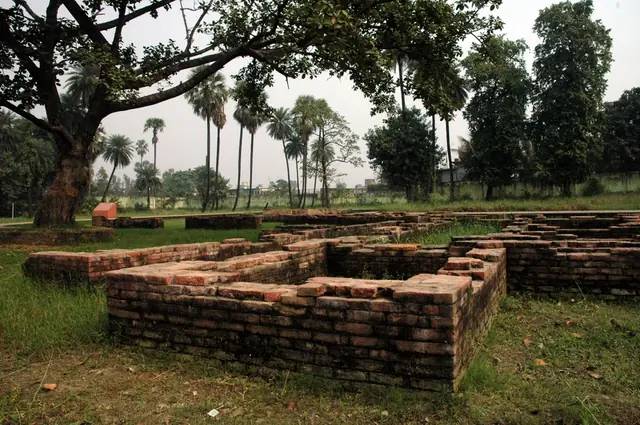
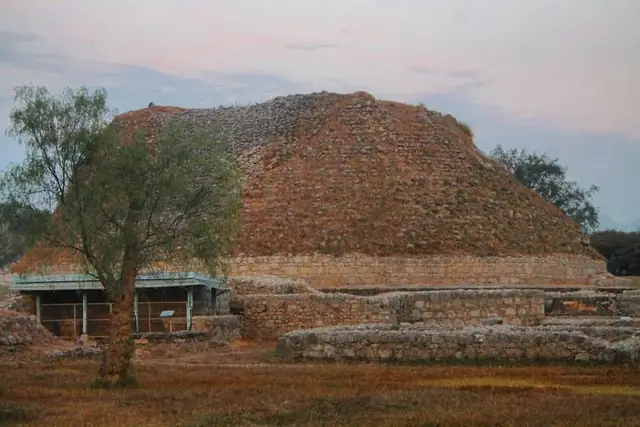
Some of it the ground has confirmed. L. A. Waddell in the 1890s and D. B. Spooner in 1912–13 found long lines of heavy timber palisade at Bulandi Bagh and a great pillared hall at Kumhrar in Patna, which fits his picture of a wooden-walled capital. Other parts do not hold. He wrote that the Indians had no written laws and did not know writing, yet Strabo himself quotes Nearchus saying that Indians wrote letters on closely woven cloth, and within a lifetime Ashoka’s Brahmi edicts stood across the land. He said no Indian was a slave, while the Arthashastra has rules for the dasa. And he passed on gold-digging ants and men who slept wrapped in their own ears, which is why Strabo counted him among the untrustworthy writers on India.
In the texts
- Indika (lost; fragments in Strabo, Arrian, Diodorus, Pliny)
- Arrian, Indika (c. 2nd century CE)