Cite
MLA
“When did Shri Rama live?.” Hindu History, 2026, https://www.hinduhistory.in/vimarsha/ramayana-date/. Accessed .
APA
Hindu History. (2026). When did Shri Rama live?. Retrieved , from https://www.hinduhistory.in/vimarsha/ramayana-date/
What defines it
- 01
Treta Yuga: 12,96,000 years in the Puranic reckoning
- 02
Vayu Purana: the Treta of the 24th mahayuga
- 03
Bala Kanda birth sky: Punarvasu, Karka lagna, five planets exalted
- 04
ASI Ramayana sites project, 1975–76
- 05
Ayodhya’s deepest dug level: Northern Black Polished Ware
01The yuga answer
The Vayu Purana (70.48 in some editions, 70.88 in others) says that Shri Rama, son of Dasharatha, ended Ravana’s power in the Treta of the twenty-fourth mahayuga; other traditions place him in the Treta of the present, twenty-eighth mahayuga. In either reckoning the Dvapara Yuga alone, at 8,64,000 years, stands between Shri Rama and the start of the Kali Yuga in 3102 BCE. Valmiki’s Bala Kanda gives the sky at Shri Rama’s birth: Chaitra Shukla Navami, Punarvasu nakshatra, Karka lagna, five planets in exaltation. These lines are the starting point of every astronomical attempt to date him, and the yuga figures are the reason the tradition sets those attempts aside.
02The ground
In 1975–76 B. B. Lal led the Archaeological Survey of India’s project on the Archaeology of the Ramayana Sites, digging at Ayodhya, Shringaverapura, Bharadwaj ashram at Prayagraj, Chitrakoot and Nandigram. The final report was never submitted, and a preliminary account appeared only in 1989; Lal later set out his case in Rama: His Historicity, Mandir and Setu (2008). The court-ordered ASI excavation of 2003 at the Ram Janmabhoomi went down to the Northern Black Polished Ware period, around the 6th century BCE or earlier. In 1973 H. D. Sankalia of Deccan College had argued that the oldest geography of the epic points to a Lanka in central India. So the question is really three: when Shri Rama lived, where the places of the epic are, and what the earth can show.
The positions
Treta Yuga: the reckoning of the Shastras
Valmiki Ramayana; Vayu Purana and the other Puranas; the panchang and acharya tradition
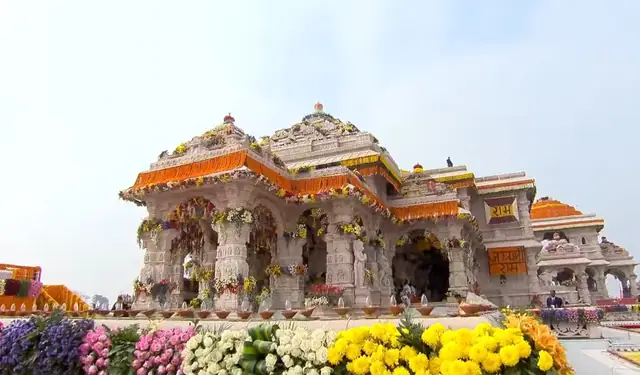
Valmiki says plainly that Shri Rama lived in the Treta Yuga, and the Puranas measure the yugas exactly: Treta 12,96,000 years, Dvapara 8,64,000. Shri Rama’s line is the solar dynasty of Ikshvaku, given generation by generation in the Ramayana and the Puranas, and he comes many generations before the kings of the Mahabharata. On this reckoning Shri Rama lived more than eight lakh years ago, and the worship of Ram Lalla at Ayodhya continues an unbroken memory of him.
Historical method has no tool that reaches this far: no artefact, settlement or script from hundreds of thousands of years ago is known that could be tested against the text. The Puranas themselves differ on which mahayuga, and the dynastic lists give some dozens of generations, which some readers take to imply a far shorter span.
Astronomical dating: 5114 BCE
Pushkar Bhatnagar (Dating the Era of Lord Ram, 2004)
Bhatnagar, an officer of the Indian Revenue Service, entered the planetary positions of the Bala Kanda into the Planetarium Gold software and found a sky matching them on 10 January 5114 BCE, around midday, which he read as Chaitra Shukla Navami of that year. He then dated other events of the epic by their described skies in the same way. Supporters argue that so many planets standing in the stated signs on one day is unlikely to be chance, so the epic must preserve a real observation.
Planet positions of this kind recur over long cycles, and the software could look back only to about 99,999 BCE, a small fraction of the span the yugas require. Critics note that the date requires shortening the yuga lengths the Shastras give. No peer-reviewed astronomical study has confirmed it.
Archaeology: test the places, not the yuga
B. B. Lal (Archaeology of the Ramayana Sites, 1975–76; Rama, 2008); H. D. Sankalia (lectures of 1973)
Archaeology can test places, not persons. Lal’s project showed that Ayodhya, Shringaverapura, Bharadwaj ashram, Chitrakoot and Nandigram were all old, inhabited places, and in 2008 he argued for the historicity of Shri Rama. The deepest levels dug at Ayodhya reach the Northern Black Polished Ware period. Sankalia, the founder of modern prehistory at Deccan College, held that the oldest geography of the epic fits central India better, placing Lanka in the region around Jabalpur rather than on the island.
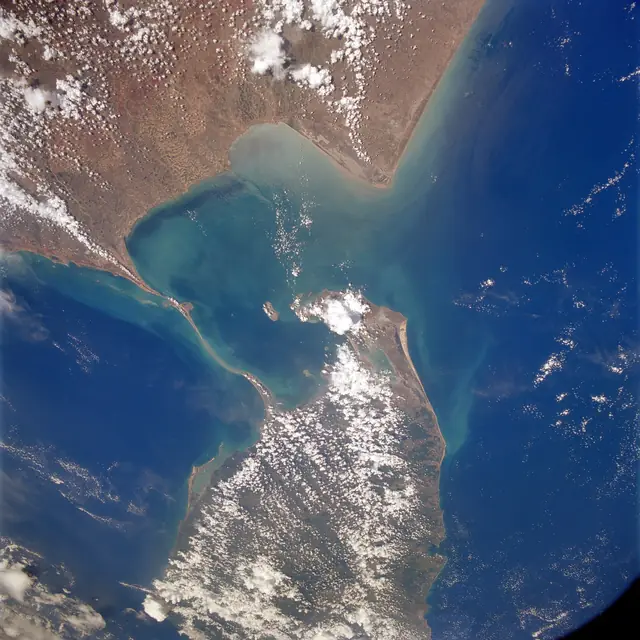
A trench reaches only as deep as it is dug, and a living city like Ayodhya can be excavated only in small patches, so the first level found at one spot need not be the first settlement of the place. Sankalia’s central-Indian Lanka runs against the tradition of Rameswaram and Dhanushkodi, where the Setu is worshipped as the crossing to the island.
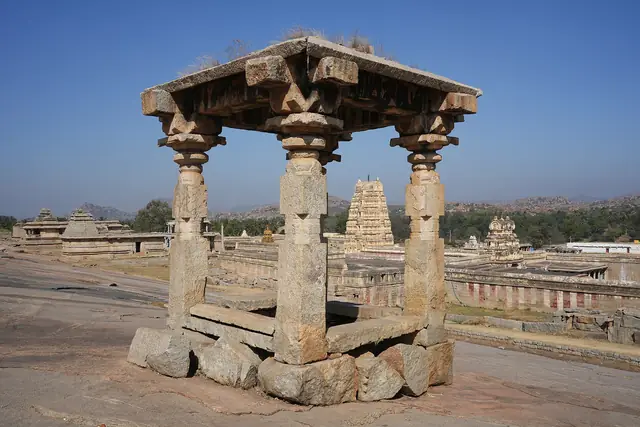
For the date of Shri Rama himself, no test available today can decide between the yuga reckoning and a historical date. What can be tested is narrower: deeper and wider excavation at Ayodhya, Shringaverapura and Chitrakoot; an independent check of the astronomical claims by astronomers who publish their full method; and agreement on the epic’s geography, from Kishkindha near Hampi to the Setu.
Great masters
In the texts
- Valmiki Ramayana, Bala Kanda
- Vayu Purana, chapter 70
- B. B. Lal, Rama: His Historicity, Mandir and Setu (2008)