Cite
MLA
“How old is the Rigveda?.” Hindu History, 2026, https://www.hinduhistory.in/vimarsha/rigveda-date/. Accessed .
APA
Hindu History. (2026). How old is the Rigveda?. Retrieved , from https://www.hinduhistory.in/vimarsha/rigveda-date/
What defines it
- 01
Shruti: mantras seen by the rishis
- 02
Language close to the Avestan Gathas
- 03
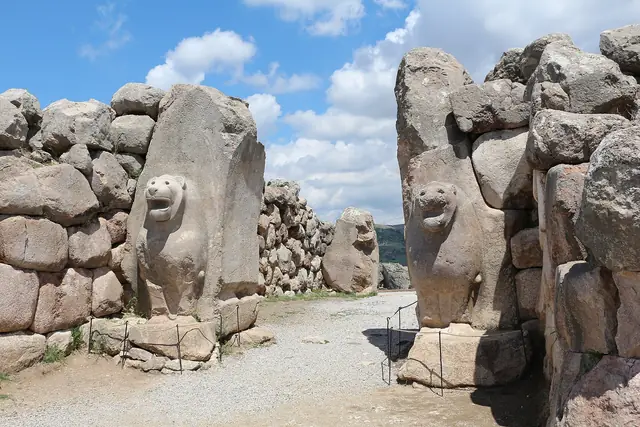
Mitanni treaty naming Mitra, Varuna, Indra, Nasatyas, c. 1380 BCE
- 04
Ayas: copper or iron?
- 05
Equinox in Mrigashira: Tilak’s Orion argument
- 06
The Sarasvati in full flow
01Two kinds of question
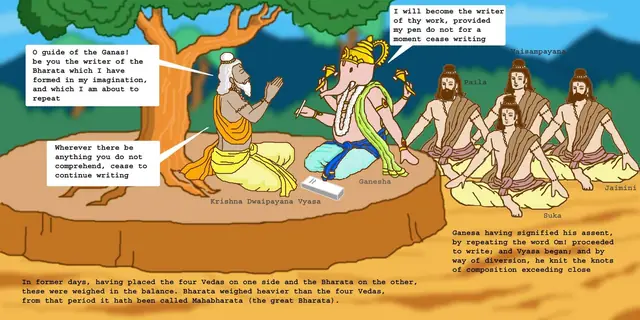
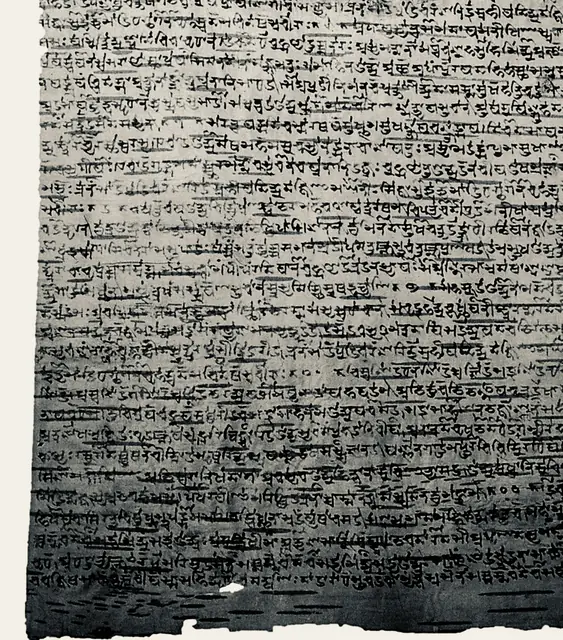
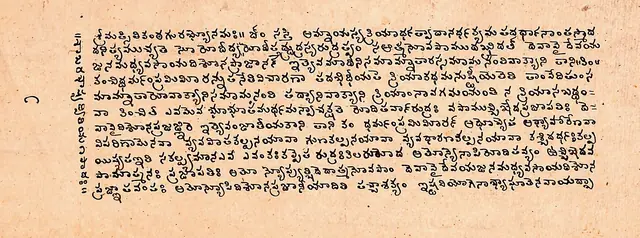
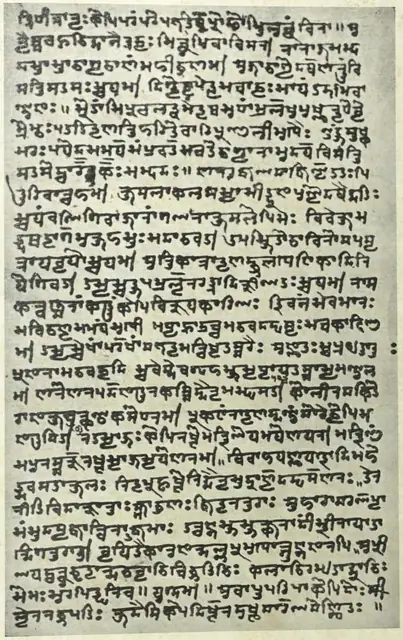
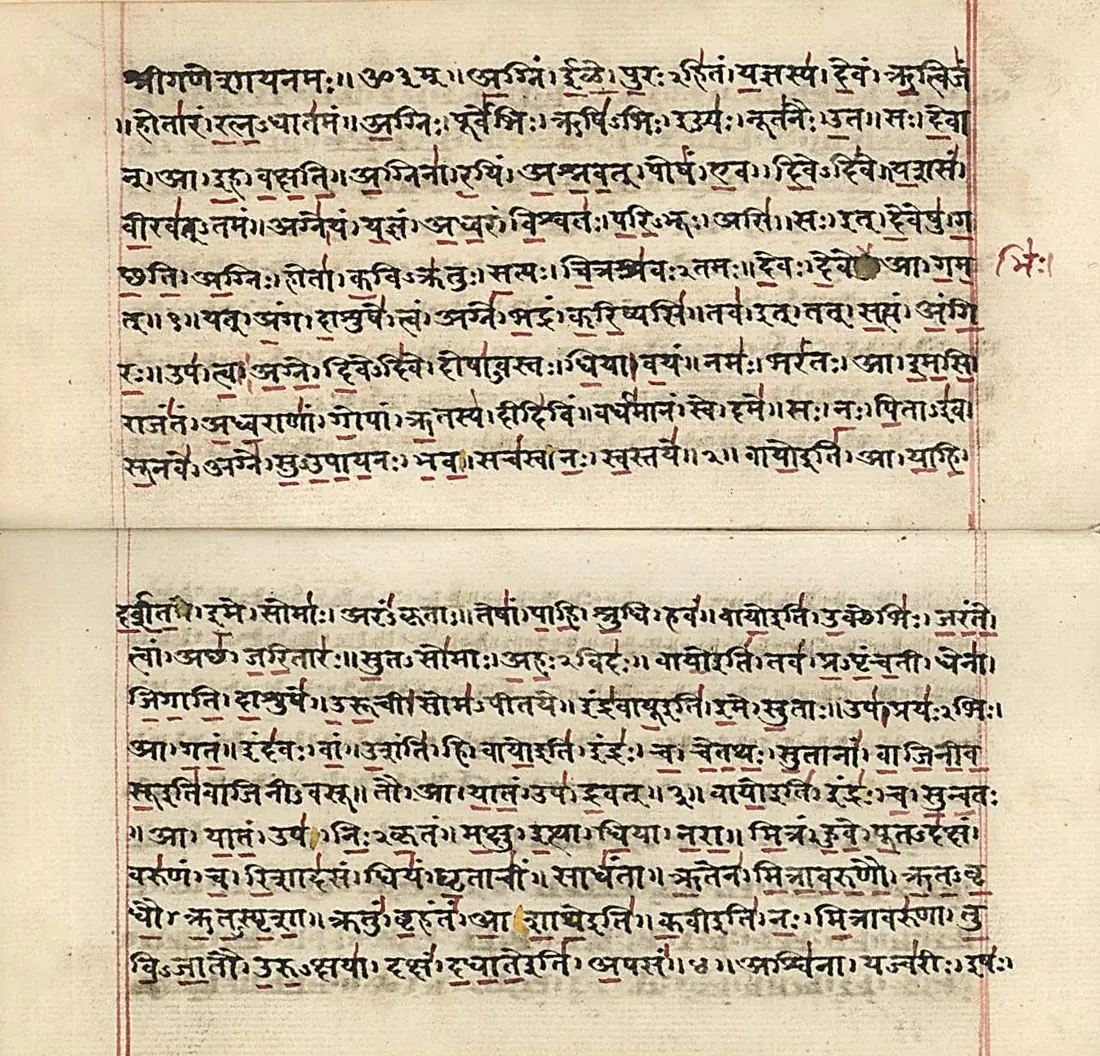
The Mimamsa school of Jaimini holds the Veda to be apaurusheya, without a human author, and the Rigveda itself names its rishis as seers of the mantras: Vishvamitra for the third mandala, Vamadeva for the fourth, Vasishtha for the seventh. In this reckoning the Veda has no date at all, and the tradition places Maharshi Vyasa’s arrangement of the Vedas into four at the close of the Dvapara Yuga, before the Kali Yuga began in 3102 BCE. Historians, who work only from datable evidence, ask when the hymns were first gathered in the language we hear. The Rigveda contains no date, no king list and no inscription, and its oldest manuscripts, such as those of the Bhandarkar Institute in Pune on UNESCO’s Memory of the World register, are a few centuries old. Every date is reasoned from outside clues.
02The clues every school uses
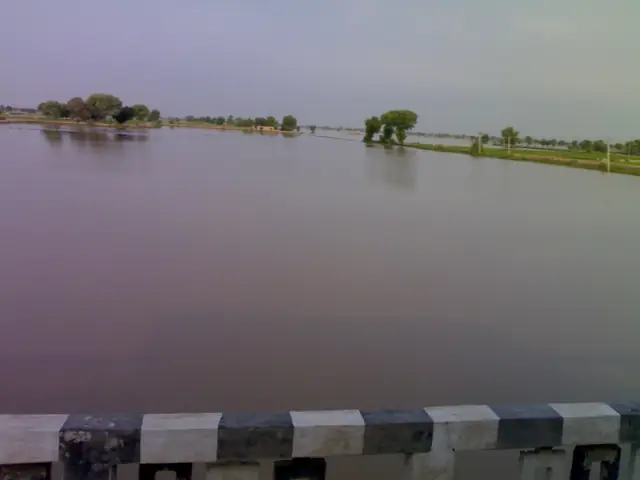
Four clues return in every argument. The language of the Rigveda is very close to the Avestan of the Gathas of Iran. A treaty found at Bogazkoy in Turkey, of about 1380 BCE, has a Mitanni king of Syria swearing by Mitra, Varuna, Indra and the Nasatyas. The hymns praise the Sarasvati as a great river, and the Ghaggar-Hakra, often identified with her, had shrunk by the second millennium BCE. And some Vedic passages carry astronomical references, such as the position of the equinox among the nakshatras, which moves slowly over thousands of years by the precession of the earth’s axis. Each school weighs these four differently, which is why their dates diverge.
The positions
Apaurusheya: the Veda has no human date
Purva Mimamsa (Jaimini, Shabara, Kumarila Bhatta); the Vedic commentators; the traditional mathas and pathashalas
The Veda and its interpreters treat the mantras as eternal, heard by the rishis, which is why the Veda is called shruti. The Mimamsa argument, set out by Jaimini and expanded by Shabara and Kumarila Bhatta, is that no author of the Veda is remembered anywhere, while the authors of other works are, and that a text without an author carries no author’s faults. The exact oral transmission, guarded by the padapatha, kramapatha and jatapatha methods, shows how carefully the tradition kept every syllable unchanged across generations.
As a statement of faith this answers a different question from the historian’s, and the two need not collide. But it gives no fixed point a historian can test: it does not say when the mantras were first heard in the language of the Samhita, or when the Shakala recension recited today took its fixed form.
Late second millennium BCE (c. 1500–1200 BCE)
Max Müller (who first proposed c. 1200 BCE), Michael Witzel, most Western Indologists
The Rigveda’s language is so close to the Avestan Gathas that, on this view, the two cannot be many centuries apart. The Mitanni treaty of about 1380 BCE shows Vedic god names already in Syria. Witzel argues that ayas in the Rigveda means copper or bronze, not iron, which first appears in the Atharvaveda as “the black metal”; the family books would then be older than iron in north India, which he put at about 1200 BCE. Spoked chariots and horses also fit a second-millennium world.
Müller’s date was a guess fitted to the short chronology of his day, and he later conceded that no one could fix the Vedic date. The date of iron in India has moved and is itself argued over. Avestan dating is as uncertain as Vedic dating. And if the Sarasvati of the hymns was the Ghaggar-Hakra in full flow, this date is too late.
Third millennium BCE or much earlier
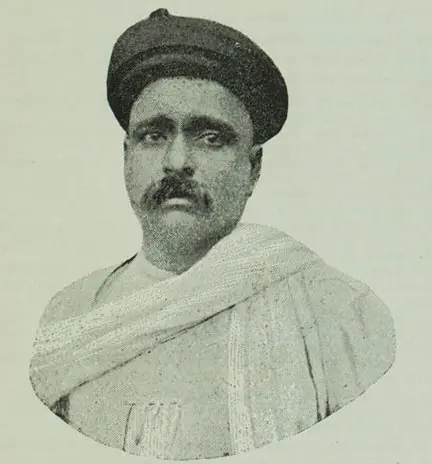
Bal Gangadhar Tilak (The Orion, 1893), Hermann Jacobi (1893), Shrikant Talageri, B. B. Lal
Tilak and Jacobi, working independently in 1893, read Vedic references to the vernal equinox lying in Mrigashira, the head of Orion, and placed the oldest Vedic period around 4000 BCE or earlier. Lal argues that a Rigveda praising the Sarasvati as overflowing must be older than the river’s decline in the late third millennium BCE. Talageri orders the books by their rishi families, places mandalas 6, 3 and 7 earliest and 5, 8, 9 and 10 latest, and argues that the oldest books long predate the names shared with the Mitanni.
Astronomical readings depend on how a few verses are interpreted; a reviewer in the Indian Antiquary in 1894 found Tilak’s reading unconvincing, and Jayant Narlikar later called the reliability of the allusions the weak point. The Sarasvati argument depends on which river is meant and when it shrank. A very early date must also explain why the language stayed so close to Avestan.
A dated object that names Vedic deities or quotes a hymn, older than the Mitanni treaty, would settle the lower bound. A firm date for the shrinking of the Ghaggar-Hakra, with agreement that it is the Sarasvati of the hymns, would bound the upper side. A deciphered Indus script could show whether Vedic Sanskrit was spoken in the cities. Until then the tradition’s answer and the historians’ estimates stand side by side.
Great masters
In the texts
- Rigveda Samhita (Shakala recension)
- Mimamsa Sutra of Jaimini
- B. G. Tilak, The Orion (1893)