01The line of Bhagadatta
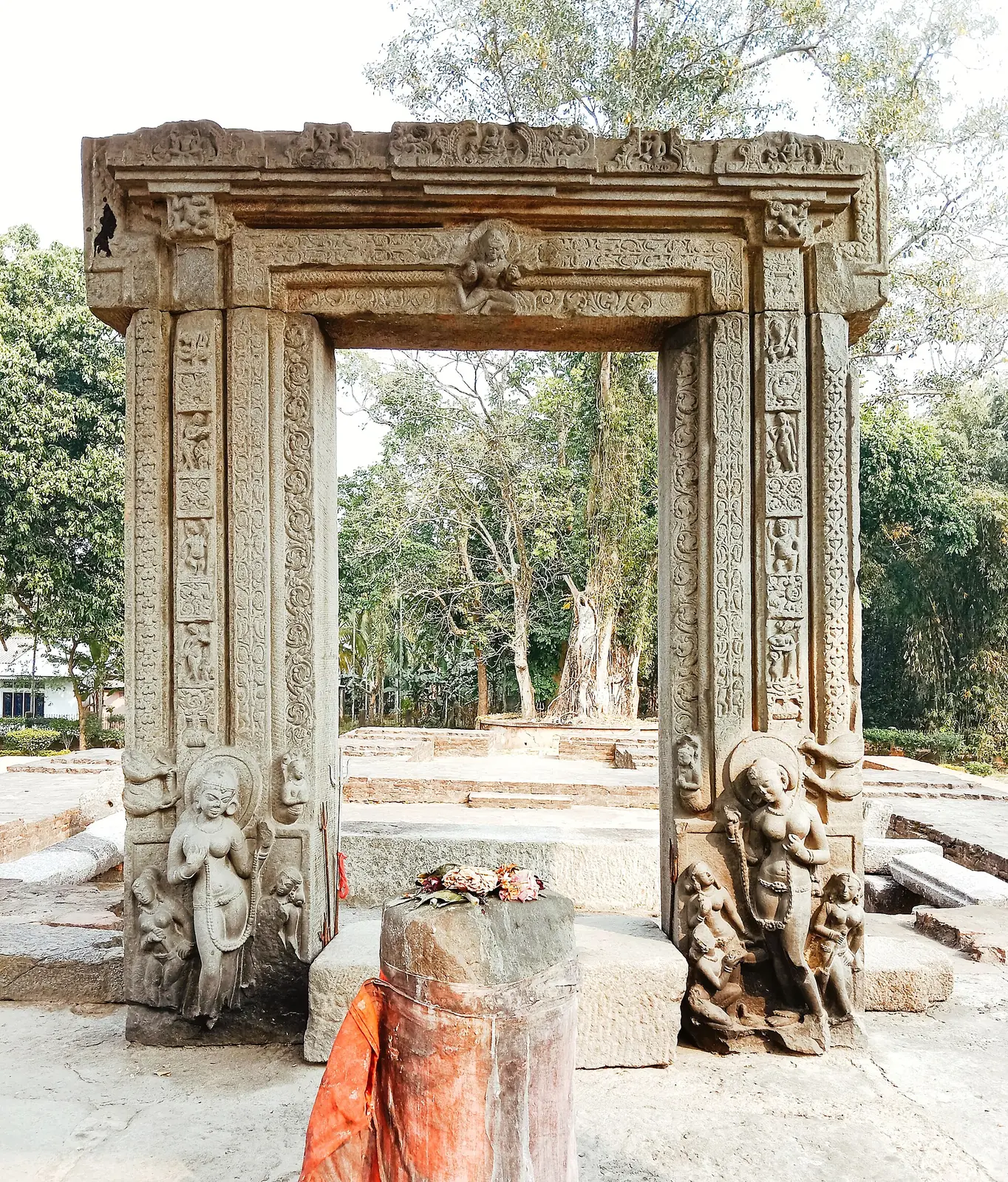
The Varman kings traced their line to Naraka, son of Bhumi Devi, and to his son Bhagadatta, who fought for the Kauravas at Kurukshetra. Pushyavarman founded the house in the fourth century. Samudragupta’s Allahabad pillar names Kamarupa among the frontier kingdoms that paid him tribute. The stone doorframe of Da Parbatia near Tezpur, with Ganga and Yamuna carved at its sides, is the oldest surviving temple sculpture in Assam and belongs to this age.
02Bhaskaravarman
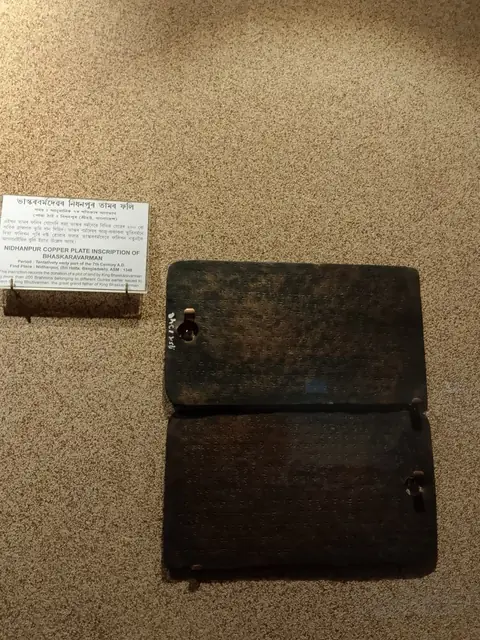
Bhaskaravarman, in the first half of the seventh century, allied with Harsha of Kannauj against Shashanka of Gauda. Xuanzang came to his court around 643 and wrote that the king was not a Buddhist but honoured learned men, and that the people worshipped the devas in hundreds of temples. The king escorted Xuanzang to Harsha’s assembly at Kannauj. His Nidhanpur copper plates, found in Sylhet, re-grant land to more than two hundred Brahmin families and give the full genealogy of his house.
03Mlechchha and Pala houses
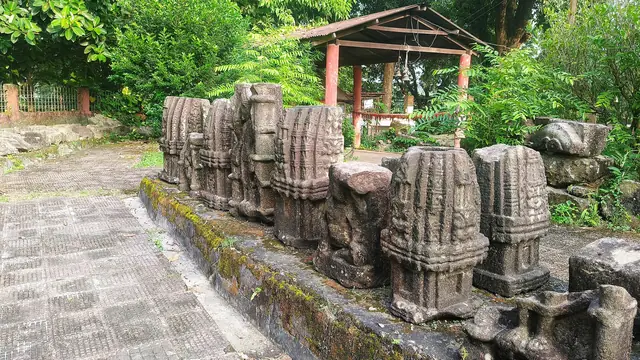
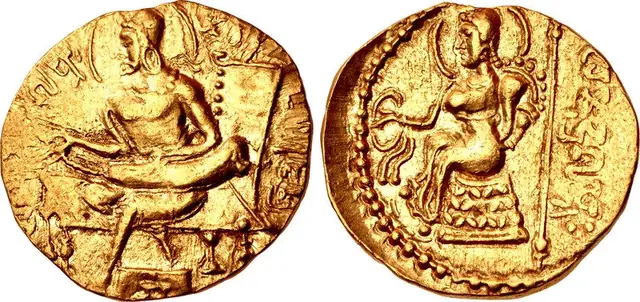
After Bhaskaravarman died without an heir, Salastambha founded a new house that ruled from Haruppeshvara, near Tezpur; a rock inscription of Harjaravarman there is dated 829. Around 900 Brahmapala began the Pala line of Kamarupa, and his son Ratnapala built the fortified city of Durjaya. The temple ruins at Madan Kamdev, with their carved figures of Shiva and Devi, belong to these centuries. In the twelfth century Vaidyadeva, a minister of the Bengal Palas, was set over Kamarupa, and the old kingdom broke into smaller states.
The rulers
- 1PushyavarmanFounder of the Varman housec. 350–374
- 2Mahendravarmanc. 470–494
- 3Bhutivarmanc. 518–542
- 4Susthitavarmanc. 590–600
- 5BhaskaravarmanHarsha’s ally; host of Xuanzangc. 600–650
- 6SalastambhaFounder of the Mlechchha housec. 655–670
- 7HarjaravarmanTezpur rock inscription, 829c. 815–835
- 8Vanamalavarmanc. 835–860
- 9BrahmapalaFounder of the Pala house of Kamarupac. 900–920
- 10RatnapalaBuilt Durjayac. 920–960
- 11Dharmapala of Kamarupac. 1035–1060
- 12VaidyadevaSet over Kamarupa by the Bengal Palasc. 1138
What they left
- Nidhanpur copper plates of Bhaskaravarman
- Da Parbatia doorframe near Tezpur
- Madan Kamdev temple ruins
- Xuanzang’s account of Kamarupa