01A wanderer at court
Bana tells his own story in the first chapters of the Harshacharita. He was born at Pritikuta on the Shona river, of the Vatsyayana gotra, lost his mother young and his father at fourteen, and spent years wandering with a band of friends that included poets, a snake-doctor, a goldsmith and a dancer. Summoned to Harsha’s camp, he was at first received coldly, the king having heard of his wild youth, and later won his favour. His account of Harsha’s family is a main source for the period: the death of Prabhakaravardhana, the murder of Rajyavardhana, and Harsha’s search for his sister Rajyashri in the Vindhya forest.
02Kadambari, finished by his son
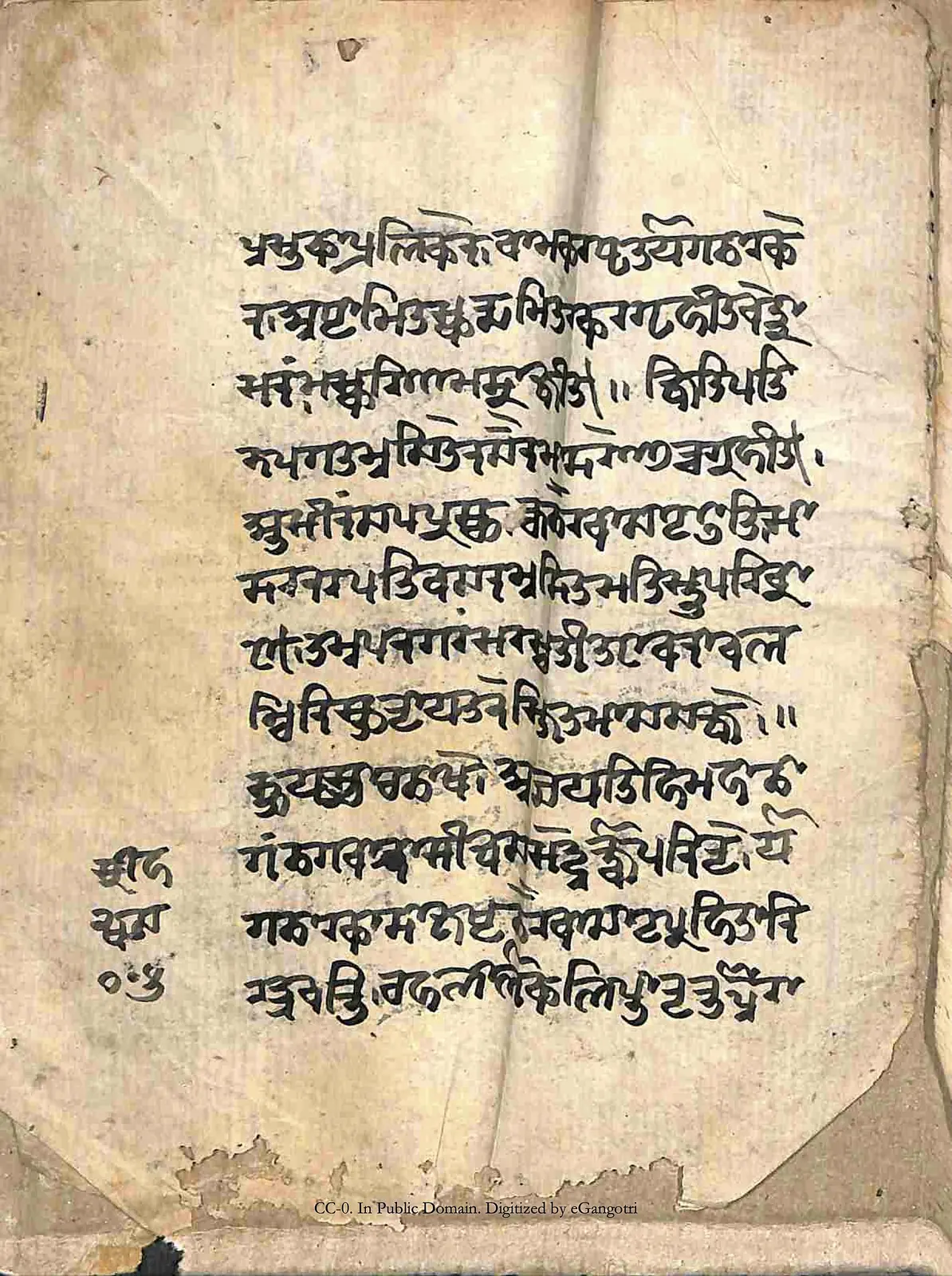
Kadambari is a story within stories, told by a parrot at a king’s court, of the love of Chandrapida and the gandharva princess Kadambari across more than one birth. Its long sentences pile compound on compound, and Sanskrit critics hold it up as the summit of prose; the saying goes ‘banocchishtam jagat sarvam’, the whole world is Bana’s leftovers, meaning he left nothing undescribed. Bana died before finishing it. His son Bhushanabhatta wrote the second half, and says so in its opening verses.