01City of the eastern light
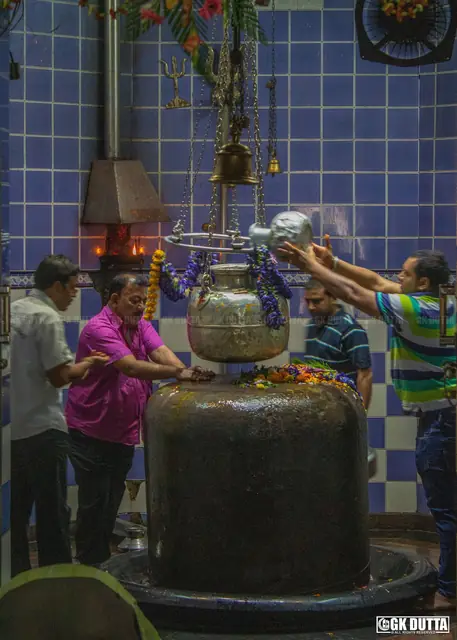
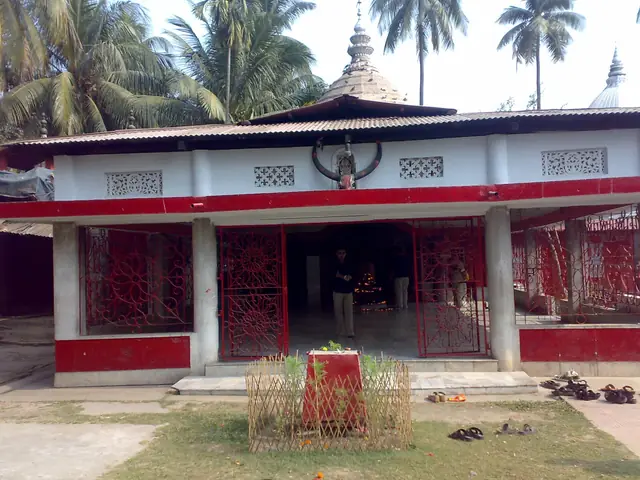
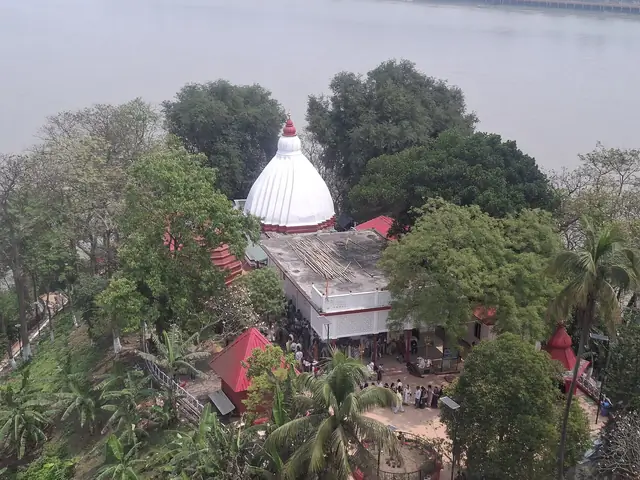
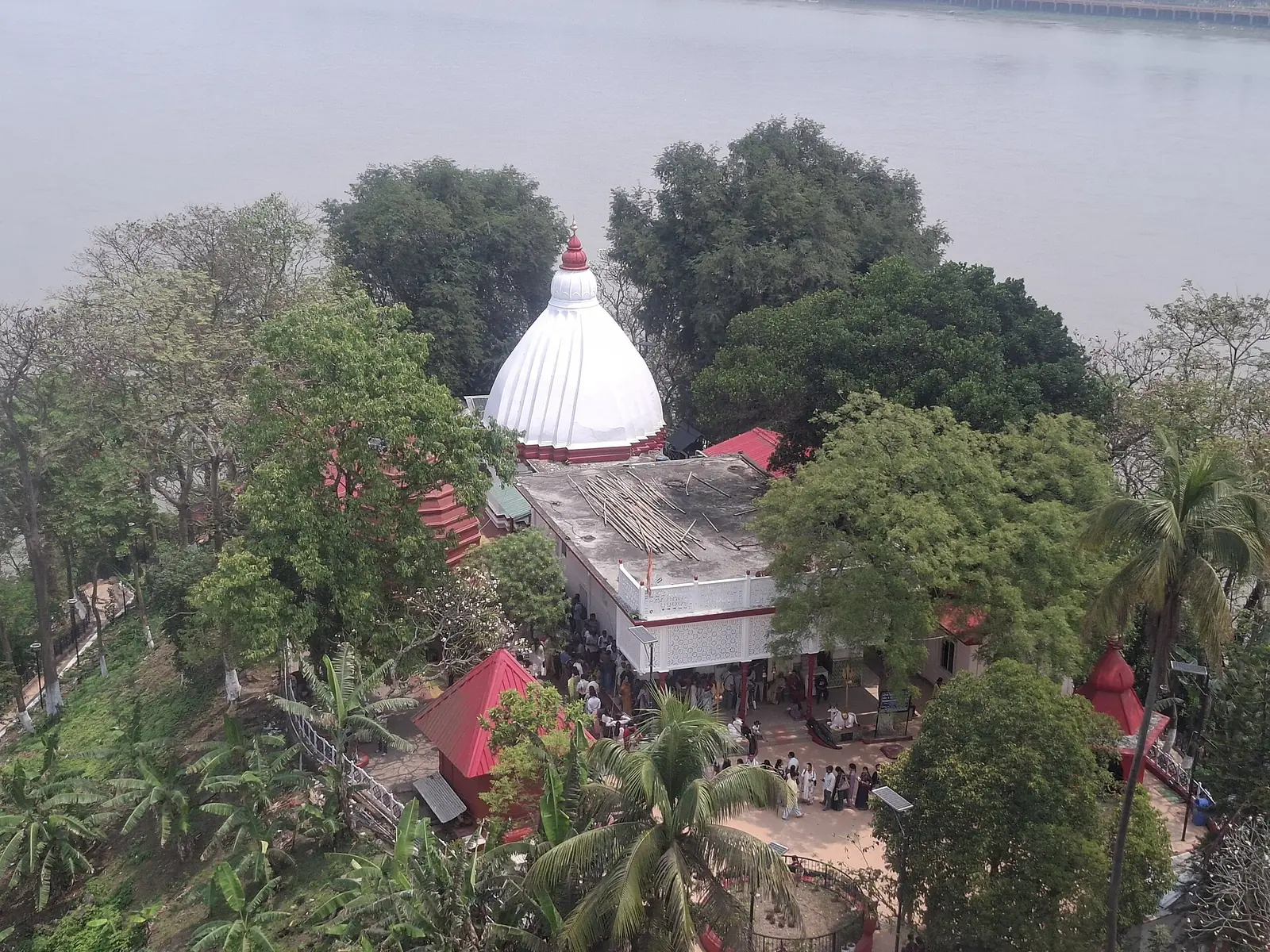
Pragjyotishpura, the city of the eastern light, appears in the Mahabharata as the kingdom of Narakasura and of his son Bhagadatta, who fought on the Kaurava side at Kurukshetra on his great elephant Supratika. The Kalika Purana places Mata Sati’s yoni-pitha on Nilachal hill above the city, where Kamakhya stands. In historical times it was a seat of the Kamarupa kings; the Chinese pilgrim Xuanzang came to the court of Bhaskaravarman around 643, and most scholars place that court here. Umananda temple on its river island, raised in 1694 by the Ahom king Gadadhar Singha, and the Navagraha temple on Chitrachal hill belong to the same sacred ground.
02Held and won back
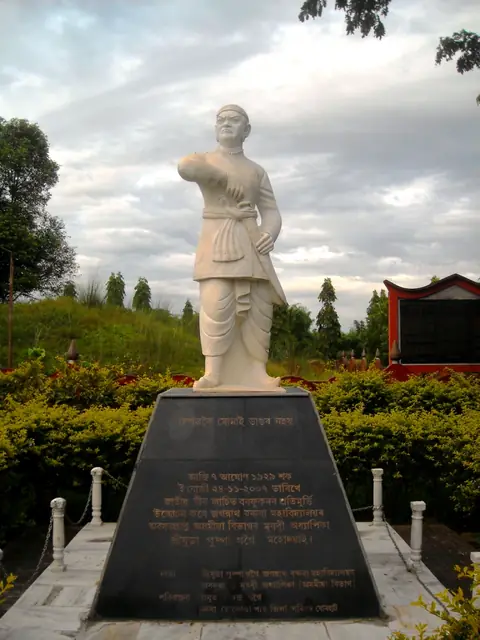
In the seventeenth century Guwahati was the frontier between the Ahoms and the Mughals. Mir Jumla’s treaty of 1663 gave it to the Mughals. In 1667 Lachit Borphukan retook it, taking Itakhuli fort in November, and in March 1671 he broke Raja Ram Singh’s fleet in the narrows at Saraighat, where the river runs between the Kamakhya and Itakhuli hills and Aswakranta. The Mughals got the city back in 1679 when the Ahom viceroy gave it up, and lost it for good to Gadadhar Singha’s army in 1682. The Burmese overran Assam in the 1810s and 1820s, and the Treaty of Yandabo in 1826 handed it to the British. Dispur, within the city, has been Assam’s capital since 1973.
The life of this place
- c. 643Xuanzang visits the court of Bhaskaravarman of Kamarupa.
- 1663By Mir Jumla’s treaty Guwahati passes to the Mughals.
- November 1667Lachit Borphukan retakes Guwahati.
- March 1671The battle of Saraighat is won on the river here.
- 1682Gadadhar Singha’s army drives the Mughals out for good.
- 1826The Treaty of Yandabo hands Assam to the British.