01Kishkindha of the vanaras
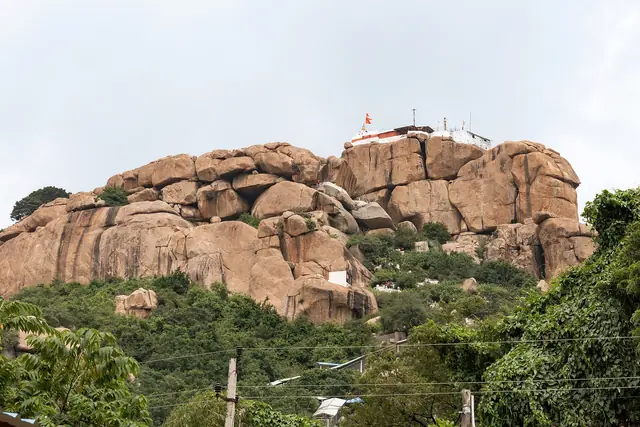
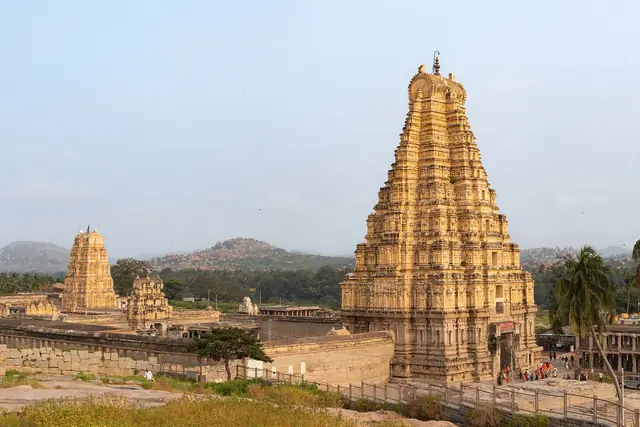
The boulder hills on both banks of the Tungabhadra are, for pilgrims, the Kishkindha of Valmiki’s Ramayana. Across from Anegondi rises Anjanadri, where tradition places the birth of Hanuman; 575 steps climb to his temple on the top. Pampa Sarovar, where Rama and Lakshmana came grieving for Sita and met Shabari’s memory, lies close by, and Rishyamukha, where Sugriva hid from Vali, is the hill above the river. In the Tungabhadra itself is the island of Nava Brindavana, with the samadhis of nine saints of the Madhva tradition.
02Before and after the city of victory
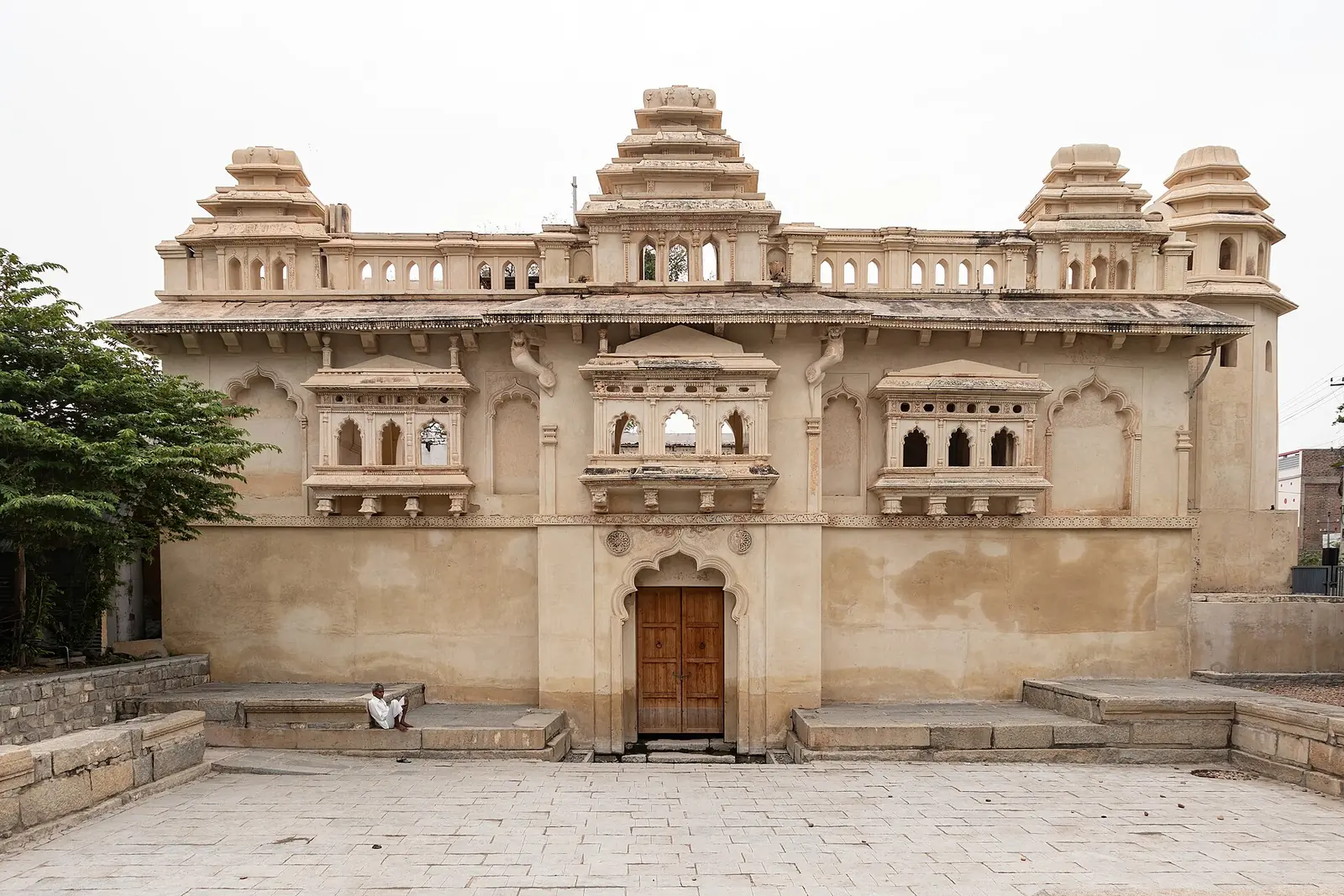
In the 1320s Anegondi was a stronghold of the small Kampili kingdom, which fell to Muhammad bin Tughluq in 1327. Harihara and Bukka, who had served Kampili, came back to these hills in the 1330s and built their new capital opposite Anegondi, on the south bank, in 1336. Anegondi became its northern bulwark. After the sack of Vijayanagara in 1565 the royal family moved south, but a branch of the line stayed here as the Rajas of Anegondi, and their descendants still keep the old palace rooms and the Gagan Mahal. Parts of the stone fort walls and gateways stand in the village.
The life of this place
- 1327Muhammad bin Tughluq destroys the Kampili kingdom, to which Anegondi belonged.
- 1336Harihara I founds Vijayanagara on the south bank, opposite Anegondi.
- 1565After Talikota the capital is sacked; a branch of the royal line remains at Anegondi.
Cross the Tungabhadra from Hampi by coracle or by the road bridge near Bukkasagara. Climb Anjanadri early in the morning, before the heat.