01Mehrgarh, the first village
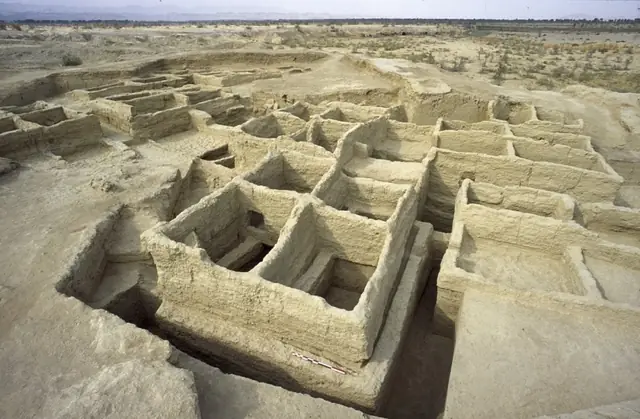
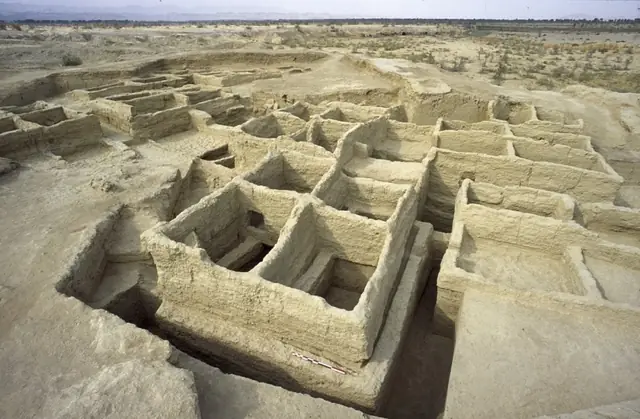
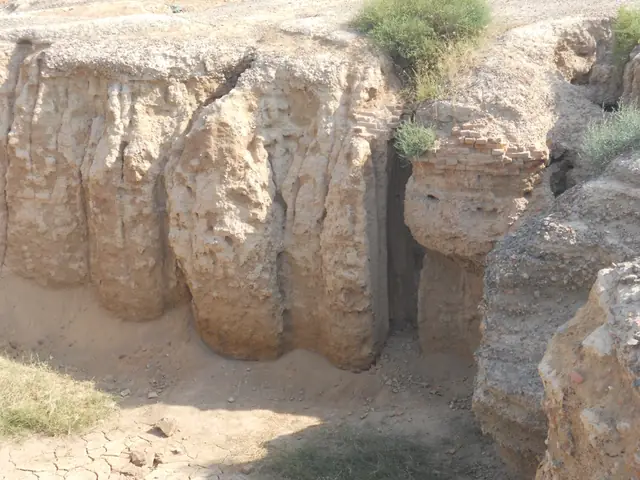
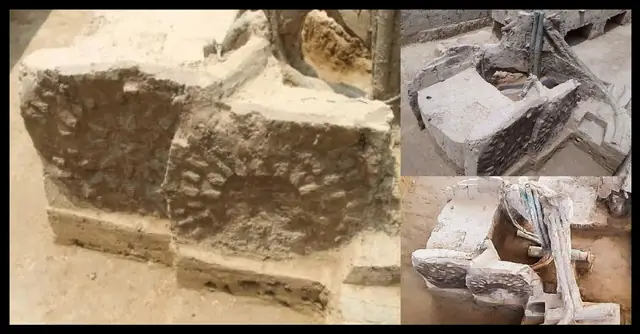
At the foot of the Bolan pass, on the Kachhi plain of Balochistan, people were growing barley and wheat and herding humped zebu cattle by about 7000 BCE. French archaeologist Jean-François Jarrige began digging Mehrgarh in 1974 and found mud-brick houses with storage rooms, burials with ornaments of shell and lapis lazuli, and, in teeth from the cemetery, small holes drilled with a bow drill: dentistry, some eight to nine thousand years ago.
Mehrgarh shows that farming in South Asia grew up here, from local roots. The village lived through thousands of years and its pottery and crafts lead straight on to the cities that came later.
02Harappa and Mohenjo-daro
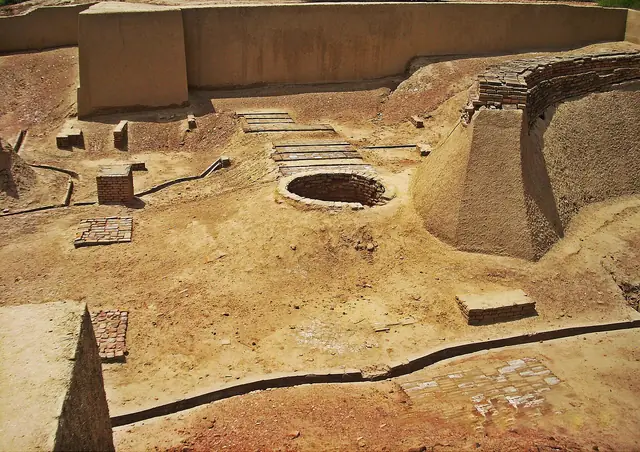
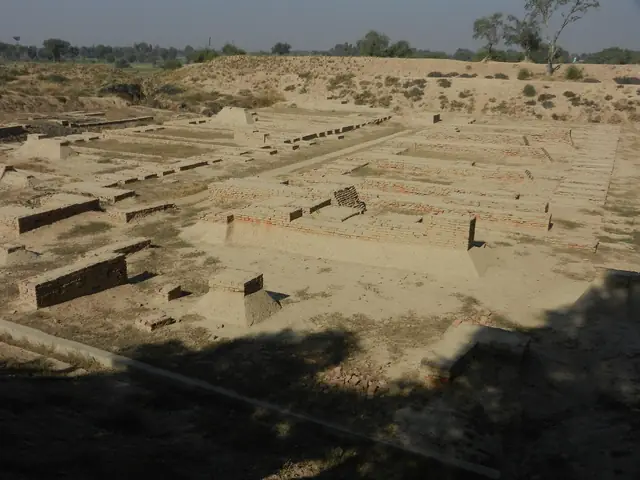
Daya Ram Sahni dug at Harappa on the Ravi in 1921; R. D. Banerji began at Mohenjo-daro on the Sindhu in 1922. What came up were planned cities: streets on a grid, houses of baked brick facing inward onto courtyards, private wells and bathrooms, and covered drains running along every lane to soak pits.
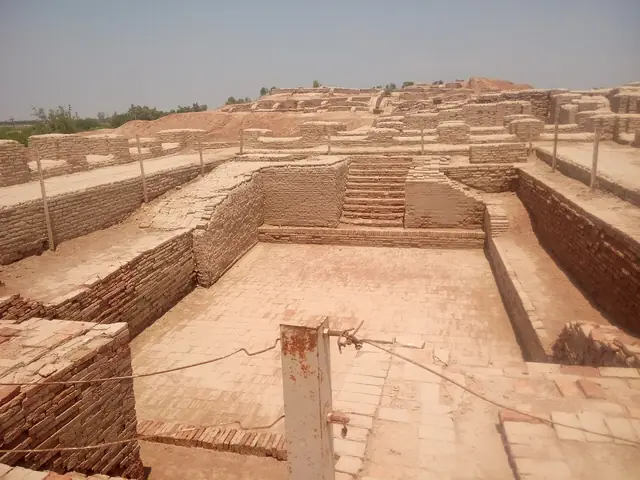
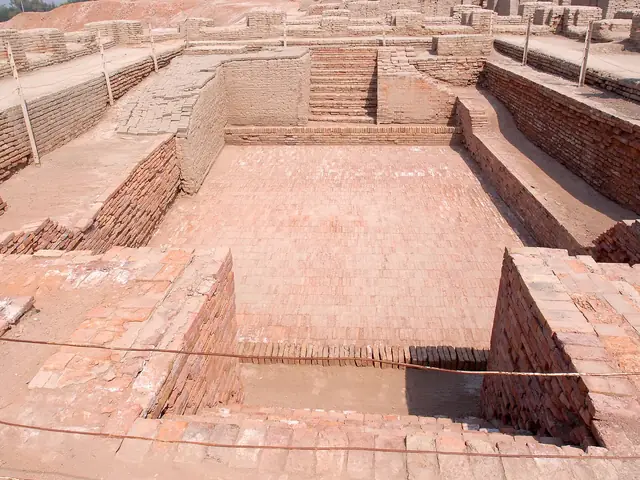
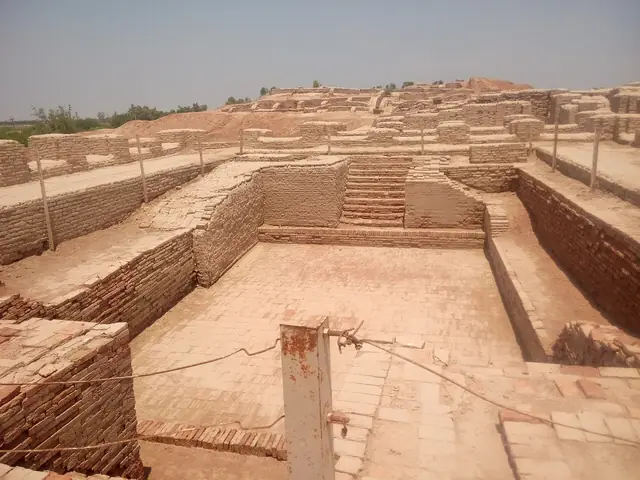
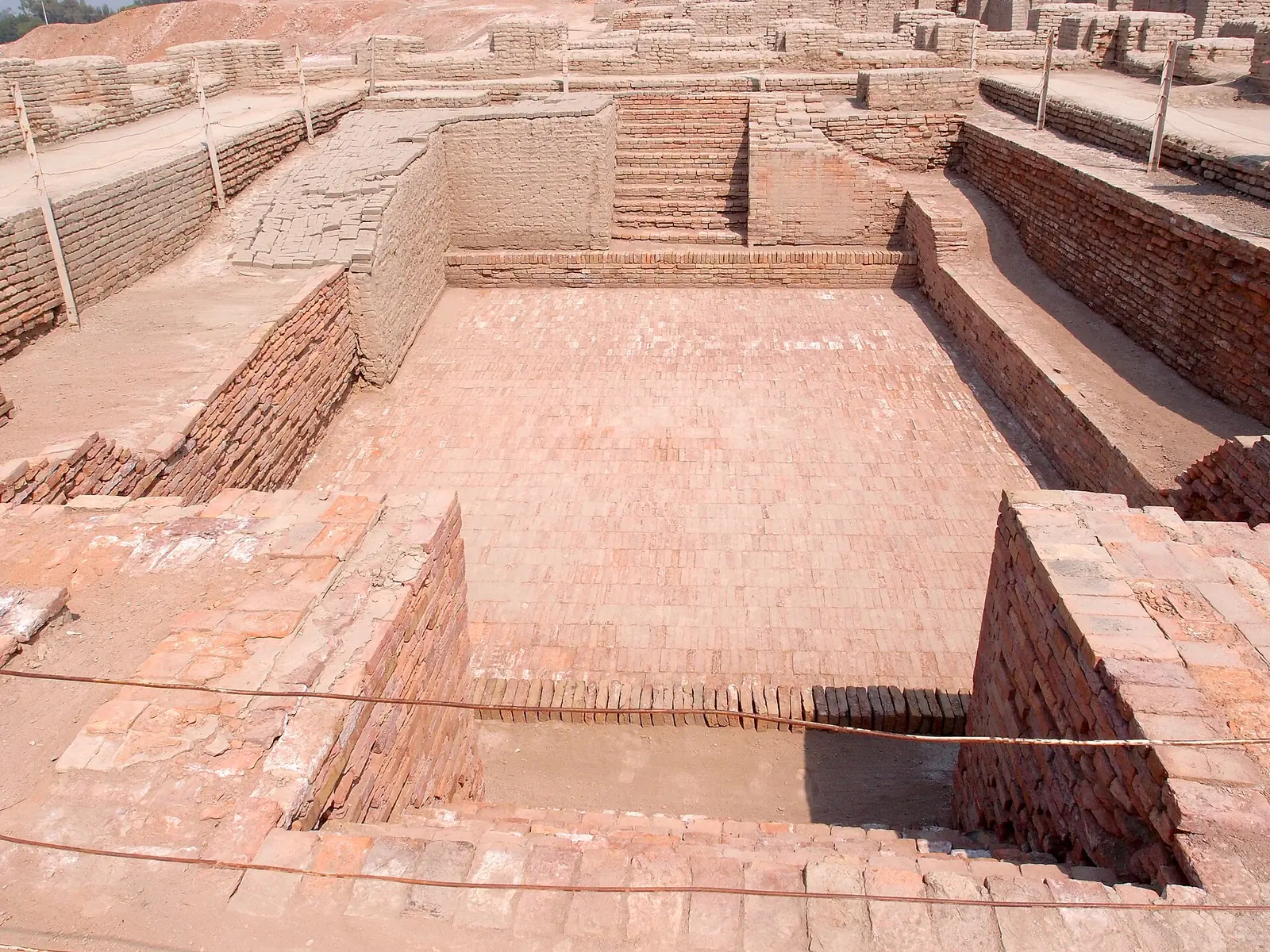
On the citadel at Mohenjo-daro sits the Great Bath, about 12 metres long and 7 wide, sunk 2.4 metres, its bricks set in gypsum and sealed with a layer of bitumen, with steps at both ends. Bathing for purity before worship remains the first act of every Hindu ritual, and the tank beside the temple is still built on the same idea.
03Dholavira in the Rann
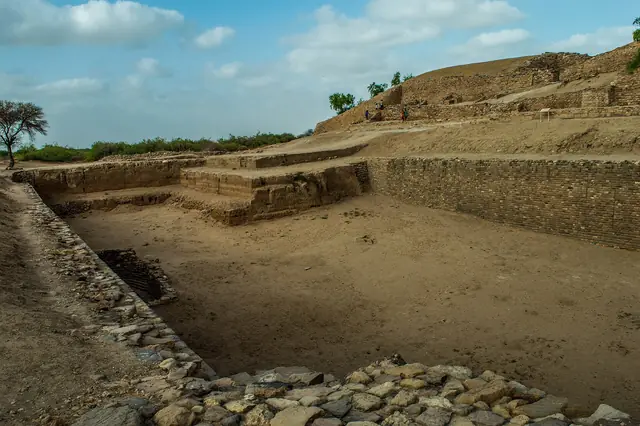
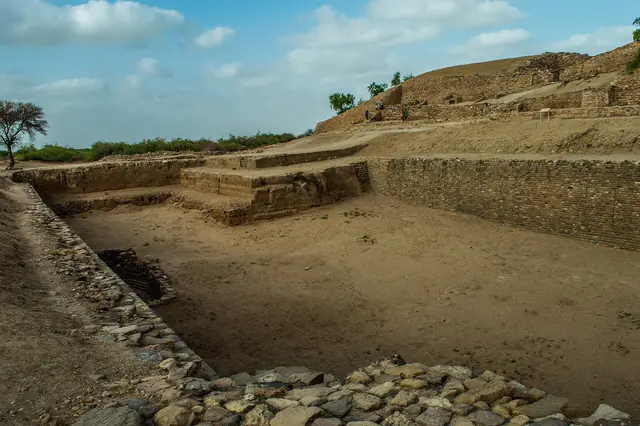
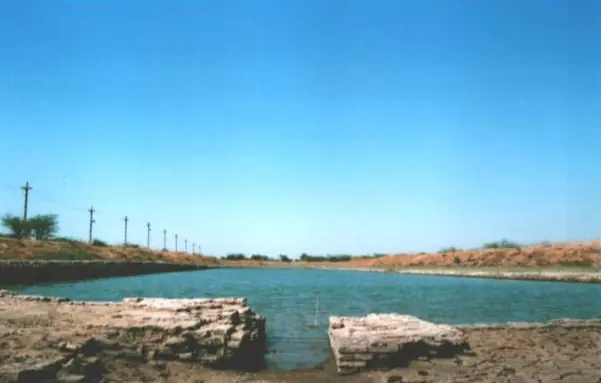
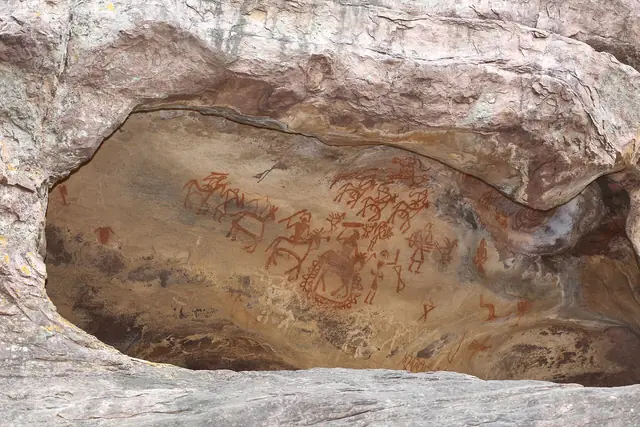
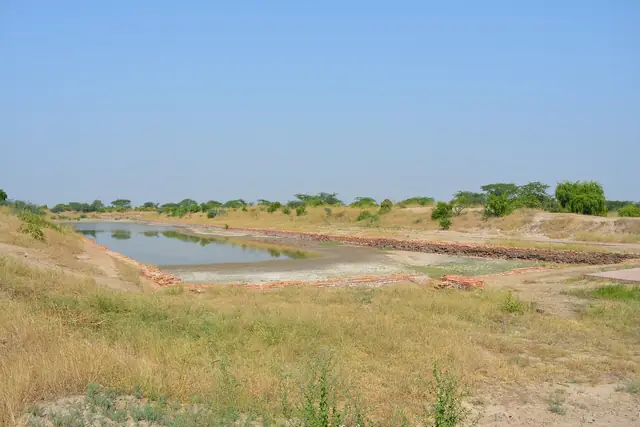
On Khadir Bet, an island in the salt desert of the Rann of Kutch, R. S. Bisht of the ASI excavated Dholavira between 1990 and 2005. The city had a citadel, a middle town and a lower town, all walled, and in a place with almost no rain it survived by catching every drop: channels and check dams on two seasonal streams fed a chain of reservoirs cut into the rock.
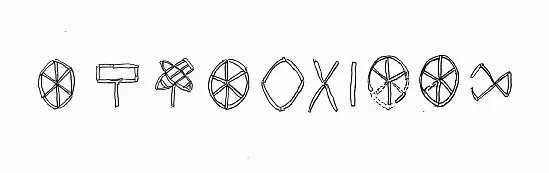
Near the north gate lay ten large signs of the Sindhu script, once set into a wooden board, the longest inscription of the civilisation, sometimes called the first signboard. Dholavira became India’s 40th World Heritage Site in 2021.
04Rakhigarhi and its genome
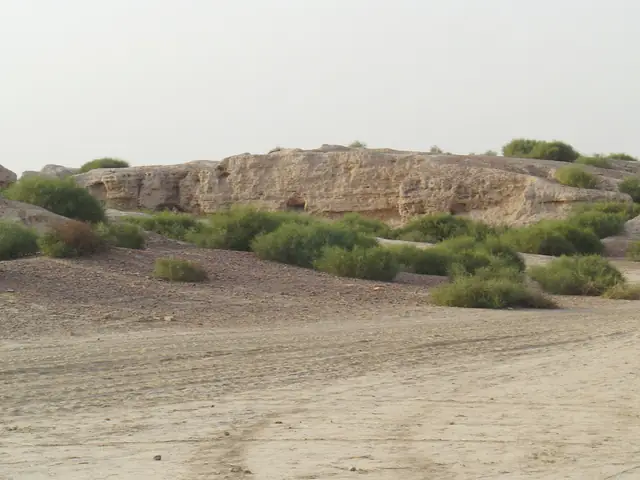
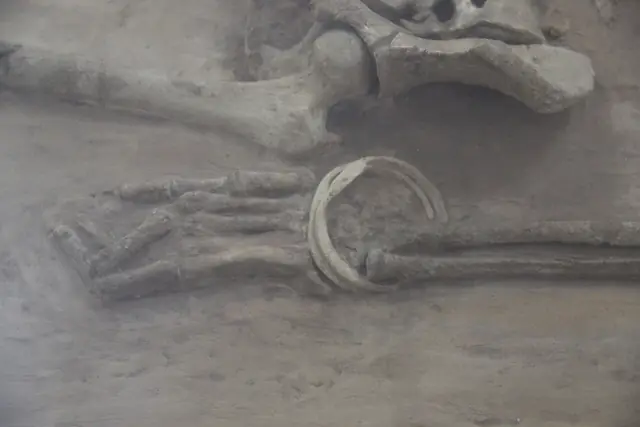
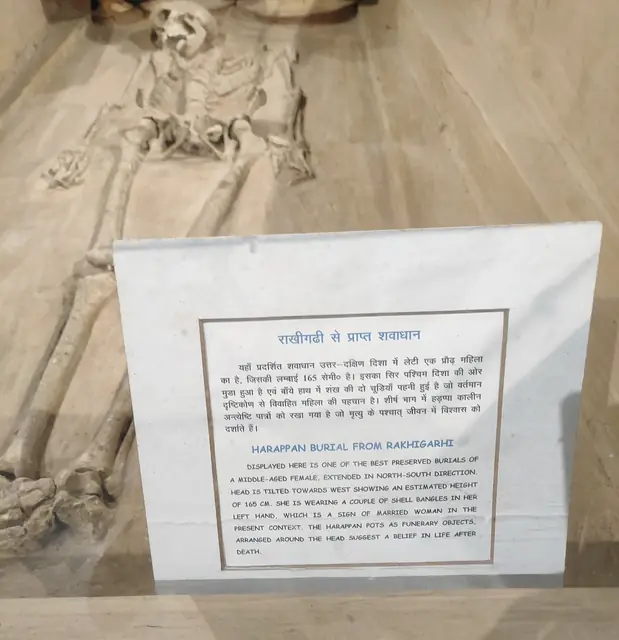
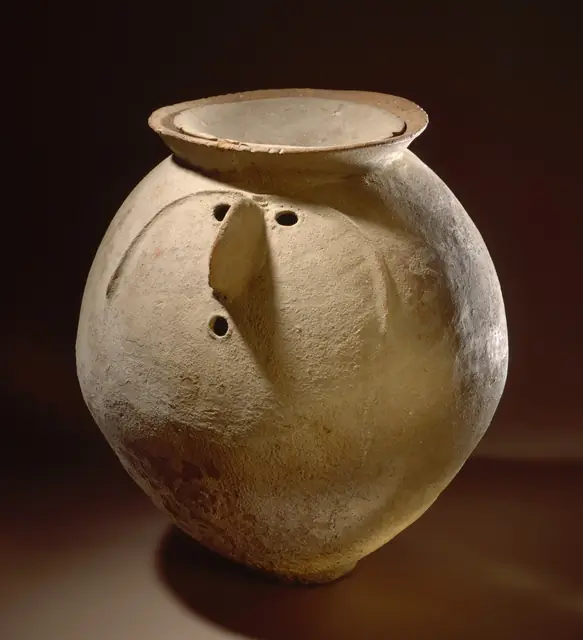
Rakhigarhi, in Hisar district of Haryana, is the largest Harappan site in India, a cluster of mounds in the old basin of the Drishadvati. Amarendra Nath of the ASI dug here from 1997, and Vasant Shinde of Deccan College from 2013. In the cemetery lay a woman, buried about 4,500 years ago with her pots beside her.
In September 2019 the journal Cell published her genome, the first ever read from a Harappan. Her ancestry came from ancient South Asian hunter-gatherers and from an Iranian-related population that had split off before farming began anywhere. She carried no ancestry from the Central Asian steppe. The study found that farming in South Asia was a local development, and that her people are the largest single source of ancestry for people in India today.
05Fire altars at Kalibangan and Lothal
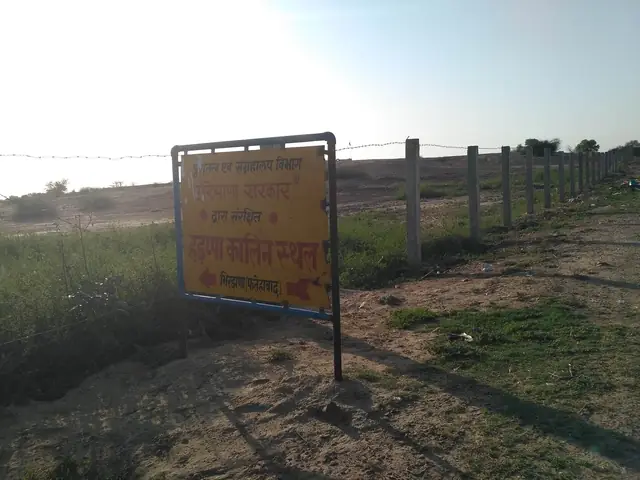
B. B. Lal and B. K. Thapar excavated Kalibangan on the Ghaggar between 1960 and 1969. On a platform of the citadel stood a row of seven rectangular fire pits, with a well and a bathing pavement close by; more pits turned up inside houses in the lower town. Similar fire altars came up at Lothal and at Banawali.
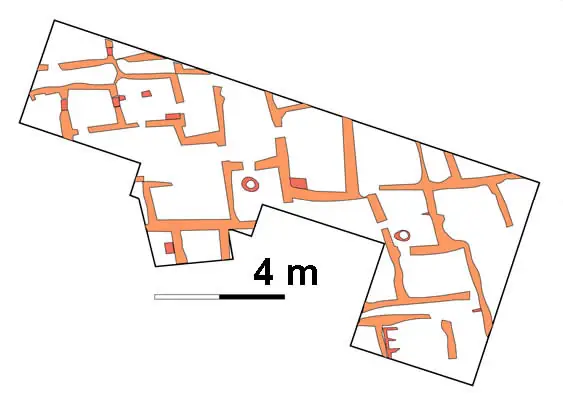
Outside the walls of Kalibangan lay something older still: a ploughed field from about 2800 BCE, its furrows criss-crossing in a grid. Farmers in the area still sow two crops that way, one in each direction. Lothal in Gujarat, dug by S. R. Rao from 1955, had a large brick basin that he identified as a dockyard, a bead factory and a warehouse.
06Faith, seals and an unread script
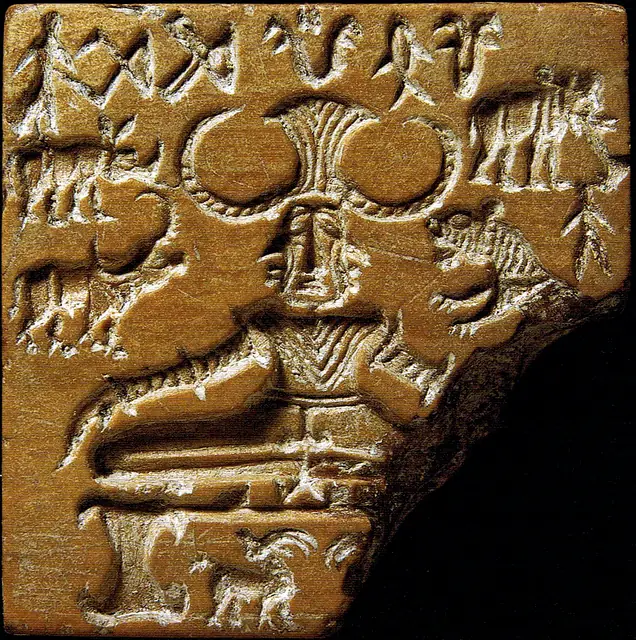
Some 4,000 inscribed objects carry the Sindhu script, short lines of about 400 signs, and it has not been read. The seals speak in pictures. One from Mohenjo-daro shows a figure seated in a yogic posture, heels pressed together, surrounded by an elephant, a tiger, a rhinoceros and a buffalo; many see in it Pashupati, lord of the animals. Others show a horned figure standing inside a pipal tree, and the swastika.
Terracotta figures fold their hands in namaste. Women wore stacks of bangles of shell and clay. The pipal leaf appears on pots. None of this needs a deciphered word to be recognised by a Hindu today.
07Meluhha: trade across the sea
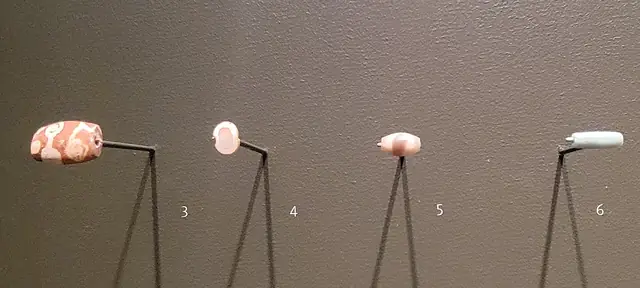
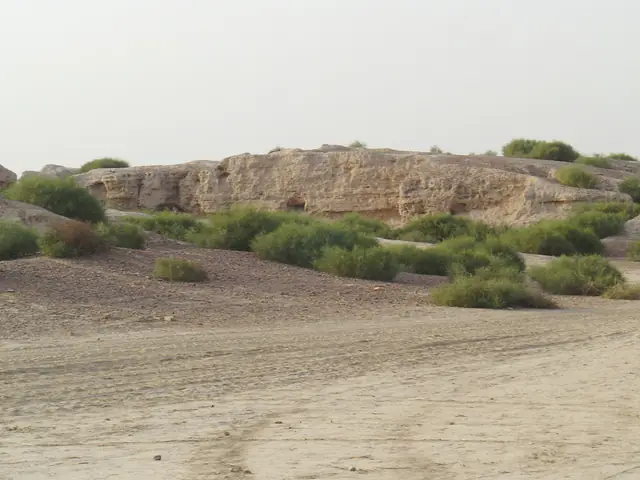
Mesopotamian tablets call a land to the east Meluhha, and Sargon of Akkad, around 2300 BCE, boasted that ships from Meluhha moored at his capital. Carnelian beads etched with white patterns, a Sindhu speciality, turn up in the royal tombs of Ur; square Sindhu-style seals turn up in the Gulf. An outpost at Shortugai on the Amu Darya in Afghanistan traded in lapis lazuli.
Trade ran on standard weights, cubes of chert in a fixed series, doubling at first and then multiplied by ten. Craftsmen at Chanhudaro and Lothal drilled long carnelian beads with stone drills. Cotton was spun and woven here early; threads have been found on a copper bead from Mehrgarh.
08Craft, measure and bronze
Bricks across the whole civilisation kept the same proportion, 1 : 2 : 4, whether the city was in Sindh, Punjab or Gujarat. Rulers of shell from Mohenjo-daro and of ivory from Lothal are finely divided. The small bronze girl from Mohenjo-daro, one hand on her hip and an arm full of bangles, was cast by the lost-wax method that the bronze casters of Swamimalai still use for temple murtis.
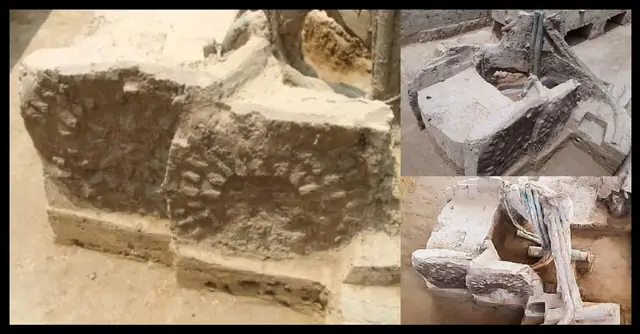
The steatite bust of a bearded man in a trefoil-patterned shawl, called the priest-king, came from the same city. Toy bullock carts of clay from the Harappan towns look like the carts still seen on village roads in Punjab and Sindh.
09When the Sarasvati dried
The Rigveda praises a Sarasvati that ran from the mountains to the sea. The Mahabharata, in the Shalya Parva, follows Balarama on a pilgrimage along its banks and names Vinashana, the place where the river vanishes into the sand. On the ground, the dry bed of the Ghaggar-Hakra runs through Haryana, Rajasthan and Cholistan, and more Harappan sites lie along it than along the Sindhu.
Geologists and satellite studies show the river lost its glacier-fed waters, as the Sutlej and Yamuna moved away, and a weakening monsoon after about 2200 BCE dried it further. The great cities thinned out between about 1900 and 1300 BCE. People did not vanish; they moved east into the Ganga-Yamuna doab and south into Gujarat, and kept their crafts.
10The invasion theory and the evidence
In the nineteenth century, colonial scholars built the “Aryan invasion” theory: that outsiders swept in, conquered a dark-skinned native people and brought the Vedas with them. When the cities were found, Mortimer Wheeler in 1947 blamed Indra for their fall, pointing to skeletons at Mohenjo-daro. In 1964 the archaeologist George Dales showed those skeletons came from different levels and different times; there was no massacre and no layer of conquest.
The evidence points the other way: fire altars, ploughing patterns, weights, bangles and yogic postures carry on into later Bharat, and the Rakhigarhi genome shows the Harappans as ancestors of most South Asians. Genetic studies also detect a smaller inflow of Central Asian ancestry in the second millennium BCE; it left no burnt cities behind.
What survives today
- Dholavira, a World Heritage Site in Kutch, with its reservoirs and the site museum
- Lothal’s brick basin and the ASI museum beside it, near Ahmedabad
- Rakhigarhi’s mounds in Hisar, Haryana, still being excavated
- The bronze girl of Mohenjo-daro in the National Museum, New Delhi
- Kalibangan’s citadel and fire altars, with a small museum, in Hanumangarh, Rajasthan
- Shell bangles, the namaste and the swastika, in daily use in Hindu homes
- The criss-cross sowing of two crops in one field, as at Kalibangan