01The mound of the dead
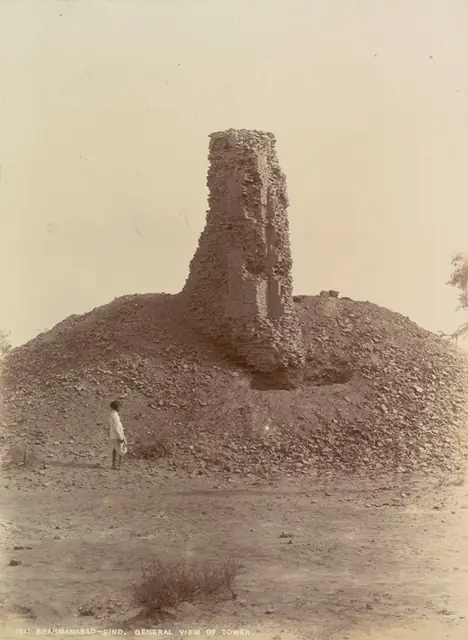
The Sindhi name means the mound of the dead. R. D. Banerji came to it in 1922 looking at the Kushan-era stupa on its top, and found seals below it like those found at Harappa. In September 1924 John Marshall told the world that a civilisation as old as Sumer had been found in the Sindhu valley. Excavation ran through the 1920s under Marshall, Vats and Mackay. The city covered some 250 hectares: a raised citadel to the west, a lower town of blocks cut by straight streets, houses with wells and bathrooms, and drains of baked brick running under the lanes. Perhaps forty thousand people lived here.
02Bath, seal and the false massacre
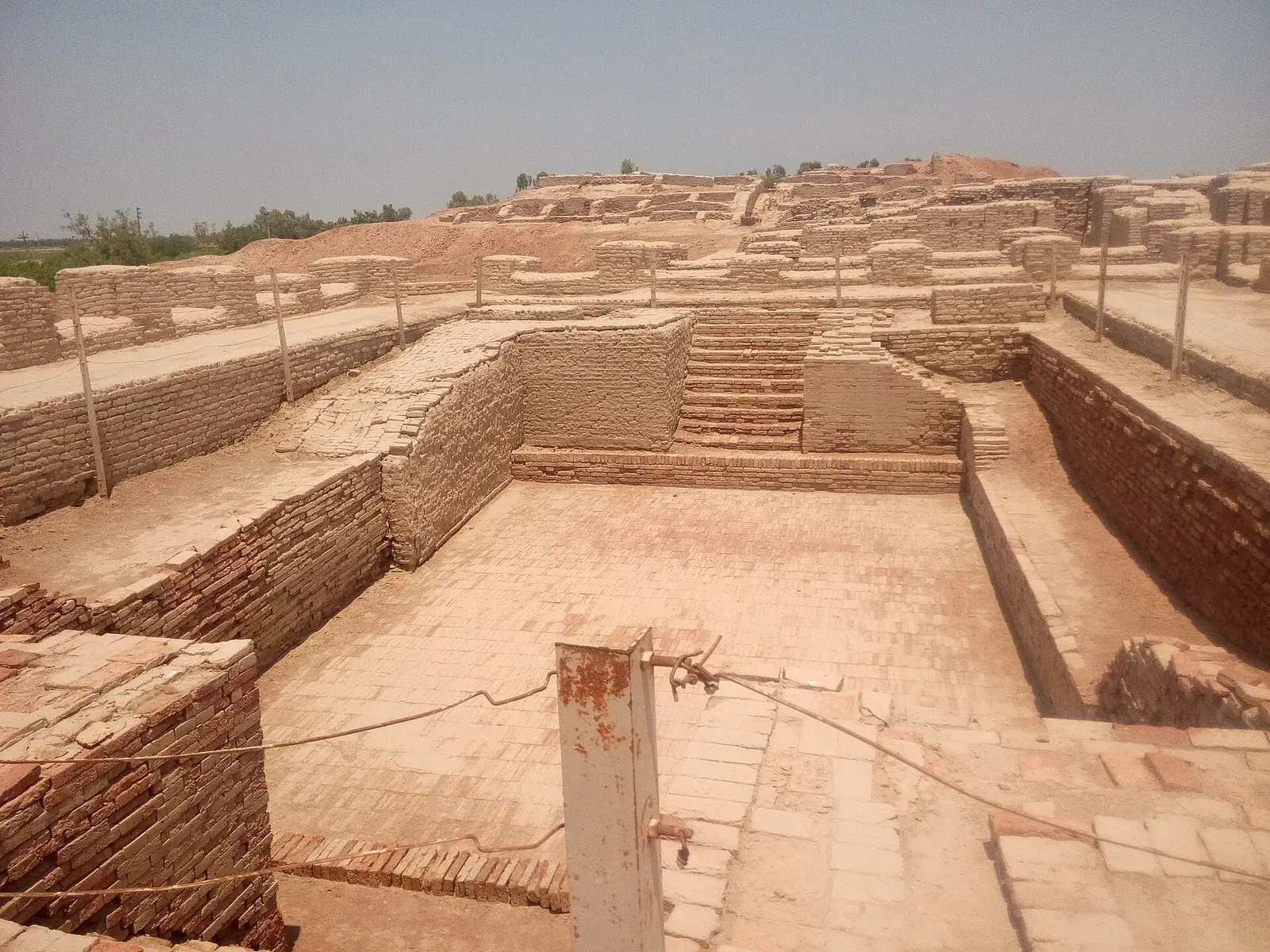
The Great Bath on the citadel is a tank about 12 by 7 metres and 2.4 metres deep, its bricks set in gypsum and sealed with bitumen, with steps down at both ends and rooms around it. Many see in it the first sacred bath of Bharat, a forerunner of the temple kund. The seal of a seated yogi among animals, the bronze dancing girl and the stone ‘priest-king’ came from these streets. In 1947 Mortimer Wheeler took a few skeletons in the upper levels as victims of an invading Aryan army, and wrote that ‘Indra stands accused’. George Dales showed in 1964 that the bones came from different periods and that no massacre had happened. The city faded as rivers shifted after c. 1900 BCE.
The life of this place
- c. 2500 BCEThe planned city of baked brick is at its height.
- after c. 1900 BCEThe city declines and is abandoned.
- 1922R. D. Banerji identifies the site and finds Harappan seals.
- September 1924John Marshall announces the discovery of the Indus civilisation.
- 1964George Dales disproves Wheeler’s ‘massacre’.
- 1980Inscribed as a UNESCO World Heritage Site.
28 km south of Larkana in Sindh, with a site museum. The dancing girl is in the National Museum, New Delhi; the priest-king is in Karachi.