01Bricks for a railway
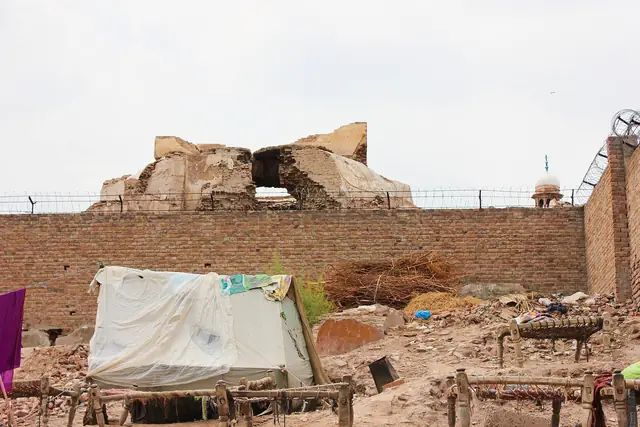
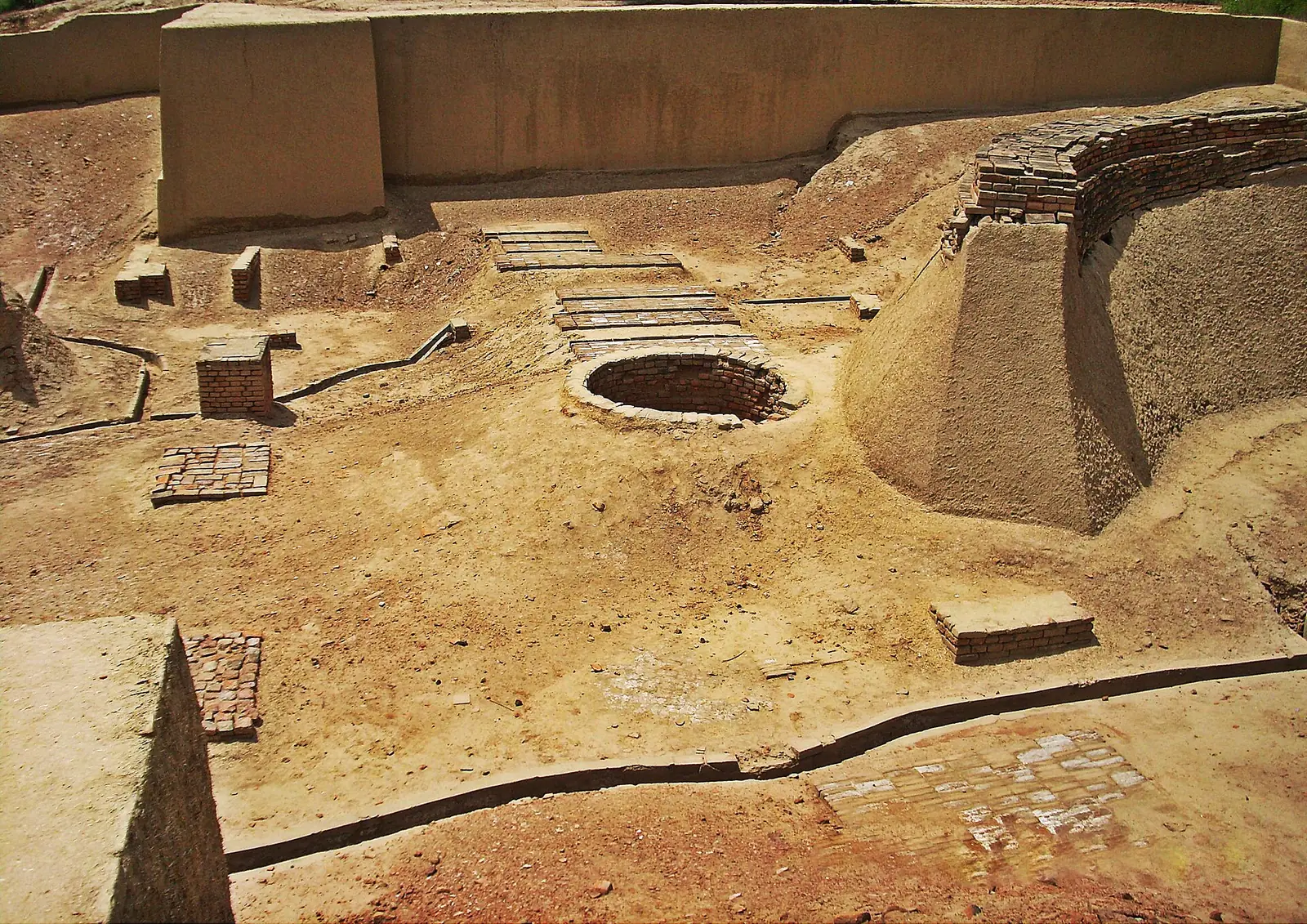
Charles Masson passed Harappa in the 1820s and saw a ruined brick castle. Alexander Cunningham came in 1853 and 1856, and in 1872–73 picked up a seal with an animal and signs no one could read. By then the mounds had been robbed: in 1856 the contractors building the Lahore–Multan railway carted away baked bricks for track ballast, along nearly 150 km of line. In 1921 Daya Ram Sahni began proper excavation, and M. S. Vats carried it on for a decade. Together with Banerji’s finds at Mohenjo-daro this showed one civilisation spread from the Sindhu to the Sarasvati, which for a long time was named after Harappa.
02Two thousand years of a city
Harappa was lived in far longer than its fame suggests. The joint American–Pakistani project working here since 1986 has traced a village of the Ravi phase from c. 3300 BCE, a walled city of the mature period with gateways, workshops for beads and shell, and rows of small houses near large working platforms. A cemetery of the mature period lies south of the citadel. After c. 1900 BCE came the Cemetery H people, who buried their dead in painted jars and kept the city alive in a smaller way until c. 1300 BCE. The script found on its seals is still unread.
The life of this place
- c. 3300 BCEThe first Ravi-phase village is settled.
- c. 2600–1900 BCEThe mature walled city flourishes.
- 1856Railway contractors carry off the ancient bricks for ballast.
- 1872–73Cunningham publishes the first Harappan seal.
- 1921Daya Ram Sahni begins excavation.
- 1986The Harappa Archaeological Research Project begins its work.
About 24 km west of Sahiwal, with a site museum. For Indian readers the nearest Harappan cities to see are Rakhigarhi, Kalibangan and Lothal.