01The dock and the warehouse
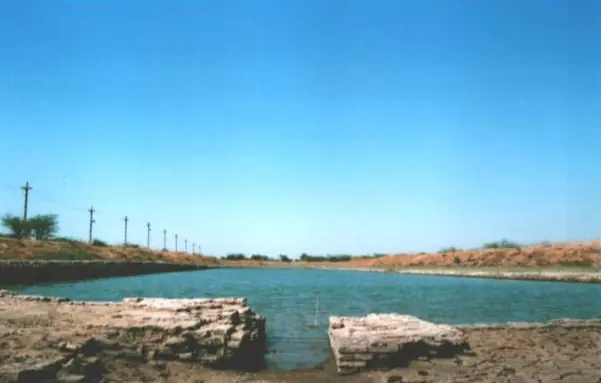
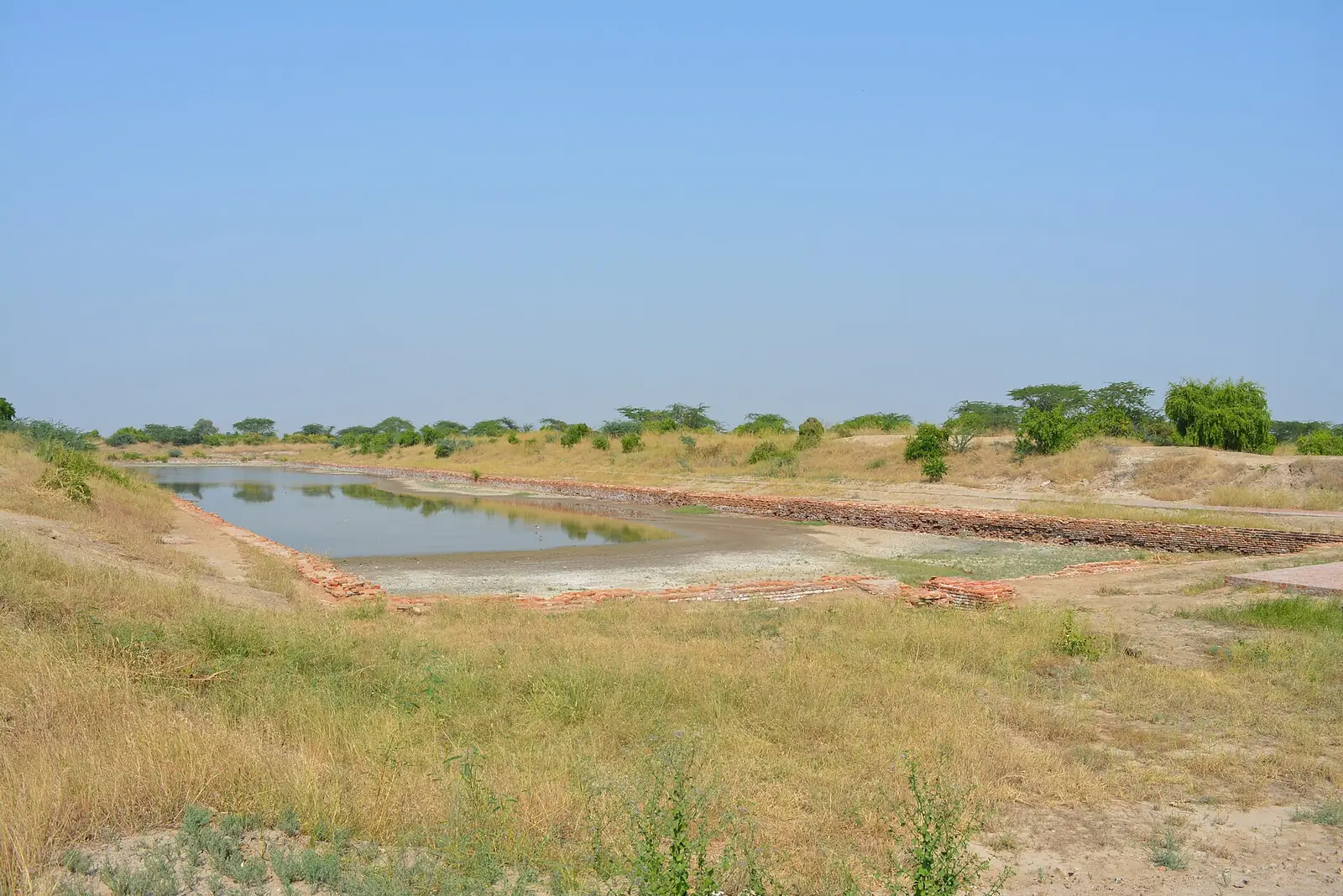
S. R. Rao of the Archaeological Survey found the mound in 1954 and excavated it from 1955 to 1960. On the east side lies a rectangular basin of burnt brick, about 220 metres long, with an inlet channel and a spillway, which Rao read as a tidal dock linked by an old channel of the Sabarmati to the sea. Some scholars have argued it was a water tank; Rao’s reading, supported by marine finds and the town’s warehouse beside it, remains the standard one. The warehouse stood on a high brick platform, and in its ashes were found clay sealings with the impressions of the bales they once closed.
02Beads, altars and the Gulf seal
Lothal had a bead factory where carnelian and agate were drilled with fine borers, a coppersmith’s workshop, and a lower town of houses with bathing platforms and drains. Rao found fire altars in the houses and a row of them on the acropolis, and a round button seal of the Persian Gulf type, the mark of trade across the Arabian Sea. A site museum keeps the finds. The National Maritime Heritage Complex is being built beside the site.
The life of this place
- c. 2400 BCEHarappan town and dock built.
- 1954 CES. R. Rao discovers the site.
- 1955–60ASI excavation under S. R. Rao.
Saragwala village, Ahmedabad district, about 80 km south-west of Ahmedabad; museum closed on Fridays.