01The bead-makers’ town
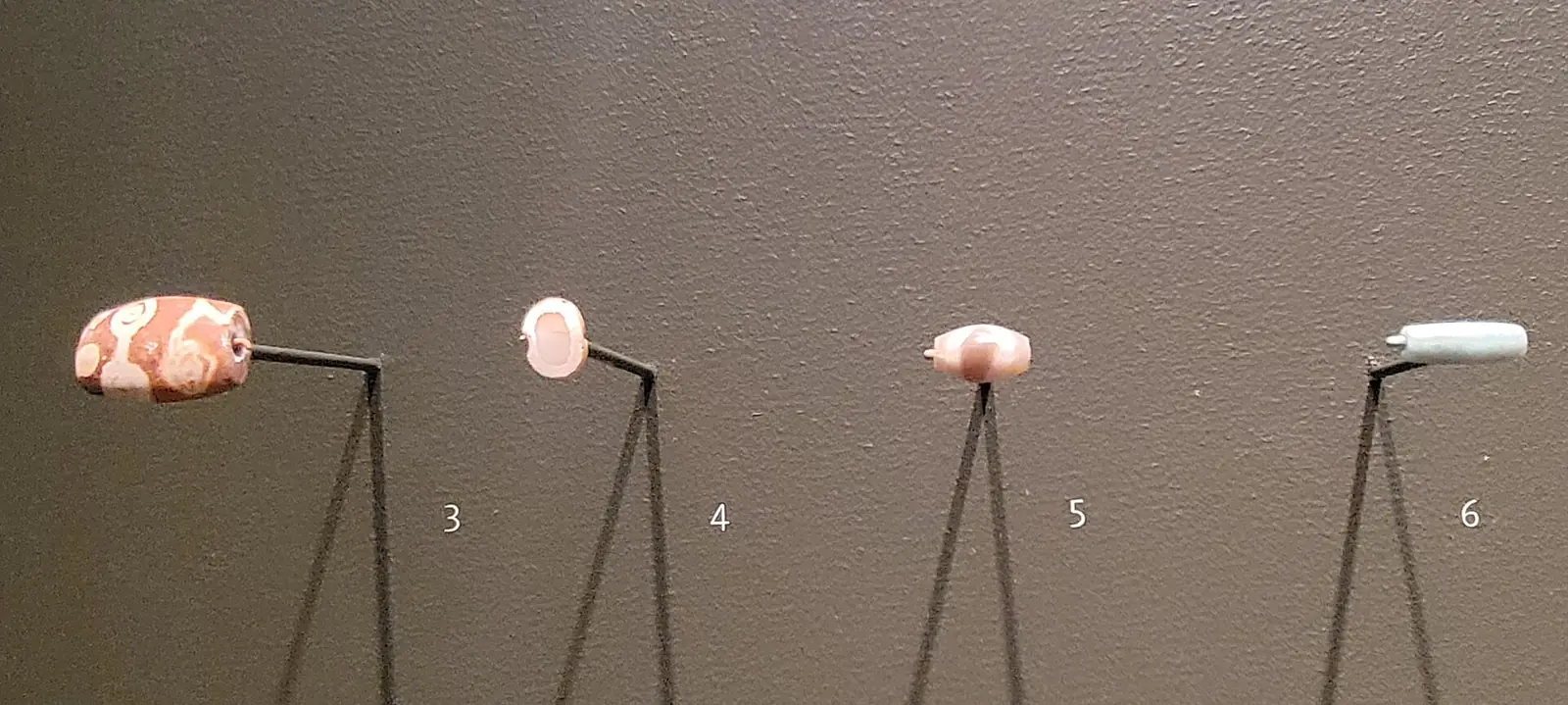
N. G. Majumdar of the Archaeological Survey found Chanhudaro in 1931, and Ernest Mackay excavated it in 1935–36 for the American School of Indic and Iranian Studies and the Boston Museum of Fine Arts. He found a town of baked-brick houses and drains like Mohenjo-daro’s, but no raised citadel. What made it remarkable was its industry: one building held carnelian, agate and amethyst in every stage of working, with the hard stone drills used to bore beads up to ten centimetres long, and there were workshops for seals, shell bangles, weights and copper tools.
02After the Harappans
Above the Harappan town Mackay found the remains of later people, named the Jhukar and Jhangar cultures after other Sindh sites, with their own pottery and round stamp seals. They show that life went on in the Indus plain after the great cities emptied, on a smaller scale. Chanhudaro was flooded more than once, and the layers of silt between its towns record the river’s moods. The mounds lie about 130 km south of Mohenjo-daro; little is visible above ground.
The life of this place
- c. 2600 BCEThe Harappan craft town is founded.
- 1931N. G. Majumdar discovers and tests the site.
- 1935–36Ernest Mackay excavates the workshops.