01A city that saved every drop
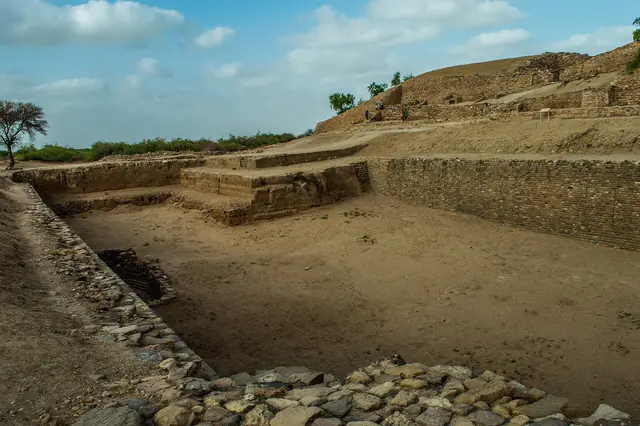
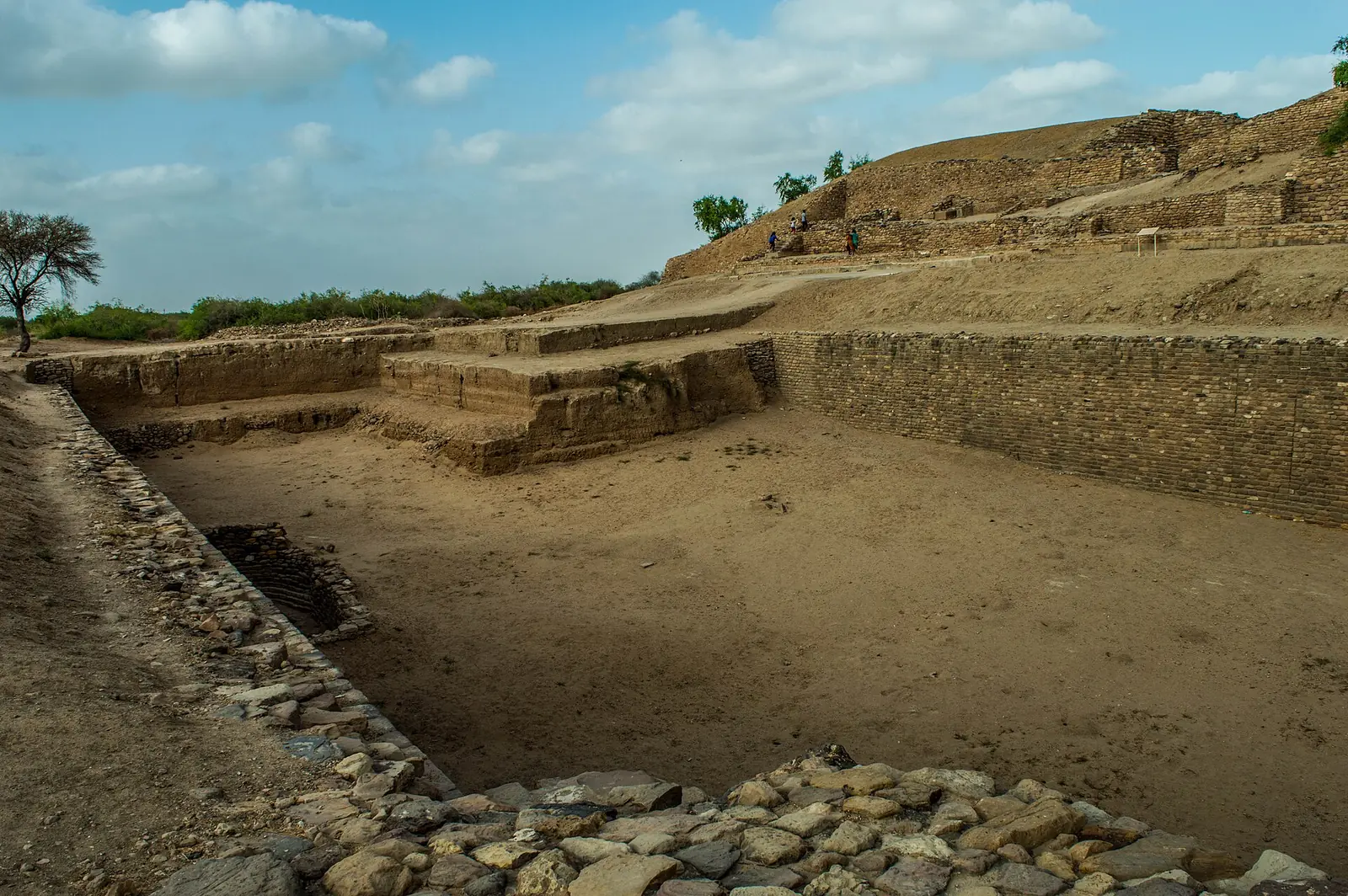
Kutch gets little rain, and Dholavira’s builders planned for it. They dammed the two seasonal streams, Mansar and Manhar, that flank the city and led their water into a chain of reservoirs cut into the rock and lined with stone, some over 7 metres deep, which ring the walled town. Inside the outer walls lie the castle, a bailey, a middle town and a lower town, each with its own walls and gates, and a large open ground that may have been for gatherings and festivals.
02Bisht’s excavations
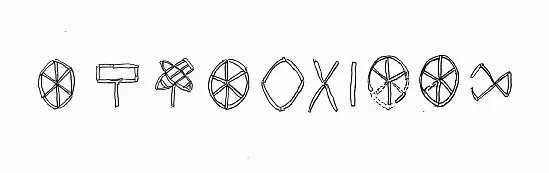
J. P. Joshi of the Archaeological Survey found the site in 1967–68. R. S. Bisht excavated it for thirteen seasons from 1990 to 2005. At the north gate of the castle he found ten Indus signs, each about 37 cm tall, made of white gypsum pieces once set into a wooden board that had fallen face down: one of the longest Indus inscriptions known, and still unread. On 27 July 2021 UNESCO inscribed "Dholavira: a Harappan City" on the World Heritage List, the first Sindhu–Sarasvati site in India to be listed.
The life of this place
- 1967–68J. P. Joshi discovers the site.
- 1990–2005ASI excavation under R. S. Bisht; the signboard found.
- 27 July 2021Inscribed as a UNESCO World Heritage Site.
Khadir Bet, Kutch, about 250 km from Bhuj; go between November and February, and stay for the white Rann at sunset.