Cite
MLA
“Brahmagupta’s rules for zero and debts.” Hindu History, 2026, https://www.hinduhistory.in/vijnana/brahmagupta-zero-negatives/. Accessed .
APA
Hindu History. (2026). Brahmagupta’s rules for zero and debts. Retrieved , from https://www.hinduhistory.in/vijnana/brahmagupta-zero-negatives/
01Dhana, rina and shunya
Brahmagupta finished the Brahmasphutasiddhanta in 628 CE, when he was 30, in the reign of the Chapa king Vyaghramukha. Chapter 18, on algebra, opens with rules for dhana (a fortune, positive), rina (a debt, negative) and shunya. A debt minus zero is a debt; zero minus a debt is a fortune; the product of two debts is a fortune; a number multiplied by zero is zero. These are the rules children still learn, written as verses.
02Where he went wrong
Brahmagupta also tried to divide by zero. He wrote that zero divided by zero is zero, and left a number divided by zero as a fraction with zero below, without a value. Five centuries later Bhaskara II called such a quantity khahara and said it is unchanged by adding or taking away, close to the modern idea of infinity, though still not quite right. The honest account gives Brahmagupta credit for the rules that hold and notes the one that does not.
03To Baghdad
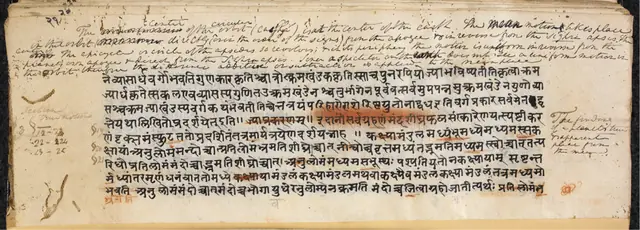
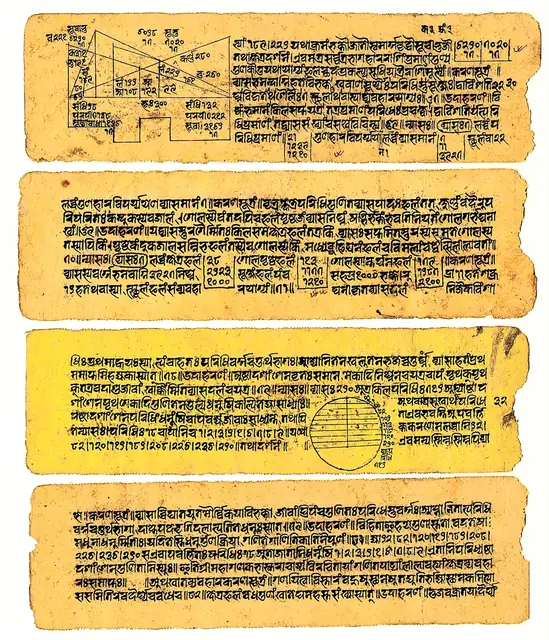
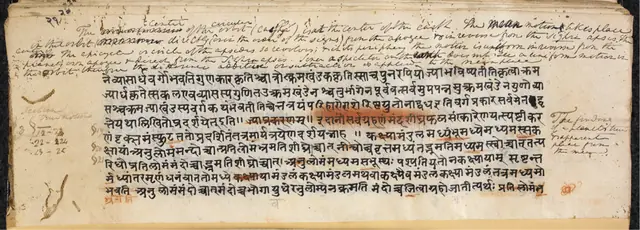
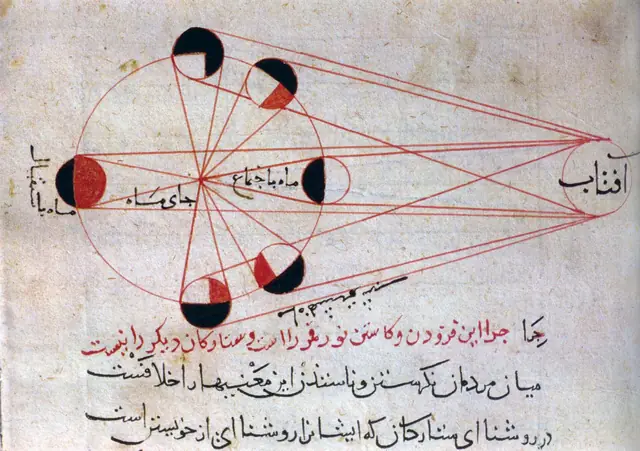
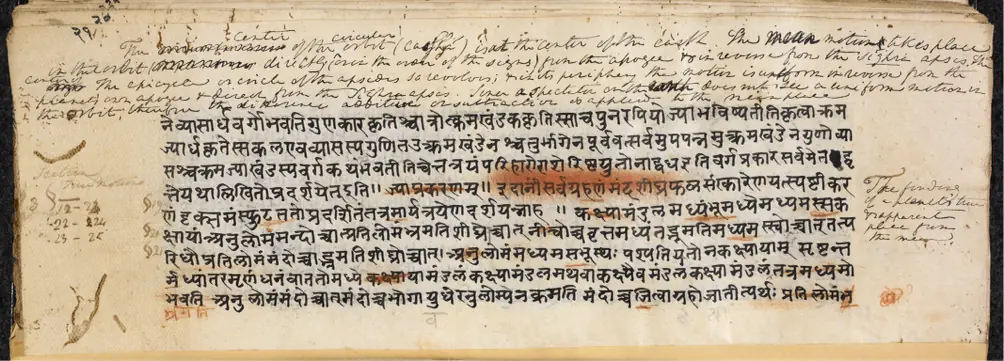
An Indian astronomer came to the court of Caliph al-Mansur in the 770s with a Siddhanta, and Muhammad al-Fazari turned it into Arabic as the Zij al-Sindhind; historians generally identify it with Brahmagupta’s work. Brahmagupta’s Khandakhadyaka became the Arabic al-Arkand. Al-Biruni later read Brahmagupta closely and quoted him at length. Prithudakasvamin’s commentary of the 9th century keeps the text in India, and a copy of it is in the British Library.
In the texts
- Brahmasphutasiddhanta, ch. 18
- Khandakhadyaka