01Kallar and the bull coins
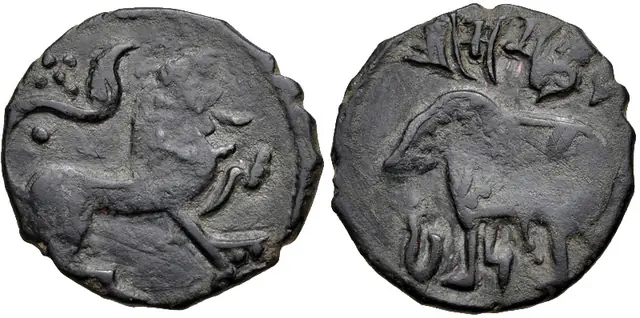
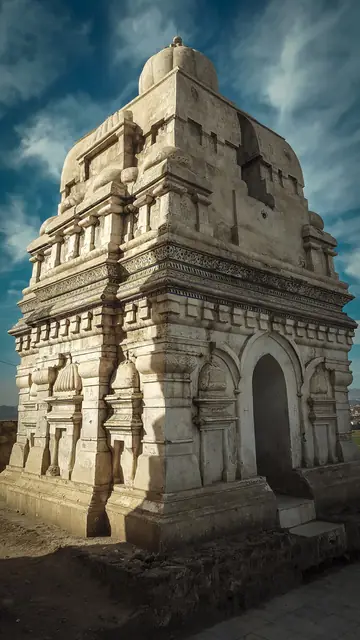
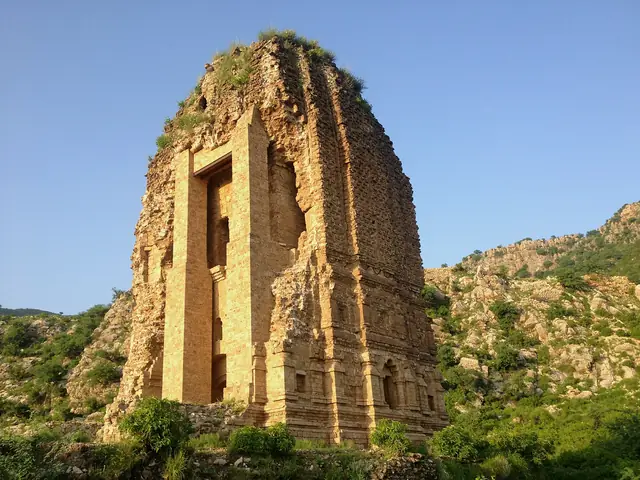
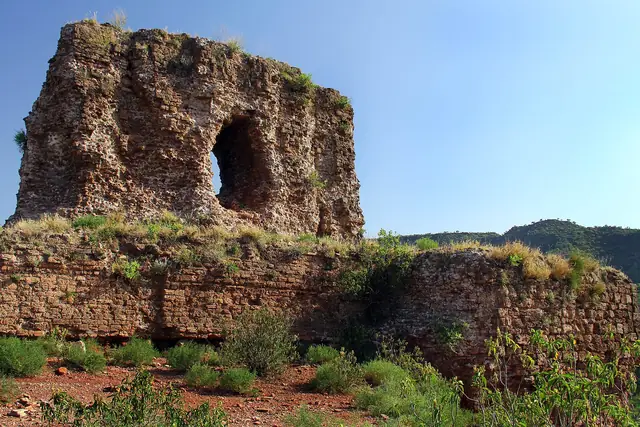
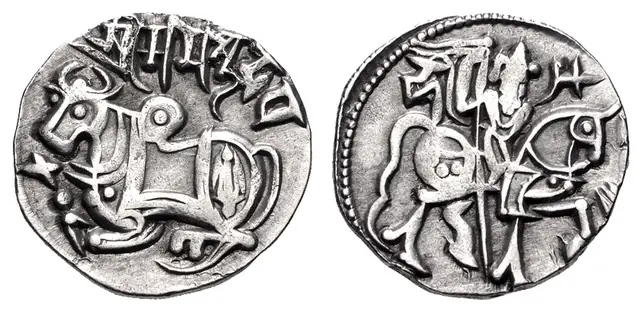
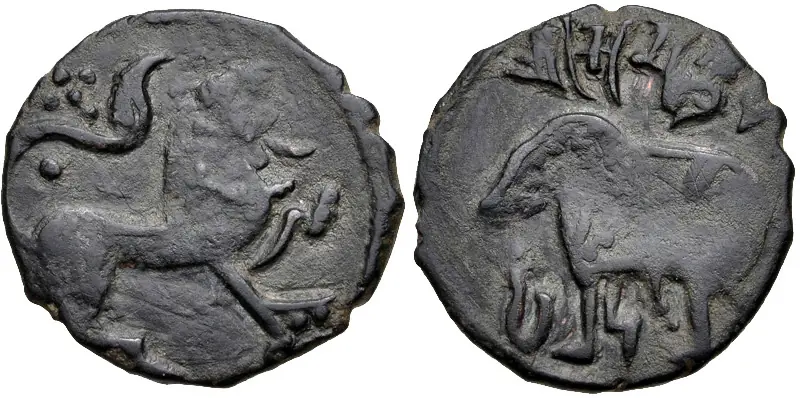
Al-Biruni, who learned their history at Ghazni, says the last of the Turk Shahis of Kabul was deposed by his Brahmin minister Kallar, who founded a new line. Their silver coins, with Nandi recumbent on one side and a horseman on the other, carry the name Shri Samantadeva and were struck for so long and copied so widely that they became the common coin of the north-west. Kabul was lost in the late ninth century, and the capital moved east to Udabhandapura, now Hund, at the crossing of the Indus. The temples of the Salt Range at Amb and Kafirkot belong to their age.
02Jayapala and Anandapala
Bhimadeva’s granddaughter Didda became queen of Kashmir, and Kalhana records the Bhimakeshava temple he built there. Jayapala, who ruled from about 964, faced Sabuktigin of Ghazni and then his son Mahmud. On 27 November 1001 Mahmud defeated him near Peshawar and took him prisoner. Al-Utbi, Mahmud’s secretary, writes that after his release Jayapala, feeling the disgrace of defeat, gave the kingdom to his son and burned himself on a pyre. Anandapala gathered an alliance of Indian kings and met Mahmud at Waihind in 1008–09, and lost when his elephant turned in the battle.
03The last stand
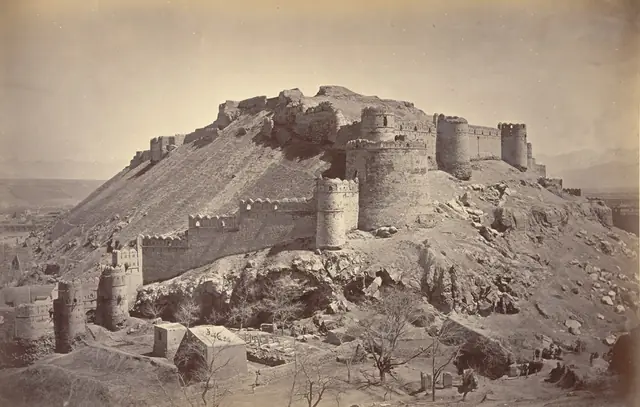
Trilochanapala fell back to the fort of Nandana in the Salt Range, lost it in 1014, and with Kashmiri troops sent by Samgramaraja was beaten again on the Tausi. He fought on in the Punjab and was killed in 1021. His son Bhimapala died in 1026, and the house ended. Al-Biruni, who served Mahmud, wrote of them that in all their grandeur they never slackened in the desire to do what is good and right, and that they were men of noble sentiment and bearing.
The rulers
- 1Kallar (Lalliya)Brahmin minister who founded the linec. 822–?
- 2SamantadevaName on the bull-and-horseman coins9th c.
- 3Kamalukalate 9th c.
- 4BhimadevaGrandfather of Queen Diddac. 930s–964
- 5JayapalaDefeated at Peshawar, 1001c. 964–1002
- 6AnandapalaLed the alliance at Waihindc. 1002–1010
- 7TrilochanapalaKilled fighting in 1021c. 1010–1021
- 8BhimapalaLast of the linec. 1021–1026
What they left
- Bull-and-horseman silver coins, copied for centuries
- Temples of the Salt Range at Amb and Kafirkot
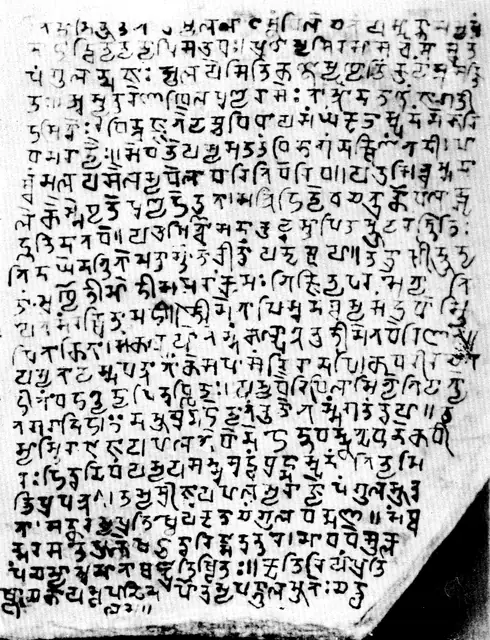
- Al-Biruni’s account of their line in the Kitab al-Hind