
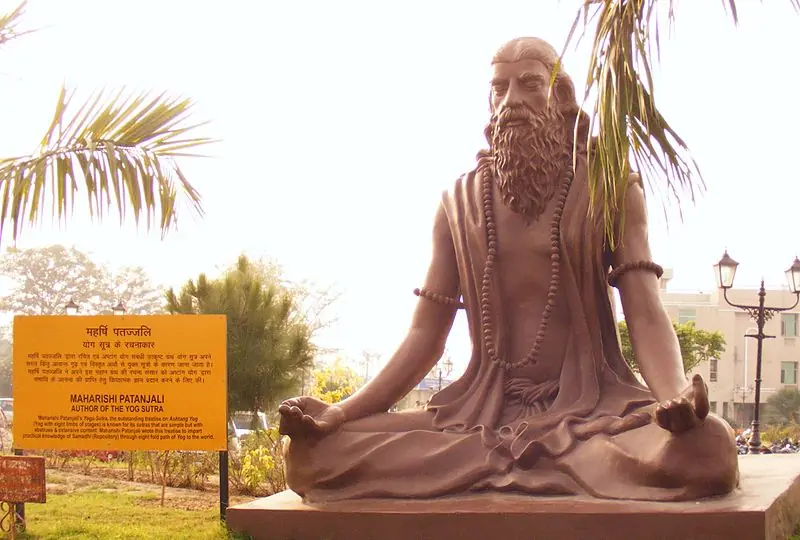
01Yoga in four padas
The Yoga Sutras open with the words ‘atha yoganushasanam’, now the teaching of yoga, and in the next sutra define it: yoga is the stilling of the movements of the mind. The four padas are Samadhi, Sadhana, Vibhuti and Kaivalya. The second pada sets out the eight limbs, ashtanga: yama, niyama, asana, pranayama, pratyahara, dharana, dhyana, samadhi. Asana gets just three sutras; the posture must be steady and easy. Vyasa’s bhashya is the oldest commentary, and every later school of yoga reads him through it.
02The grammarian of Pushyamitra’s time
The Mahabhashya comments on Panini and on Katyayana’s vartikas. Its examples of present-tense speech include ‘iha pushyamitram yajayamah’, here we are performing sacrifices for Pushyamitra, which is how scholars place its author in the reign of Pushyamitra Shunga. Tradition holds that one Patanjali gave three gifts: the Yoga Sutras for the mind, the Mahabhashya for speech, and a work on medicine for the body. At Chidambaram he is worshipped with a serpent’s body, as Adishesha who came down to watch Nataraja dance.
“Yoga is the stilling of the movements of the mind.”
Yoga Sutra 1.2