Cite
MLA
“Al-Masudi.” Hindu History, 2026, https://www.hinduhistory.in/sakshi/al-masudi/. Accessed .
APA
Hindu History. (2026). Al-Masudi. Retrieved , from https://www.hinduhistory.in/sakshi/al-masudi/
The greatest of the Kings of India in our time is the Balhara, sovereign of the city of Mankir.
The route
What defines it
- 01
Visited Multan, Mansura, Cambay and Saymur, c. 915–916
- 02
Balhara of Mankir (Manyakheta) the greatest king
- 03
Pratihara king of Kanauj with four armies
- 04
Pilgrimage to the idol of Multan, held hostage
- 05
Ancient king-lists unreliable
01A wanderer from Baghdad
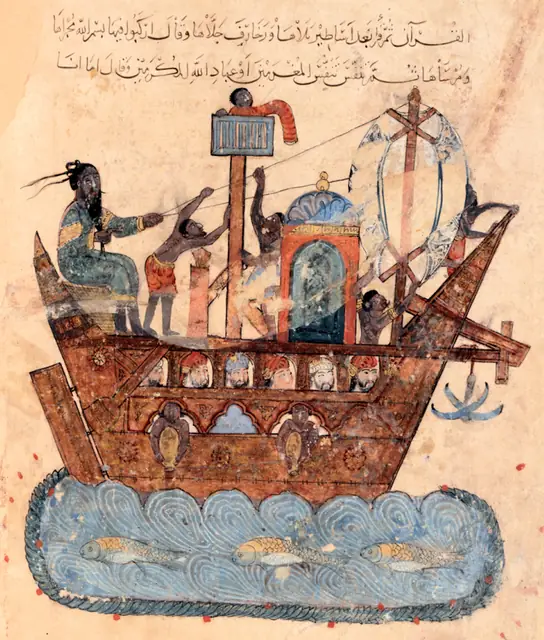
Abu al-Hasan Ali al-Masudi was born in Baghdad in the last years of the ninth century and died in Egypt in 956. He travelled so widely, he said, that he went so far west he forgot the east and so far east he forgot the west. Around 303–304 of the Hijra, about 915–916 CE, he was in the Muslim towns of Multan and Mansura in Sindh, and then at Cambay and Saymur on the western coast, places under or near the Rashtrakuta kingdom. The Meadows of Gold, which he finished in 943 and revised a few years later, is a world history and geography; its chapters on India mix what he saw on the coast with what he read and heard in Baghdad and Basra.
02The Balhara, the Bauura and the idol of Multan
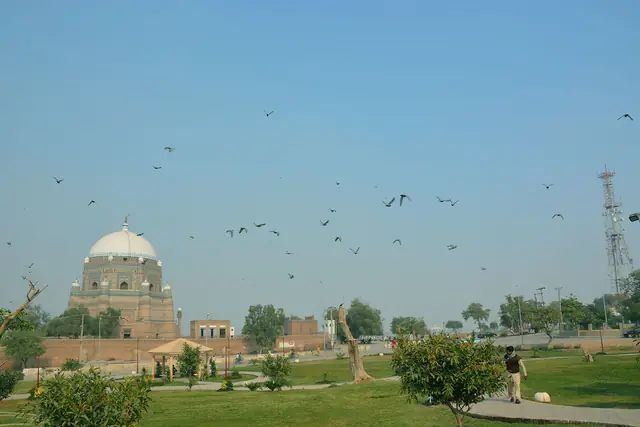
The greatest of the kings of India in his time, he writes, is the Balhara, lord of the city of Mankir, to whom many kings turn their faces in prayer. Mankir is Manyakheta, today’s Malkhed in Karnataka, the Rashtrakuta capital, and the ruler in 915 was Indra III. The king of Kanauj, whom he calls Bauura, keeps four armies, north, south, east and west, because warlike kings surround him; the army of the south fights the Balhara. That is the Pratihara emperor, then Mahipala I. At Multan he describes an idol to which people of Sindh and India came on pilgrimage from great distances with money, gems, aloe-wood and perfumes, and whose offerings filled the Muslim ruler’s treasury. When Hindu armies marched on Multan, he says, the Muslims threatened to break the idol, and the armies withdrew.
03Corroboration and confusion
His political picture is good. Rashtrakuta records say that Indra III crossed the Yamuna and laid waste Mahodaya, which is Kanauj, at just about this time, which fits his note of war between the Balhara and the Bauura. The Multan sun temple and its hostage idol are described again a century later by al-Biruni. His history of India before his own day is another matter. He has a first king called Brahma the Great reigning 366 years, under whom the Siddhanta and Aryabhata’s work were composed, followed by Porus and a king called Koresh; this is hearsay folded into a Baghdad scholar’s scheme. His rivers are wrong too, with the Indus fed from the land of Kanauj. Use him for the 910s and for what Muslims of Sindh believed, not for ancient chronology.
In the texts
- Muruj al-Dhahab wa Maadin al-Jawhar, Meadows of Gold (943, revised c. 947)