Cite
MLA
“Gaudiya Vaishnava Sampradaya.” Hindu History, 2026, https://www.hinduhistory.in/darshana/gaudiya-sampradaya/. Accessed .
APA
Hindu History. (2026). Gaudiya Vaishnava Sampradaya. Retrieved , from https://www.hinduhistory.in/darshana/gaudiya-sampradaya/
What defines it
- 01
Nama-sankirtan and the mahamantra
- 02
Chaitanya as Radha and Krishna in one form
- 03
Raganuga bhakti and the theory of bhakti-rasa
- 04
The six Goswamis and Vrindavan’s temples
- 05
Ratha Yatra kirtan at Puri
01Kirtan in the streets of Navadvip
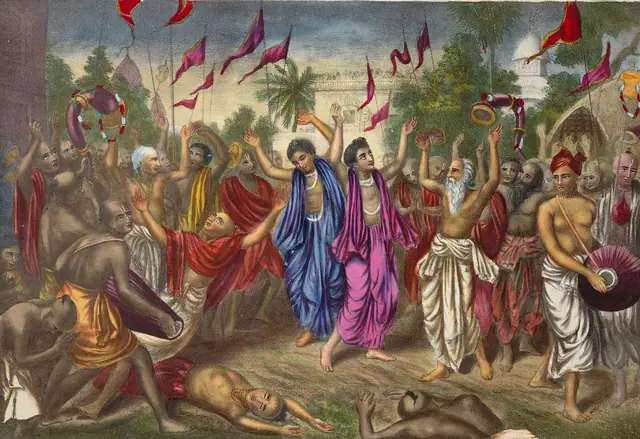
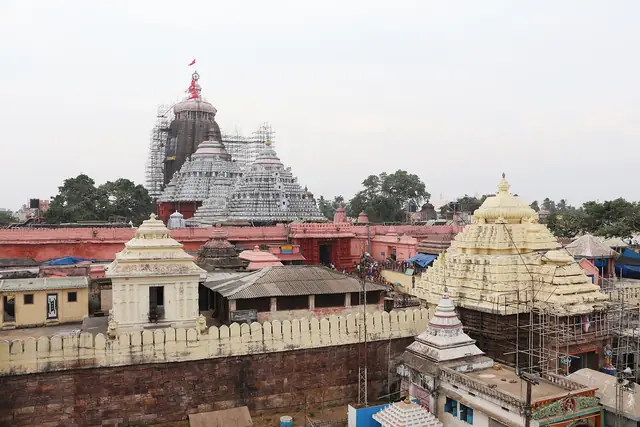
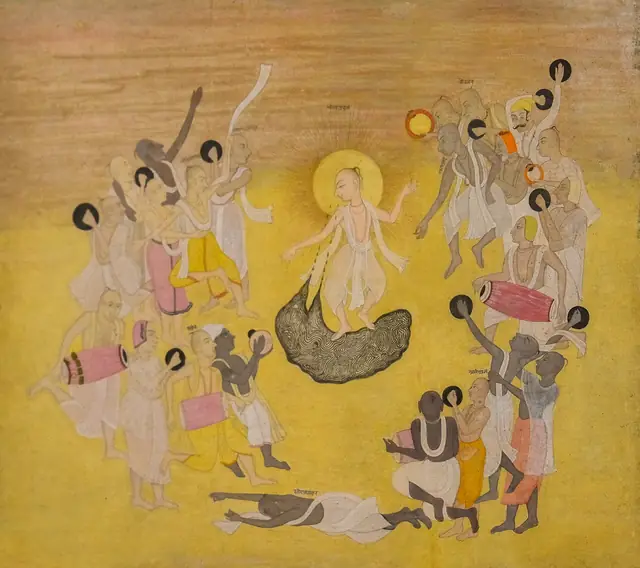
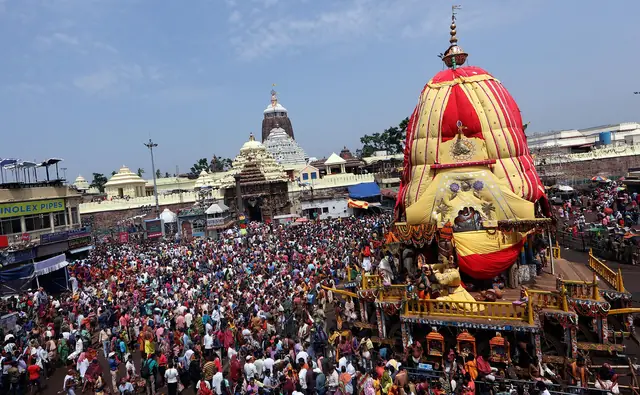
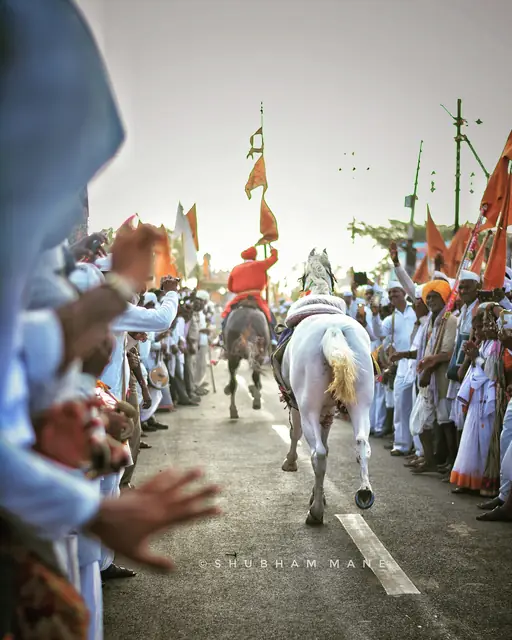
In Navadvip Chaitanya and his companions Nityananda, Advaita Acharya, Gadadhara and Srivasa began nagar-sankirtan, singing the names of Hari through the streets with mridanga and kartal. The tradition holds the mahamantra, Hare Krishna Hare Krishna Krishna Krishna Hare Hare, Hare Rama Hare Rama Rama Rama Hare Hare, as the yuga-dharma for Kali Yuga, and finds it in the Kali-santarana Upanishad. For his followers Chaitanya is Krishna himself, come in the mood and colour of Radha to taste her love. At Puri he danced before Jagannath’s chariot at the Ratha Yatra, and the Gaudiya sampradaya still leads kirtan there. Bengal, Odisha and Manipur took up his way, and in Manipur it shaped the Raas Leela dance.
02The six Goswamis of Vrindavan
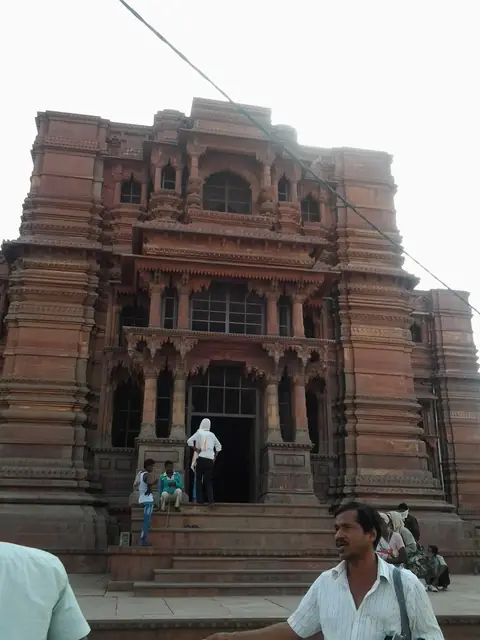
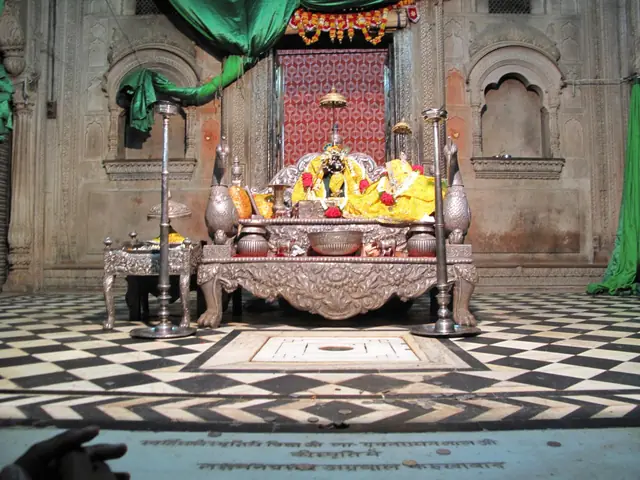
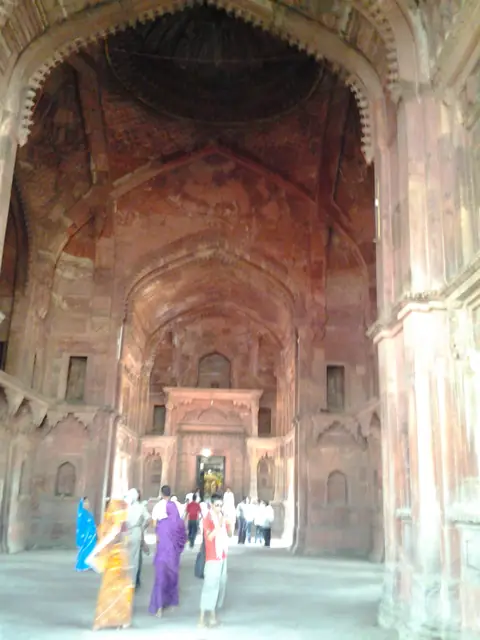
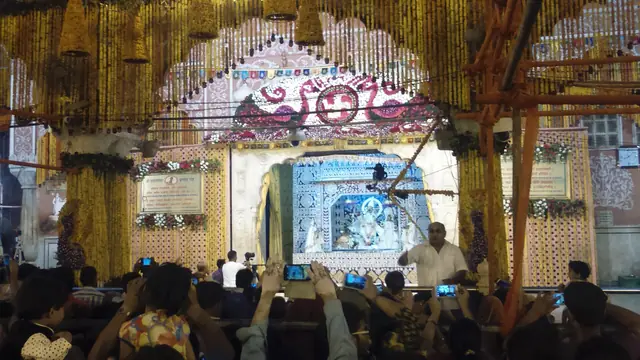
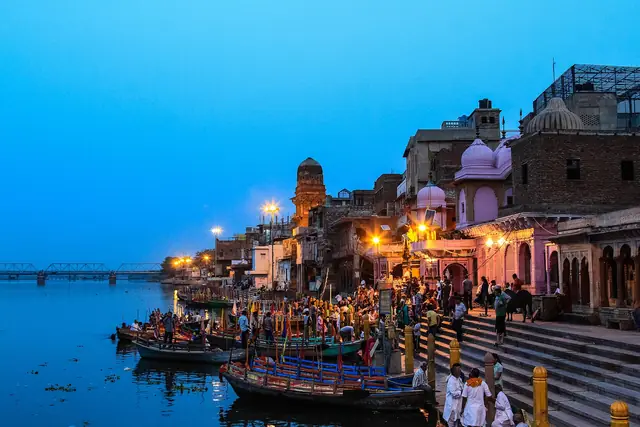
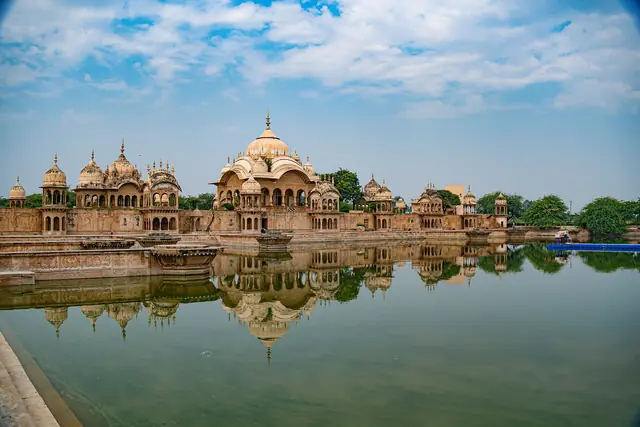
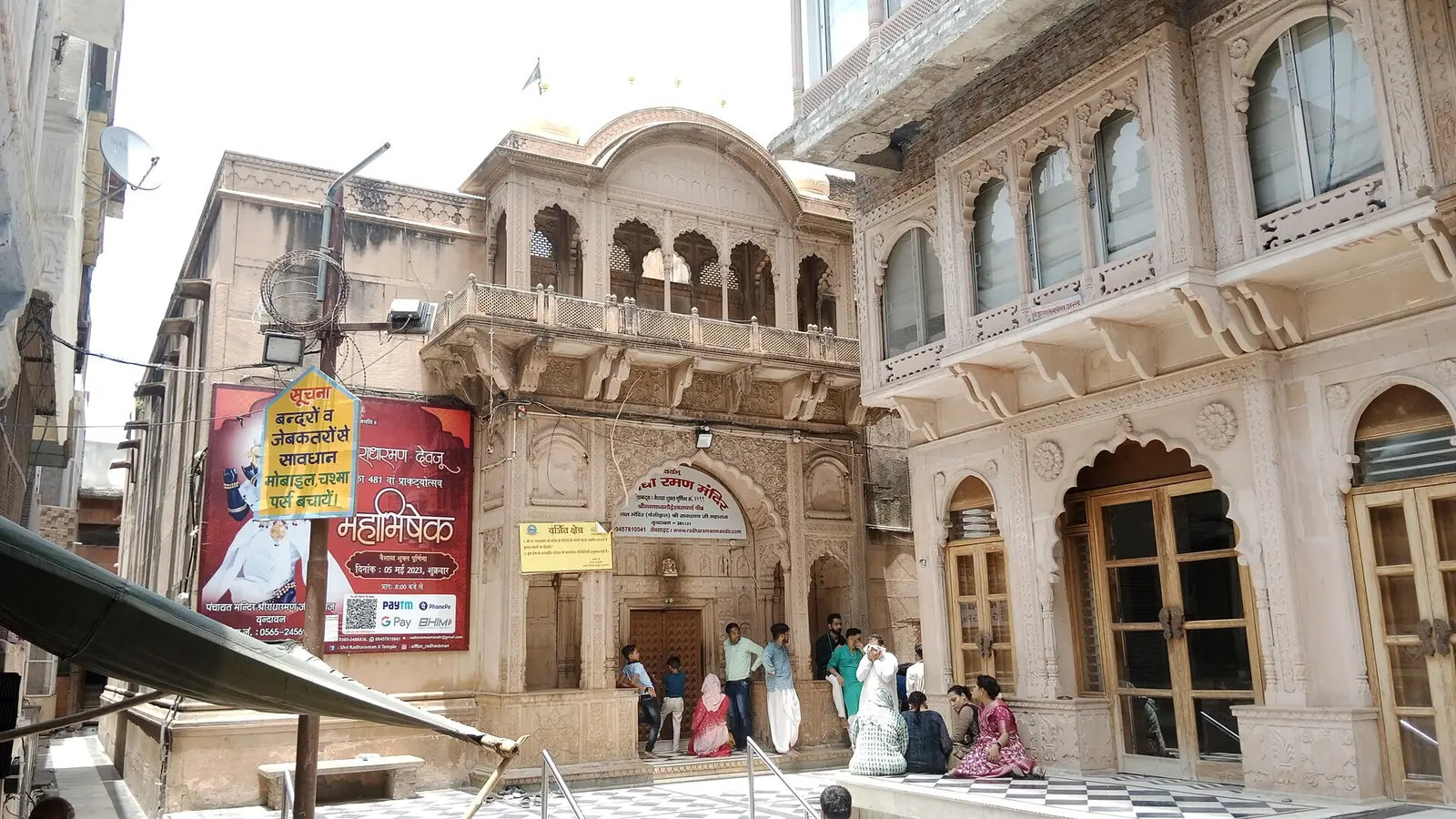
Chaitanya sent disciples to Vrindavan, then mostly forest, to find the places of Krishna’s lila and to write. Six of them are honoured as the six Goswamis: Rupa, Sanatana, Jiva, Gopala Bhatta, Raghunatha Bhatta and Raghunatha Dasa. Rupa’s Bhakti-rasamrita-sindhu gave bhakti its own theory of rasa; Sanatana’s Hari-bhakti-vilasa set out the rules of Vaishnava life; Jiva wrote the Sandarbhas. They founded temples whose deities are still worshipped: Radharaman, revealed to Gopala Bhatta in 1542, has never left Vrindavan, while Govindadev was moved to Jaipur in the troubled 17th century. Raja Man Singh’s red sandstone Govind Dev temple of 1590 still stands in Vrindavan.
03From Bengal to the world
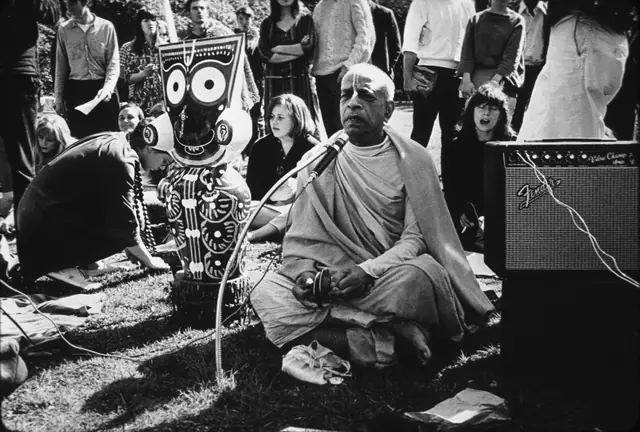
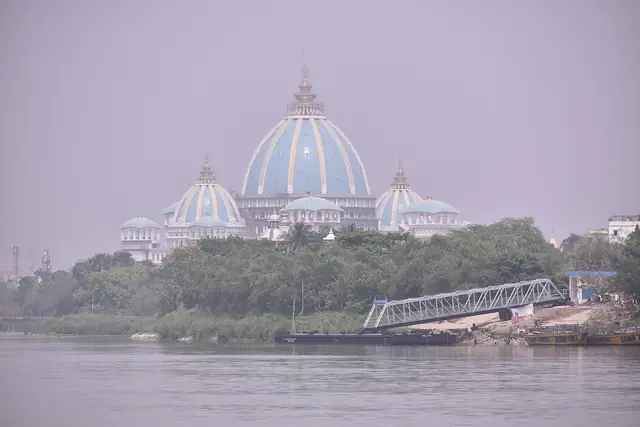
Krishnadasa Kaviraja’s Chaitanya Charitamrita, written in Vrindavan, became the scripture of Bengali Vaishnavas. In the 19th century Bhaktivinoda Thakur revived the tradition and identified Mayapur in Navadvip as Chaitanya’s birthplace; his son Bhaktisiddhanta Sarasvati founded the Gaudiya Math and spread preaching centres across Bharat. In 1965 his disciple A. C. Bhaktivedanta Swami Prabhupada sailed to America, and in 1966 founded the International Society for Krishna Consciousness in New York. Today the kirtan of Navadvip is sung in cities on every continent, and Mayapur draws pilgrims from across the world, especially at Gaura Purnima, the full moon of Phalguna, which marks Chaitanya’s appearance.
Family tree
Great masters
In the texts
- Bhagavata Purana
- Bhakti-rasamrita-sindhu of Rupa Goswami
- Hari-bhakti-vilasa
- Chaitanya Charitamrita