Cite
MLA
“Varkari Sampradaya.” Hindu History, 2026, https://www.hinduhistory.in/darshana/varkari-sampradaya/. Accessed .
APA
Hindu History. (2026). Varkari Sampradaya. Retrieved , from https://www.hinduhistory.in/darshana/varkari-sampradaya/
What defines it
- 01
Vitthala and Rakhumai of Pandharpur
- 02
The wari to Pandharpur for Ashadhi Ekadashi
- 03
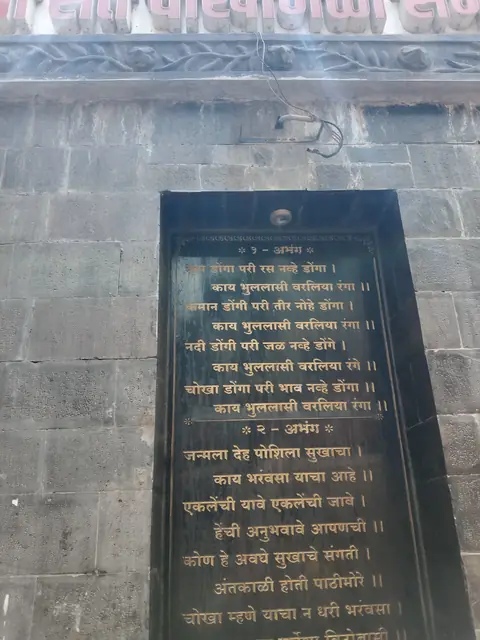
Abhanga and kirtan in Marathi
- 04
Tulsi mala, Ekadashi, Haripath
- 05
Sants of every caste in one company
01Vitthala on the brick
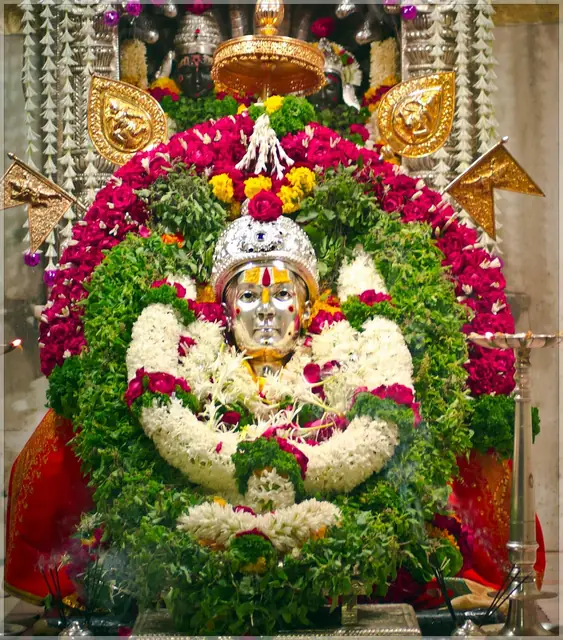
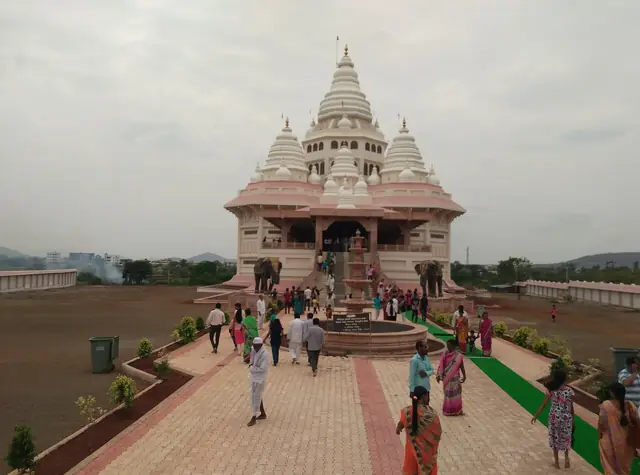
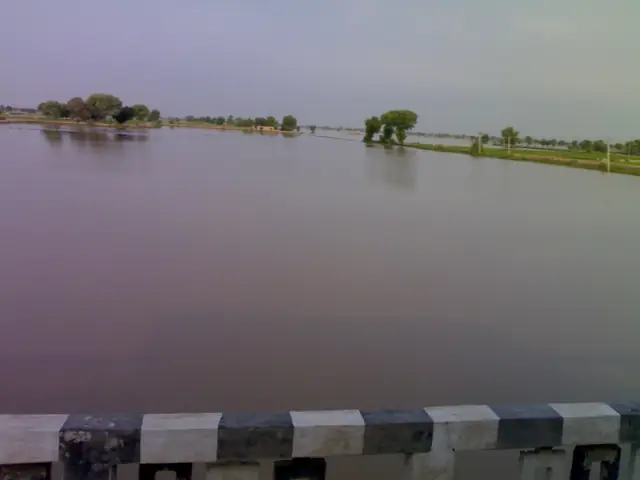
The Varkaris worship Vitthala, also called Vithoba or Pandurang, Shri Krishna standing with hands on hips on a brick beside the Bhima river, which the town calls the Chandrabhaga, with Rakhumai, Rukmini, beside him. The katha says Pundalika was serving his aged parents when Krishna came to his door; Pundalika tossed him a brick to stand on until the service was done, and Bhagwan is standing there still. A varkari is one who does the vari, the regular pilgrimage. The marks are simple: a tulsi-bead mala round the neck, gopichandan on the brow, a vegetarian diet, the Ekadashi fast twice a month, and the daily recitation of Jnaneshwar’s Haripath.
02Dnyandev to Tuka
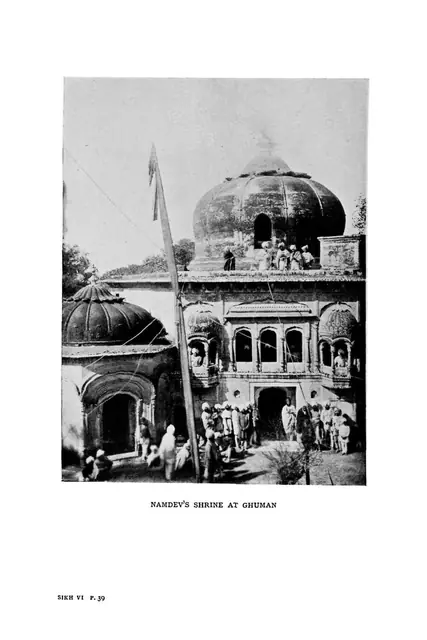
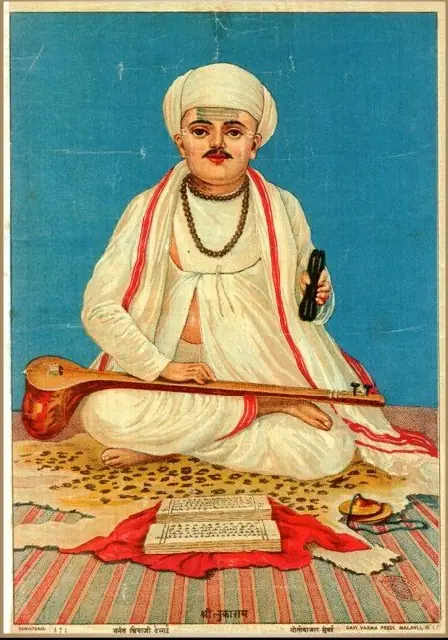
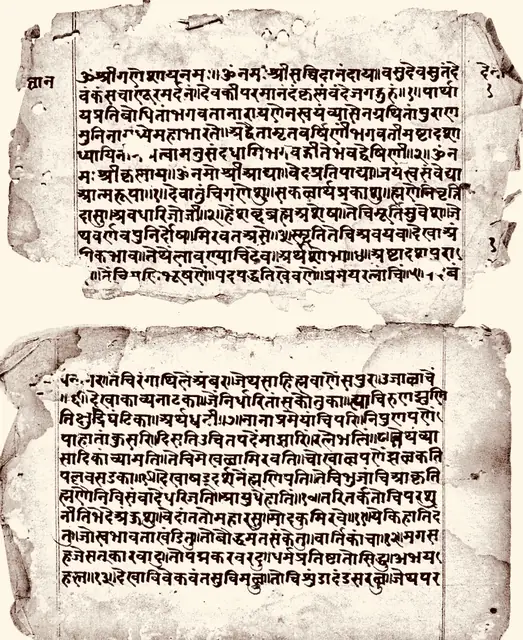
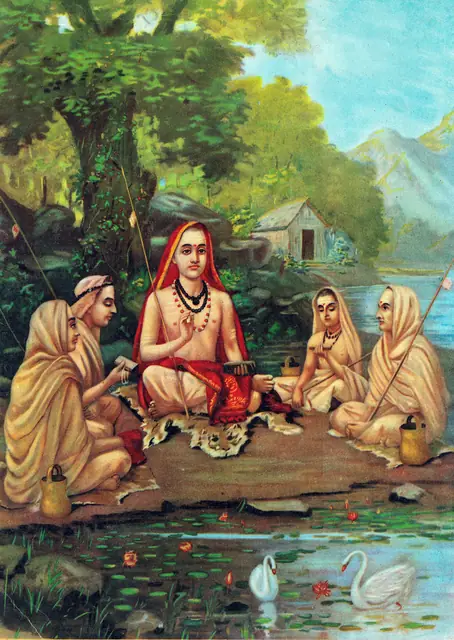
Jnaneshwar (1275–1296) wrote the Dnyaneshwari in 1290 at Nevasa, a Marathi commentary on the Gita in about nine thousand ovis, so that ordinary people could read what had been locked in Sanskrit; he took samadhi at Alandi at twenty-one. His guru was his elder brother Nivrittinath, who had been initiated into the Nath line by Gahininath. His contemporary Namdev, a tailor, carried Vitthala’s name to Punjab, and some of his verses are in the Guru Granth Sahib. Chokhamela, Janabai, Gora Kumbhar and Sena the barber sang in the same company. Eknath (1533–1599) of Paithan edited the Dnyaneshwari and wrote the Eknathi Bhagavat. Tukaram (1608–1650) of Dehu left thousands of abhangas, collected as the Gatha, and the Varkaris still chant “Dnyanoba Tukaram” as they walk.
03The wari
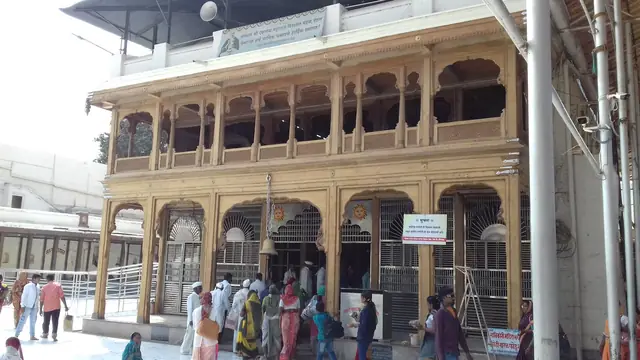
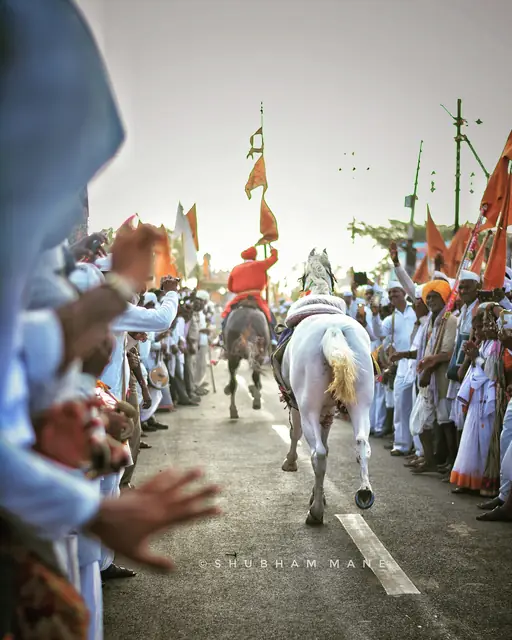
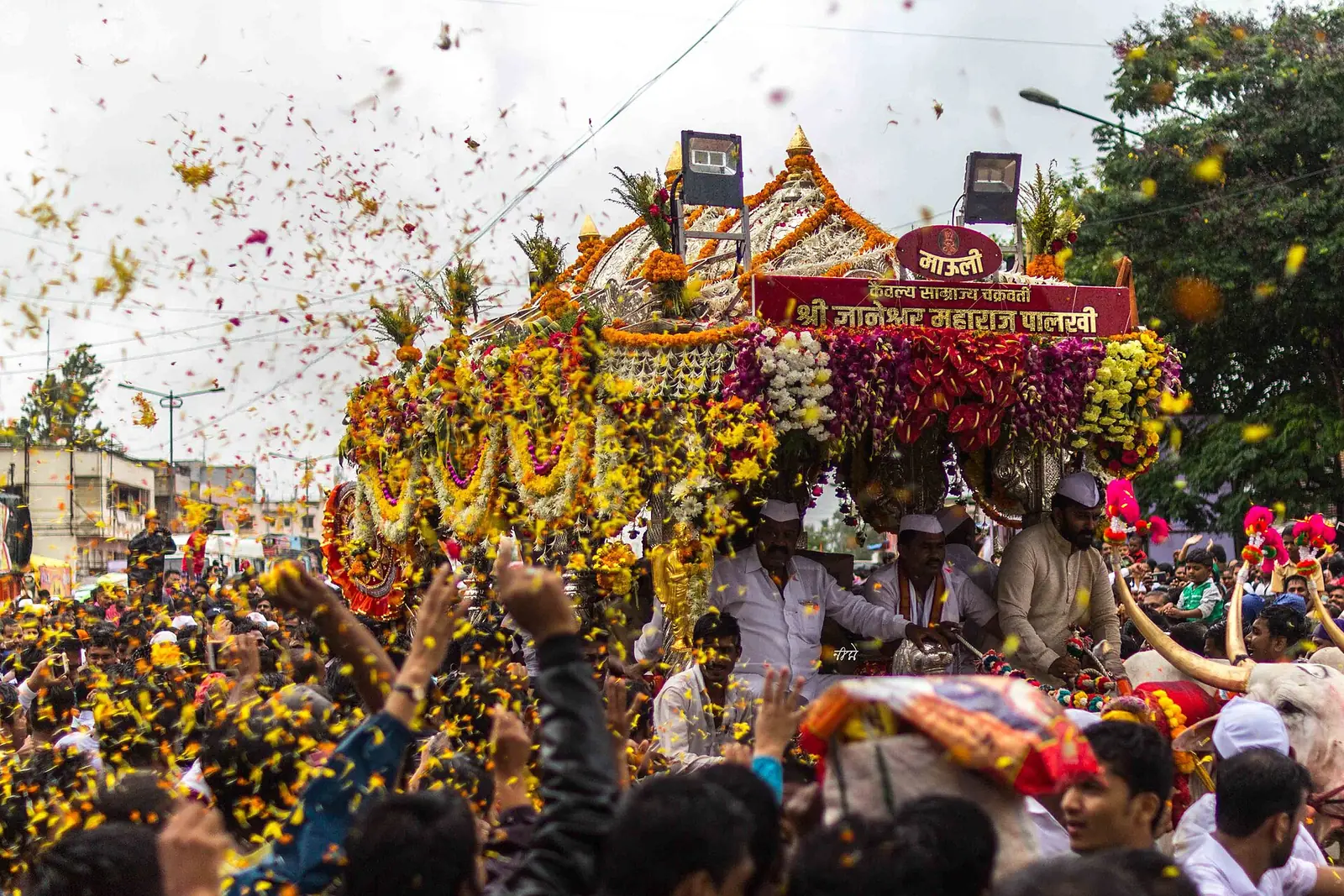
Each year, in the weeks before Ashadhi Ekadashi in June or July, palkhis carrying the padukas of Jnaneshwar from Alandi and of Tukaram from Dehu set out for Pandharpur, a walk of over two hundred kilometres that takes about three weeks. Other palkhis come from the samadhis of Nivrittinath, Sopan, Muktabai and Eknath. Pilgrims walk in dindis, groups led by a flag-bearer and a veena player, singing abhangas to the beat of tal and mridanga. On the way come the ringans, when the horse of the palkhi runs round a circle of pilgrims. Many lakhs reach Pandharpur for the Ekadashi darshan. A smaller wari is made at Kartiki Ekadashi.
Great masters
In the texts
- Dnyaneshwari (1290) and Amritanubhava
- Haripath
- Eknathi Bhagavat
- Tukaram Gatha