01From a shaligram
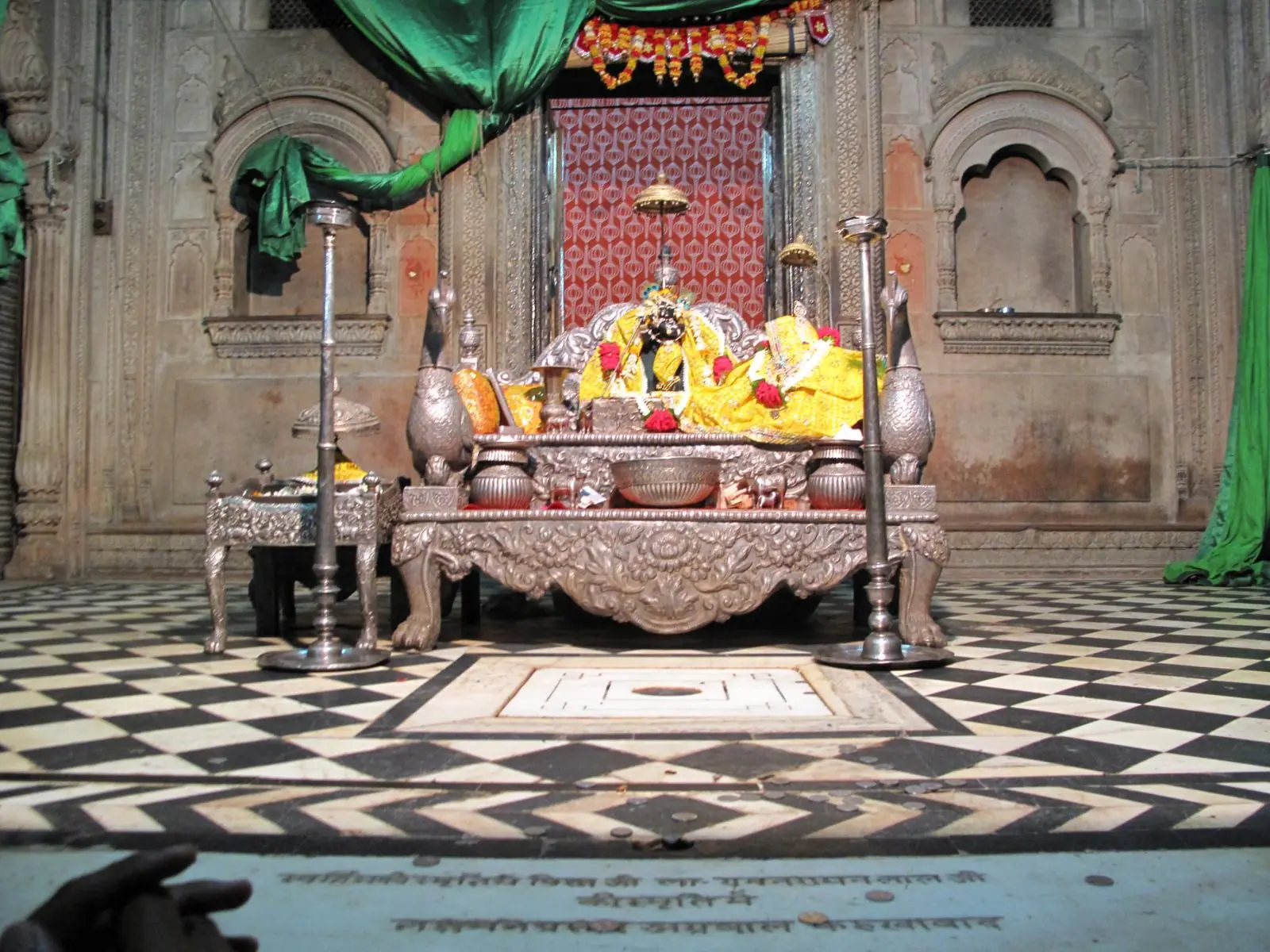
Gopal Bhatta, son of a priest of Srirangam, became a disciple of Chaitanya Mahaprabhu and one of the six Goswamis of Vrindavan. The Gaudiya tradition tells that he brought twelve shaligram shilas from the Gandaki in Nepal and worshipped them with longing to serve Krishna in a form with limbs. On the full moon of Vaishakha in 1542, one shila was found in the morning to have become a small, smiling, three-fold bent murti of Krishna. That is Radha Raman, the beloved of Radha. There is no separate image of Radha; a crown beside him stands for her.
02The fire that never went out
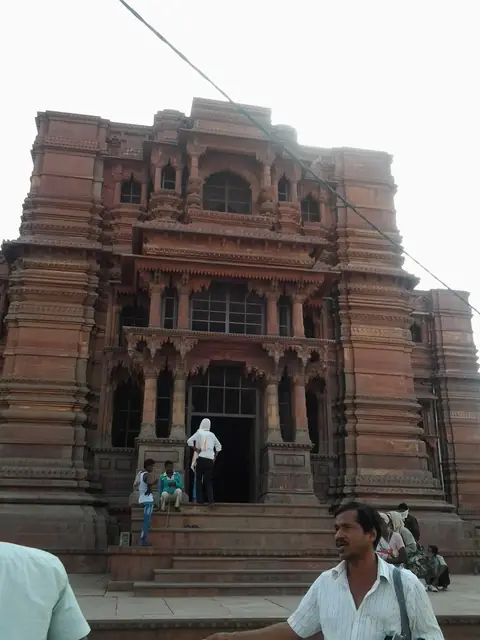
When Aurangzeb’s order of 1669 to demolish temples reached Braj, the murtis of Govind Dev, Madan Mohan and Gopinath were carried away to Rajasthan for safety. Radha Raman, small enough to hide, stayed in Vrindavan, and the goswamis of Gopal Bhatta’s line have served him there without a break. The temple’s tradition holds that the kitchen fire has been kept burning since it was first lit in Gopal Bhatta’s time, without a matchstick ever being struck. The present temple building is of the 19th century.
The life of this place
- Vaishakha Purnima, 1542Radha Raman manifests from a shaligram for Gopal Bhatta Goswami.
- 1669Other great murtis of Vrindavan are taken to Rajasthan; Radha Raman stays.
The temple is near Nidhivan and Seva Kunj in old Vrindavan; the appearance day festival falls on Vaishakha Purnima.