01From Vrindavan to Jaipur
Rupa Goswami, sent to Braj by Chaitanya Mahaprabhu, found the murti of Govind Dev at the Gomatila in Vrindavan and served him in a simple shrine; in 1590 Raja Man Singh of Amber raised the great red sandstone temple there. When Aurangzeb’s orders against the temples of Braj came in 1669–70, the priests carried Govind Dev west, and after years in camps and villages he came to Kachhwaha country. Sawai Jai Singh II, who founded Jaipur in 1727, set him in a garden pavilion facing the palace, so that the king could see his deity from his own rooms in the Chandra Mahal.
02Seven jhankis a day
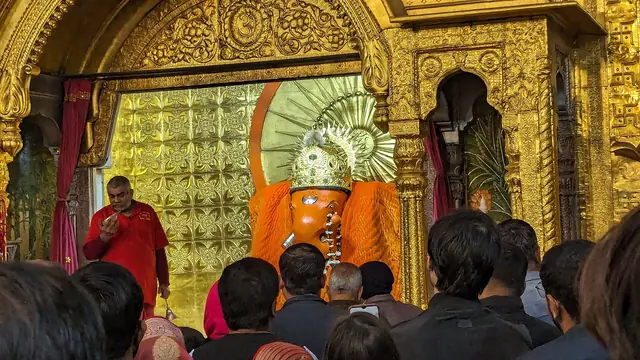
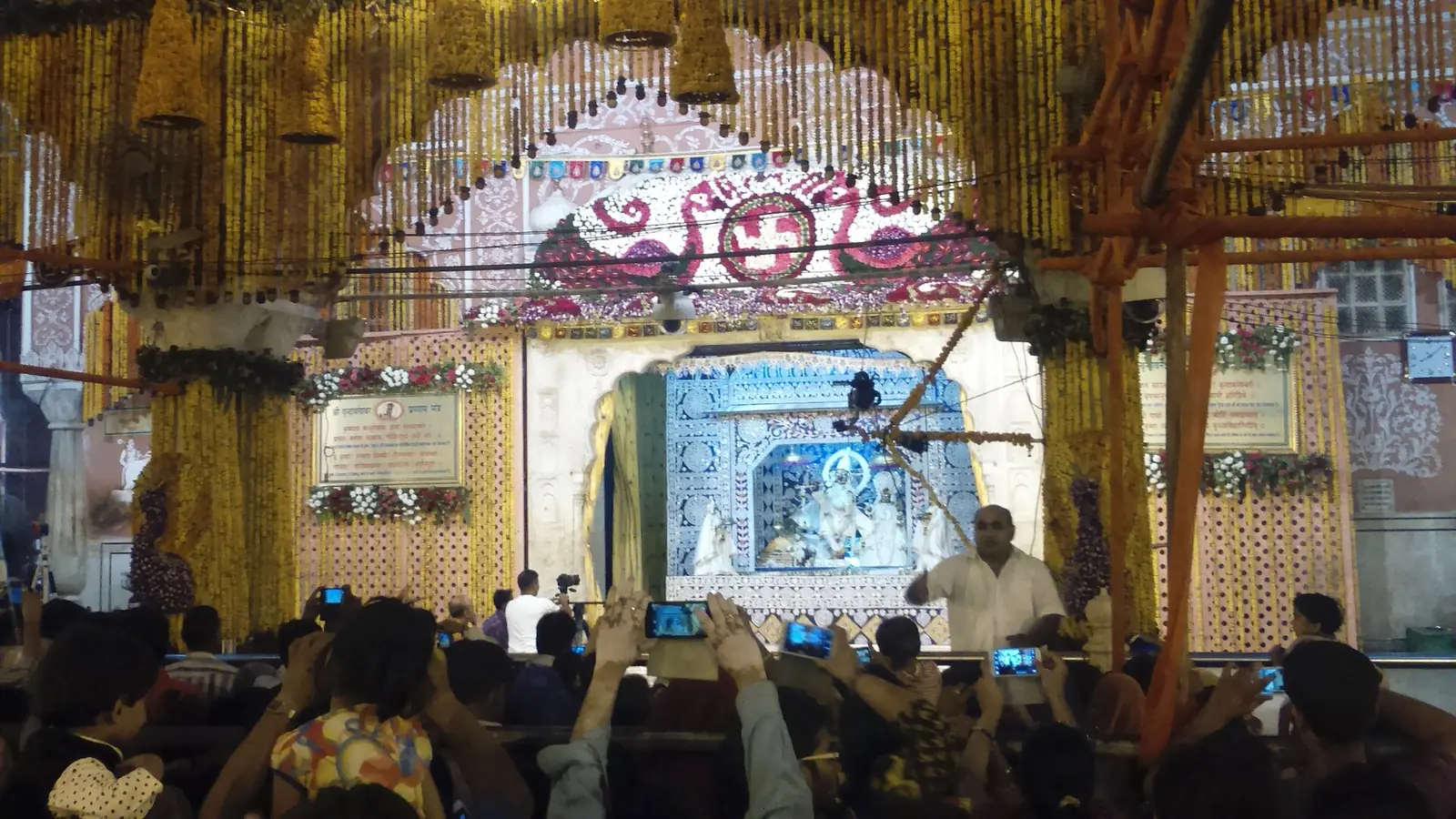
Darshan opens and closes through the day in seven jhankis, from mangala before dawn to shayan at night, and the hall fills each time with the people of the walled city, many on their way to work. The rulers of Jaipur styled themselves diwans of Govind Dev, servants governing on his behalf. The hall in front of the shrine, rebuilt in the 20th century, has a wide span without pillars so that the crowd has a clear sight of the deity. Janmashtami and Holi here are the city’s own festivals.
The life of this place
- 1590Raja Man Singh builds the Govind Dev temple at Vrindavan.
- 1669–70The deity is carried away from Vrindavan as the temples of Braj are targeted.
- 1727Sawai Jai Singh II founds Jaipur and enshrines Govind Dev in the palace garden.
Enter from Jaleb Chowk or the north gate of the City Palace complex; the mangala jhanki is soon after dawn.