Cite
MLA
“Braj Chaurasi Kos Parikrama.” Hindu History, 2026, https://www.hinduhistory.in/yatra/braj-chaurasi-kos-parikrama/. Accessed .
APA
Hindu History. (2026). Braj Chaurasi Kos Parikrama. Retrieved , from https://www.hinduhistory.in/yatra/braj-chaurasi-kos-parikrama/
The route
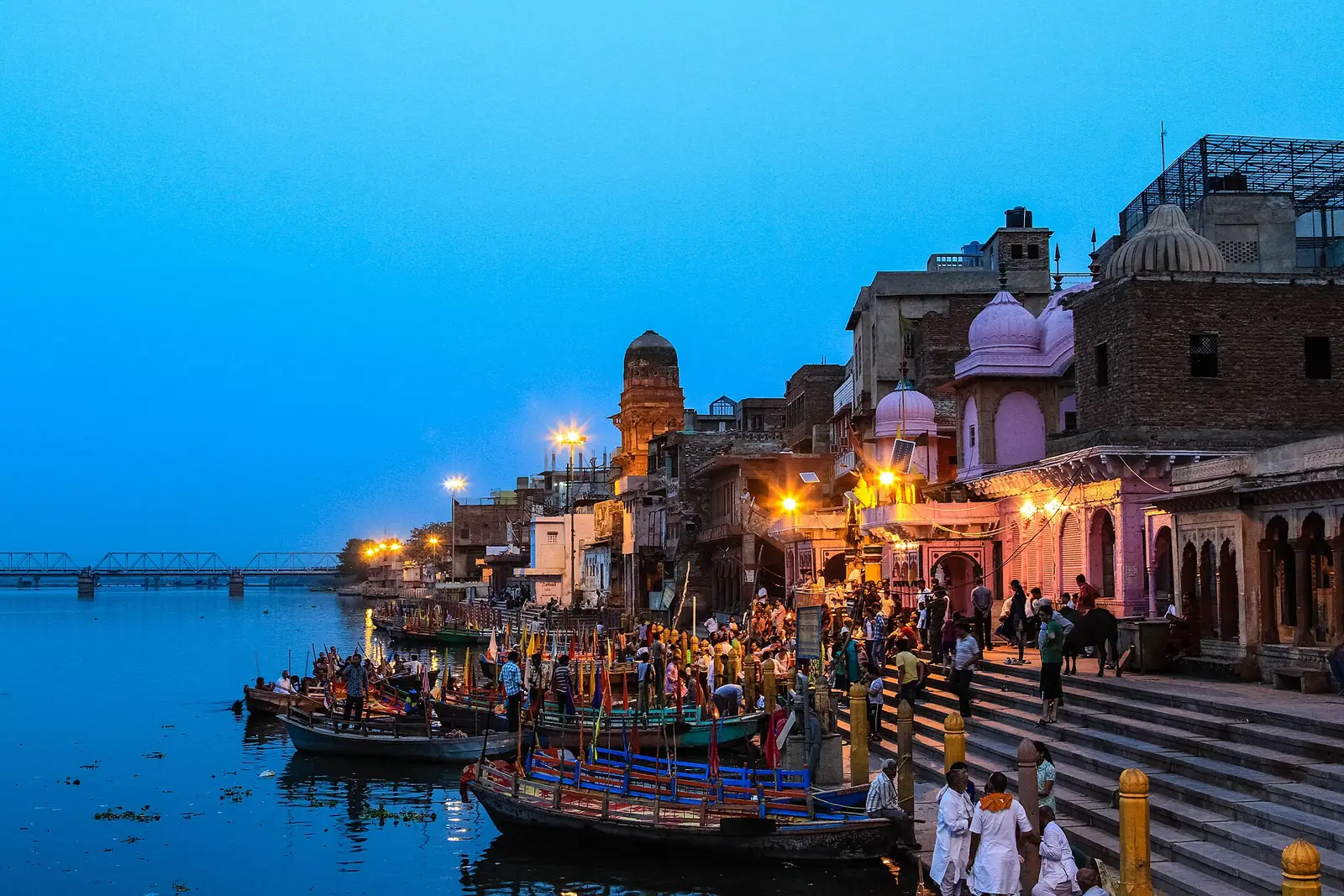
- 1Mathura, Vishram Ghat
- 2Madhuvan
- 3Govardhan
- 4Radha Kund
- 5Kaman (Kamyavan)
- 6Barsana
- 7Nandgaon
- 8Vrindavan
- 9Gokul
- 10Mahavan
- 11Baldeo
What defines it
- 01
84 kos, about 250–300 km
- 02
Twelve vanas from Madhuvan to Mahavan
- 03
Narayan Bhatt’s Braj Bhakti Vilas, 1553, lists over 300 sites
- 04
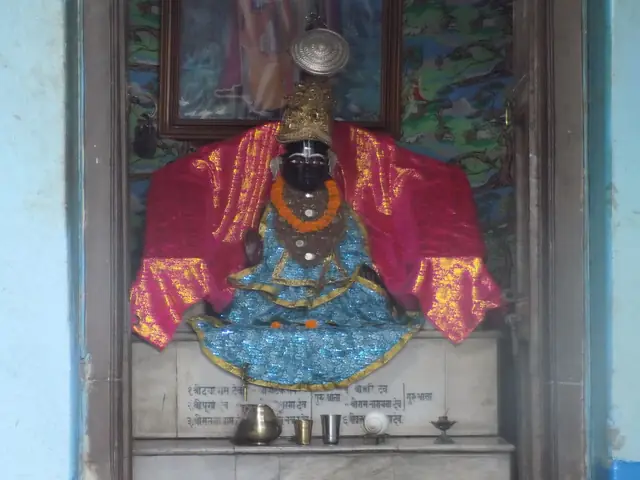
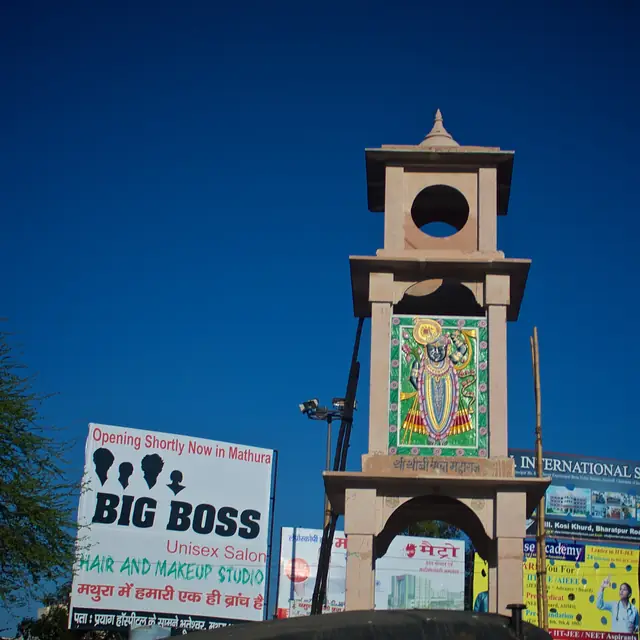
Deities moved to Jaipur and Nathdwara under Aurangzeb
01Twelve forests
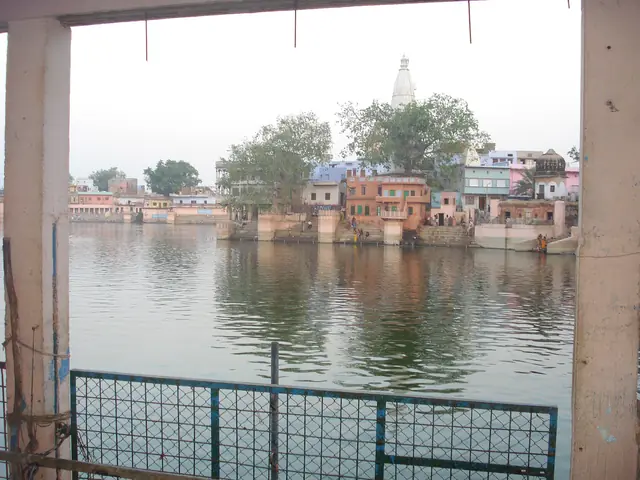
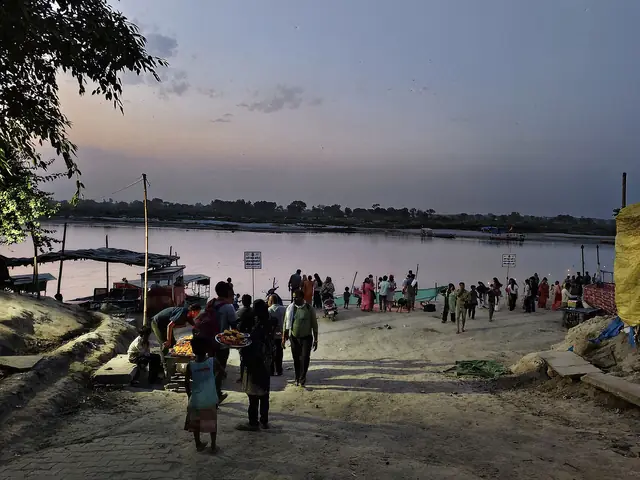
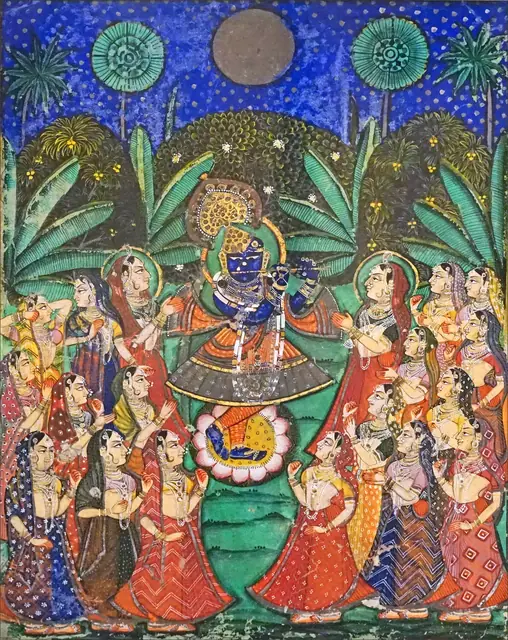
Braj is counted in vanas, forests: Madhuvan, Talvan, Kumudvan, Bahulavan, Kamyavan, Khadiravan, Vrindavan, Bhadravan, Bhandiravan, Belvan, Lohavan and Mahavan, with many smaller upavanas. The Mathura Mahatmya of the Varaha Purana describes this circle, and pilgrims walk it to touch every place where Shri Krishna played: Gokul and Mahavan where he was raised by Nanda and Yashoda, Vrindavan of the rasa, Govardhan which he lifted, Kamyavan with its many kunds, Barsana of Shri Radha and Nandgaon on its hill facing it. The 84 kos are often explained as release from the 84 lakh births, and the custom is to walk barefoot, eat simply and sing the names of Radha and Krishna on the way.
02Finding the lost places
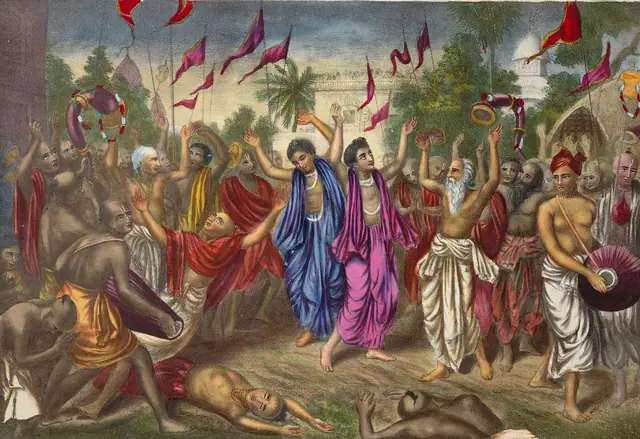
By the fifteenth century many of the leela-sthalis had been forgotten or overgrown. In the early sixteenth century Vallabhacharya and Chaitanya Mahaprabhu came to Braj, and Chaitanya sent Rupa and Sanatana Goswami to settle at Vrindavan and recover the sacred sites. Narayan Bhatt, a scholar from the south who lived at Radha Kund, set down more than 300 places in his Sanskrit Braj Bhakti Vilas in 1553 and is credited with laying out the circuit of the van yatra; another account gives that credit to Vitthalnath, the son of Vallabhacharya, whose followers still make a ban yatra in Bhadrapada. The poets Surdas and the Ashtachhap made Braj’s villages famous across north India in their songs.
03Under Aurangzeb, and today
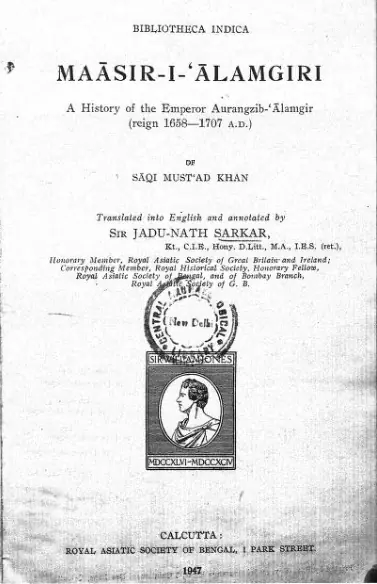
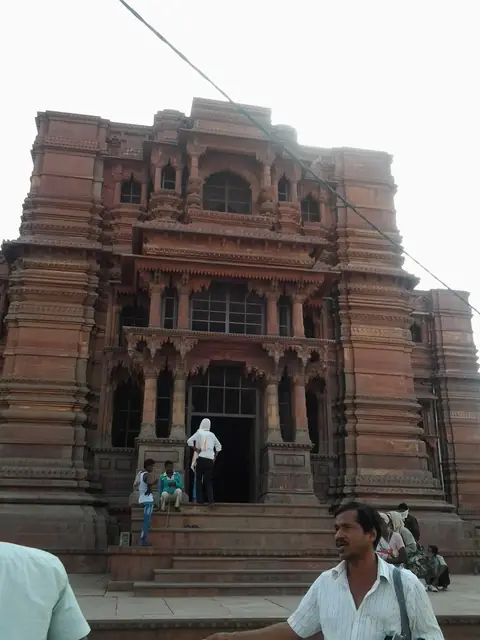
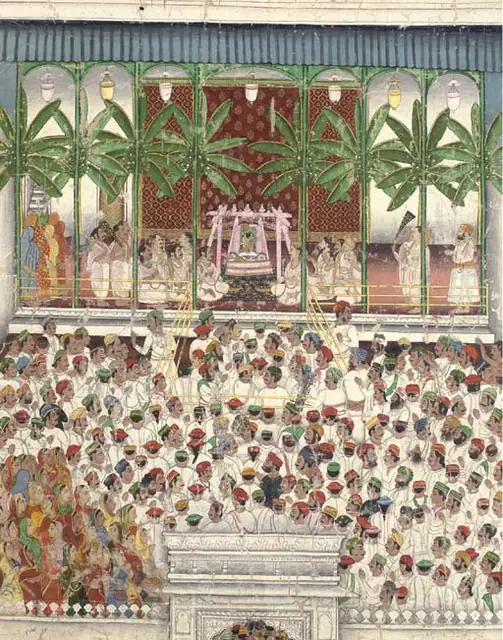
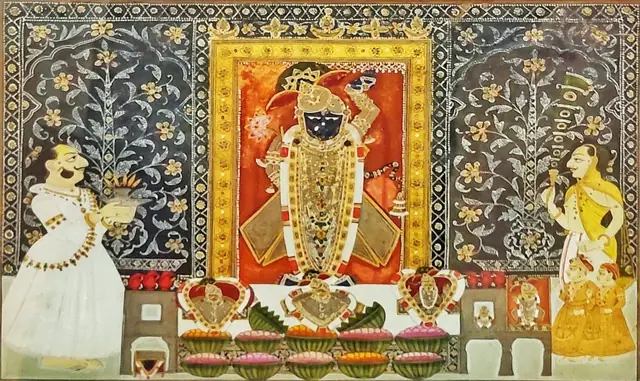
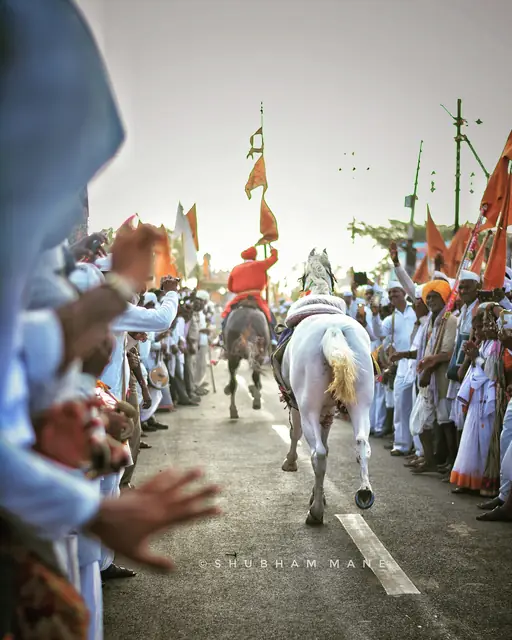
Raja Man Singh of Amber built the great red sandstone Govind Dev temple at Vrindavan in 1590. When Aurangzeb turned on the temples of Mathura, ordering the Keshav Dev temple at the birthplace destroyed in 1670 as the Maasir-i-Alamgiri records, the priests carried the deities away: Govind Dev to Jaipur, Shrinathji to Mewar, where Nathdwara grew around him. The parikrama went on regardless, walked by sadhus and village groups. Today it is led by many ashrams and samitis, with tents, cooks and a fixed daily stage of 10 to 20 km; the route crosses into Rajasthan at Kaman and touches Haryana near Hodal. Pilgrims who cannot walk the whole often do the Govardhan or Vrindavan parikramas instead.
Great masters
In the texts
- Mathura Mahatmya of the Varaha Purana
- Braj Bhakti Vilas of Narayan Bhatt
- Bhagavata Purana, Book 10