Cite
MLA
“Prakara and pradakshina: walls and the walk around.” Hindu History, 2026, https://www.hinduhistory.in/sthapatya/prakara-and-pradakshina/. Accessed .
APA
Hindu History. (2026). Prakara and pradakshina: walls and the walk around. Retrieved , from https://www.hinduhistory.in/sthapatya/prakara-and-pradakshina/
What defines it
- 01
Pradakshina / parikrama: clockwise, deity on the right
- 02
Sandhara inner corridor around the garbhagriha
- 03
Jagati terrace as an outer path
- 04
Concentric prakara walls, fortified from the 14th century
- 05
Kerala nalambalam; Kashmir peristyle
01Walking with Bhagwan on the right
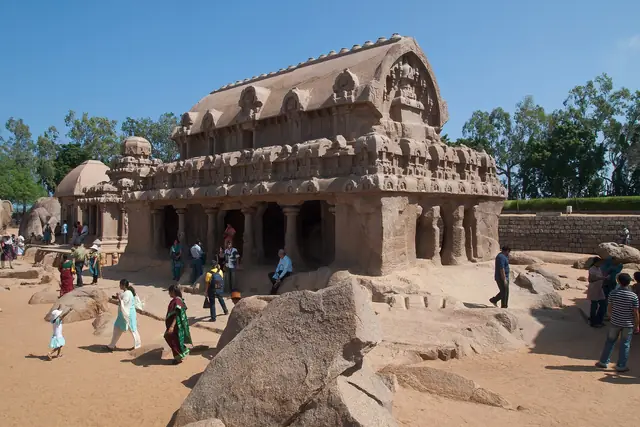
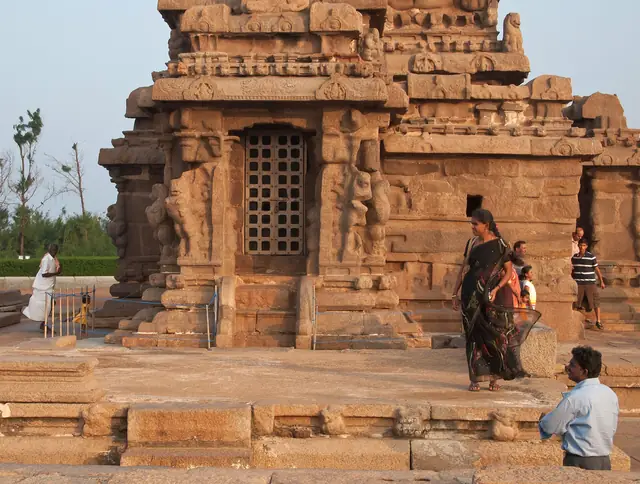
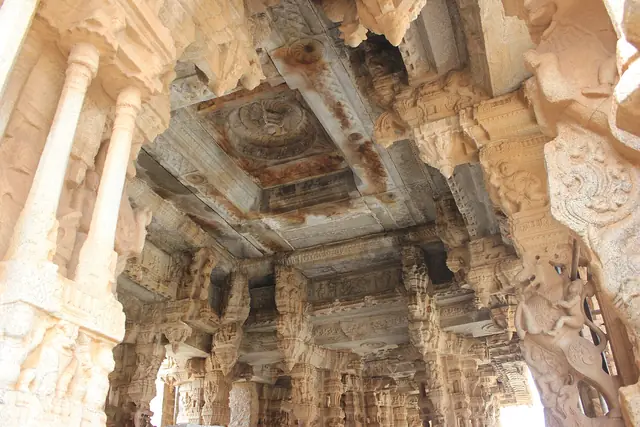
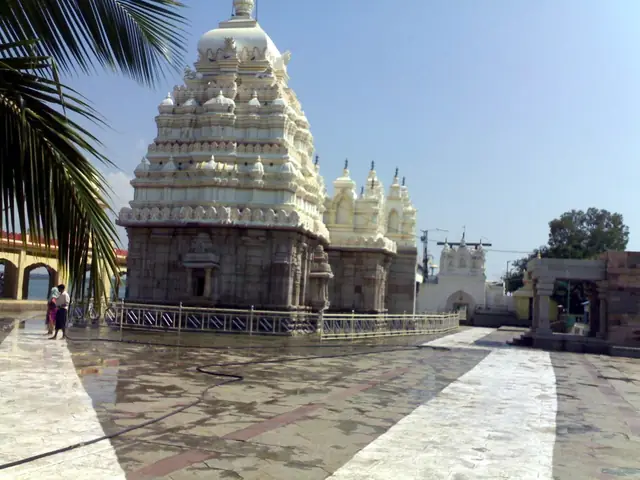
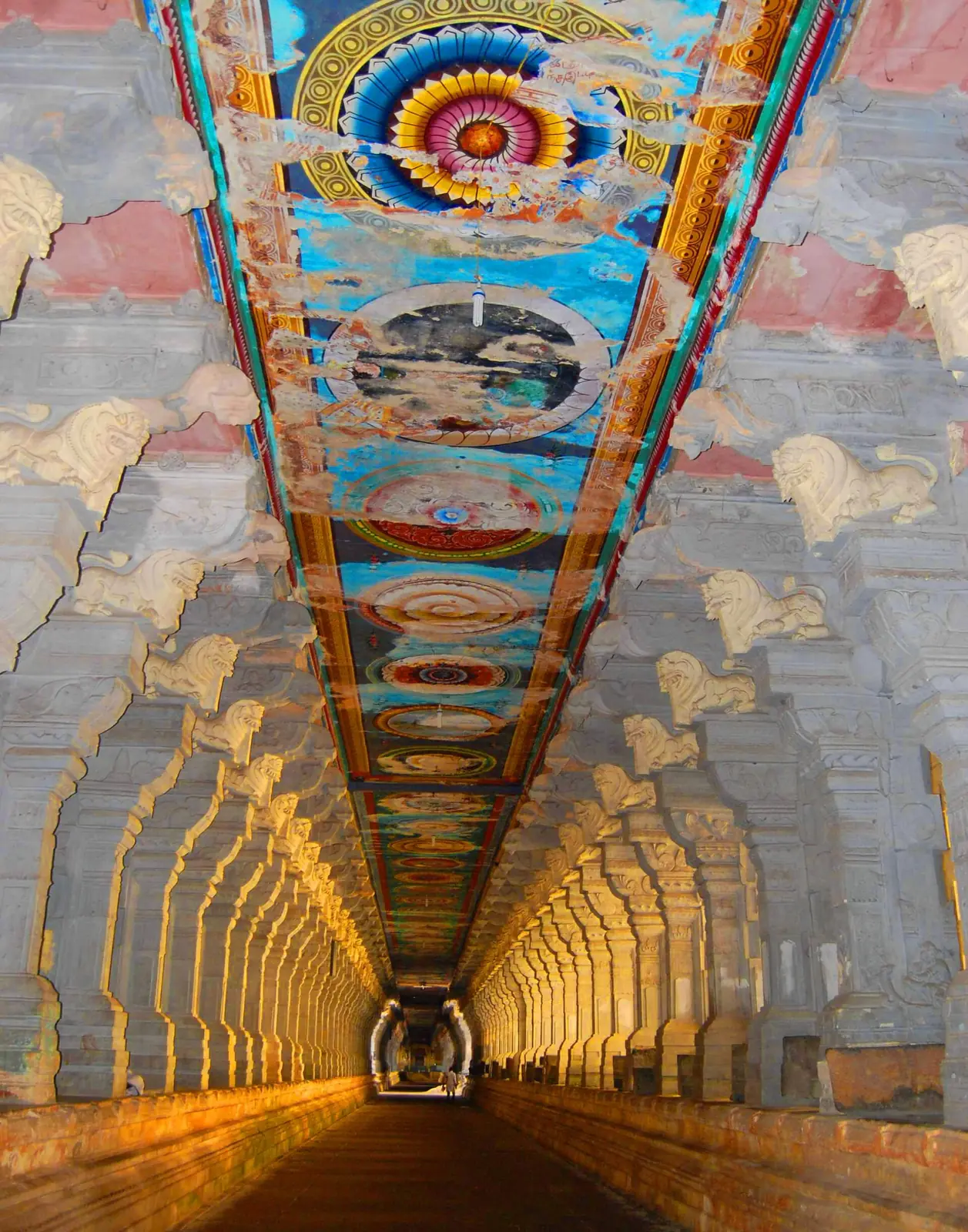
Pradakshina, also called parikrama, is the walk around the deity in a clockwise direction, so that the sacred stays on one's right, dakshina. The temple builds this walk into stone in three ways. In a sandhara temple an inner corridor runs between the walls of the garbhagriha and an outer wall, in half-darkness; the Bhima Ratha at Mamallapuram already shows a colonnaded path of this kind. Many temples instead stand on a jagati, a moulded terrace that projects outward and serves for circumambulation and for reading the friezes. And temples enclosed by walls give a third, open path around the whole precinct. In Kerala the murals of the sreekovil are painted to be seen while circling.
02The prakara
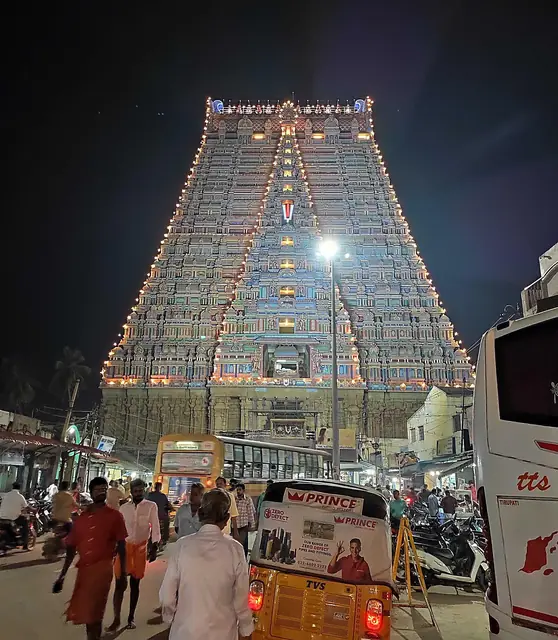
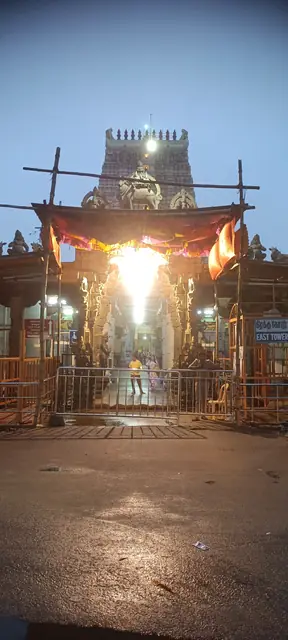
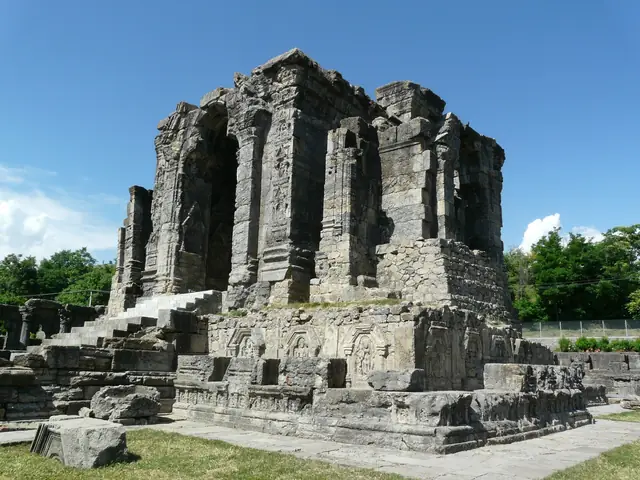
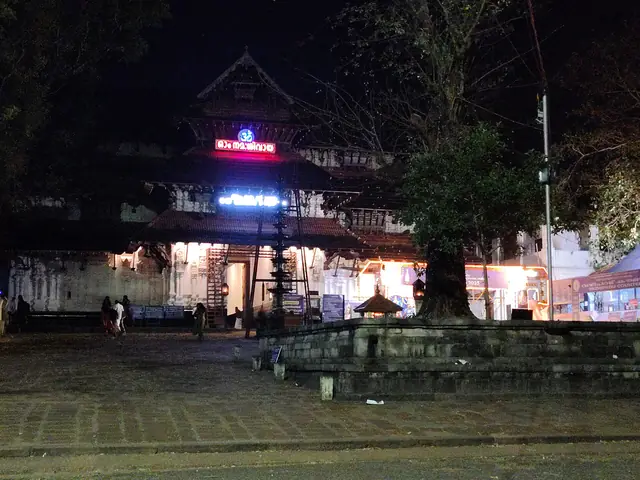
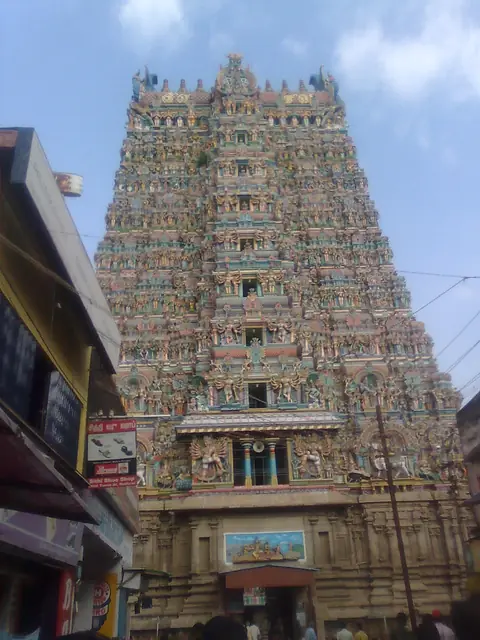
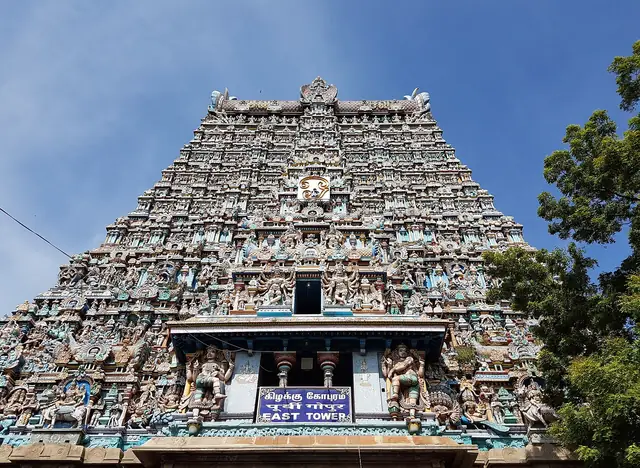
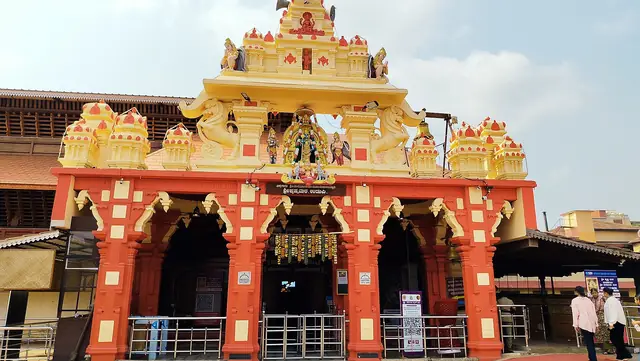
A prakara is a wall that separates an inner zone of the temple from an outer one. In the great southern temples these walls are concentric, each enclosing the last, and in many places they were made thick and high like fortifications, a change that came after the wars and plunder of the 14th century. Nagara temples of the north, by contrast, usually have no high boundary wall; they stand open on a platform. Kashmir built its own kind of enclosure, the peristyle, as at Martand, where 84 small shrines ring the courtyard. In Kerala the nalambalam, a cloister around the sreekovil, plays the part of the inner prakara, with a wall of oil lamps, the vilakkumadam, around it.
03Srirangam and the pillared corridors
At Srirangam seven concentric prakaras enclose the shrine of Shri Ranganatha, and 21 gopurams pierce them, the tallest at the outermost wall. The whole complex covers some 156 acres, so large that the town of Srirangam lies within its outer walls. Inside the walls of other great temples the pradakshina path became a pillared corridor; the corridors of the Ramanathaswamy temple at Rameswaram, lined with carved pillars, are the most famous. Walking such a path, a pilgrim moves from the noise of the outer streets, wall by wall, into the stillness of the sanctum, and then out again, always with Bhagwan on the right.