Cite
MLA
“Ships and the monsoon sea.” Hindu History, 2026, https://www.hinduhistory.in/vijnana/indian-ocean-navigation-ships/. Accessed .
APA
Hindu History. (2026). Ships and the monsoon sea. Retrieved , from https://www.hinduhistory.in/vijnana/indian-ocean-navigation-ships/
01Stitched hulls
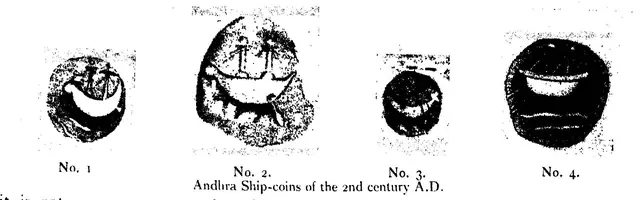
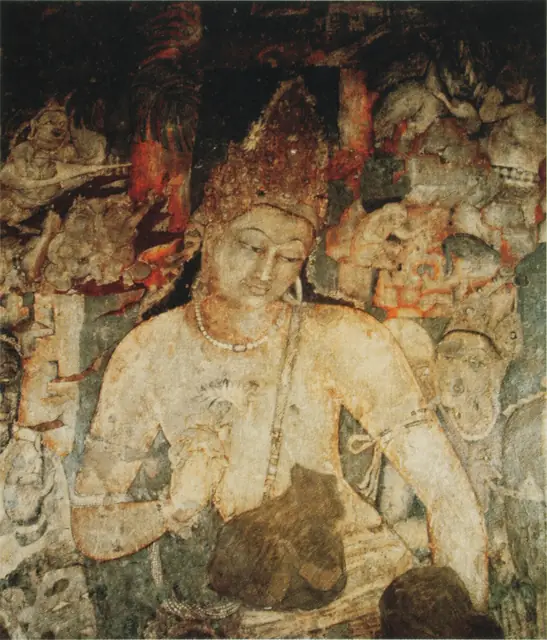
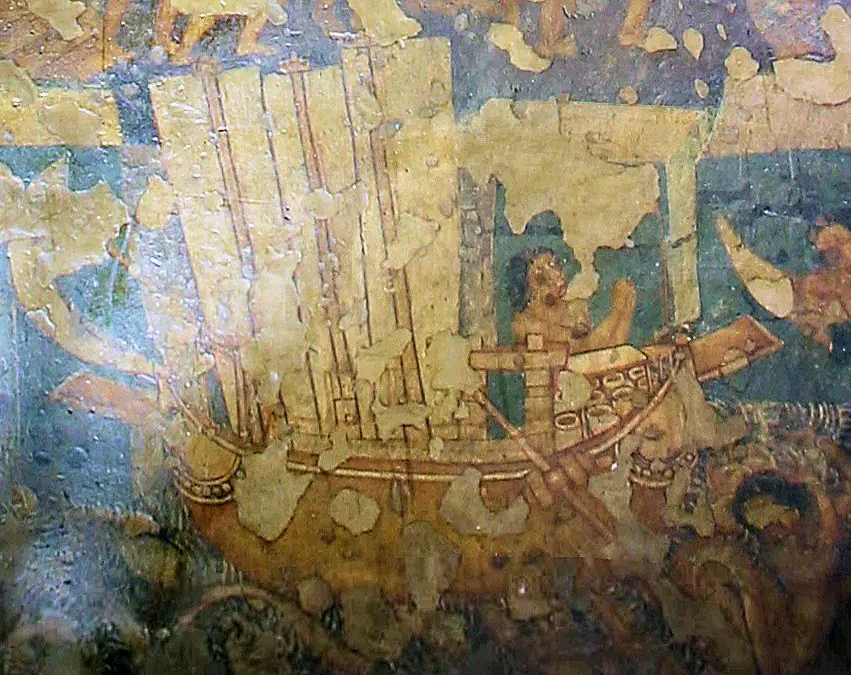
Ships of the western Indian Ocean were built of planks sewn together with coir rope through drilled holes, then caulked, so the hull flexed in the swell. Satavahana coins of the 1st–2nd centuries CE show two-masted ships, and a painting in Cave 2 at Ajanta shows a three-masted ship. In 2025 the Indian Navy inducted INSV Kaundinya, a stitched ship rebuilt from such images, and sailed her from Porbandar to Muscat. The Yuktikalpataru attributed to Raja Bhoja classifies ships by size and use.
02Monsoon and the Periplus
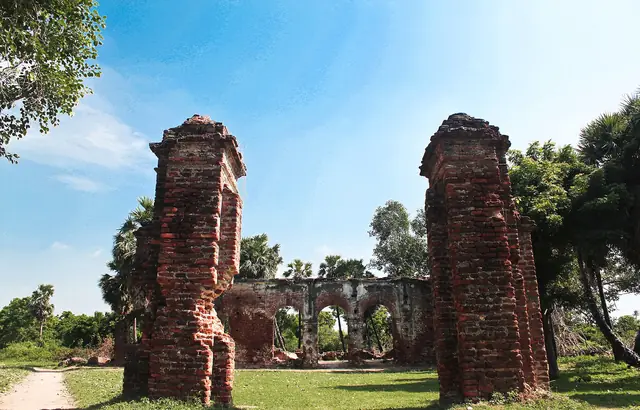
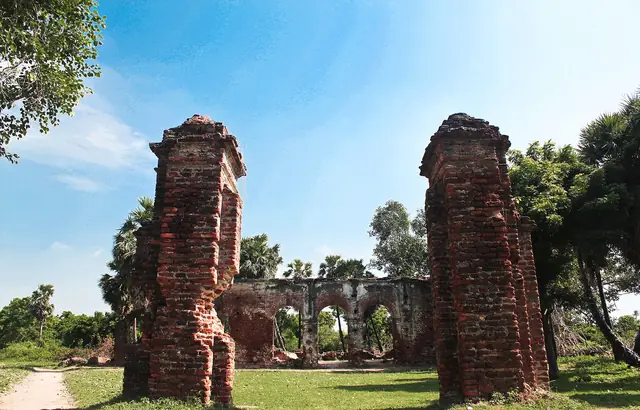
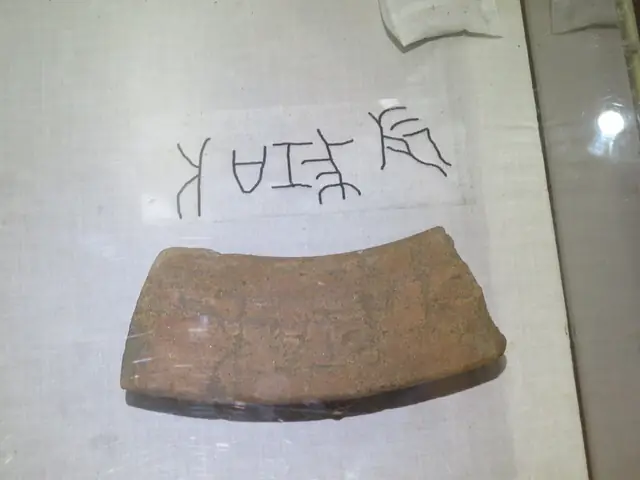
The Periplus of the Erythraean Sea, a Greek merchant’s guide of the 1st century CE, lists the ports of Bharat from Barygaza (Bharuch) to Muziris and the goods of each: pepper, cotton, pearls, ivory. It credits a Greek, Hippalus, with learning to sail straight across on the monsoon; historians agree Indian and Arab sailors knew those winds long before. Excavations at Arikamedu near Puducherry found Roman amphorae and pottery, and the Muziris papyrus in Vienna records a shipment of Indian goods.
03Pilots and stars
Indian pilots, malims, steered by star altitudes measured with a simple board on a string, the kamal, and by the pole star. When Vasco da Gama reached Malindi in 1498, Portuguese chronicles say he took on a pilot from Gujarat who guided him to Calicut. The popular story that this pilot was the Arab navigator Ahmad ibn Majid came much later and is doubted by historians. Either way, the route to India was shown to the Portuguese by sailors who already used it.
In the texts
- Periplus of the Erythraean Sea
- Yuktikalpataru