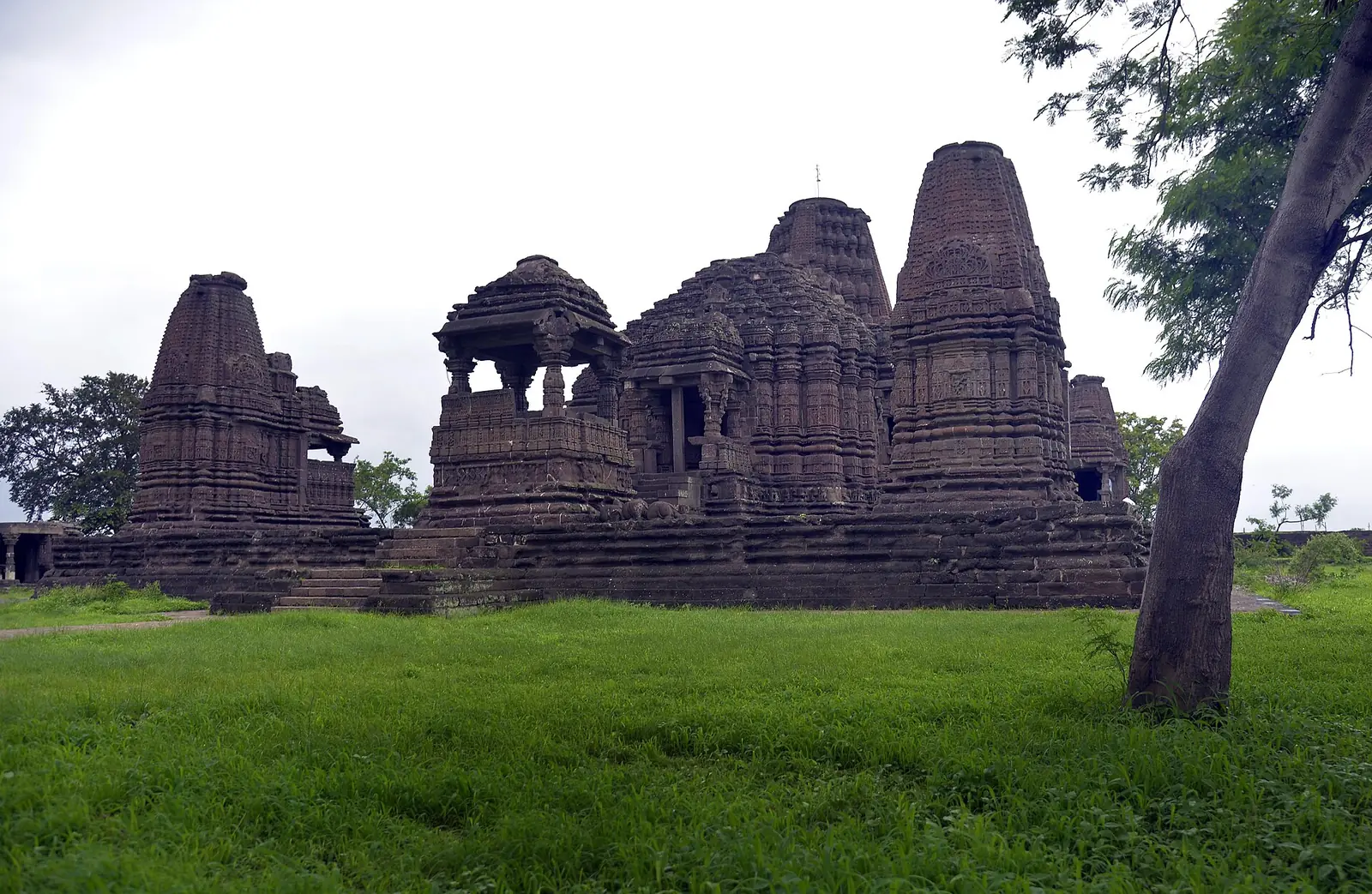
01Five shrines on one platform
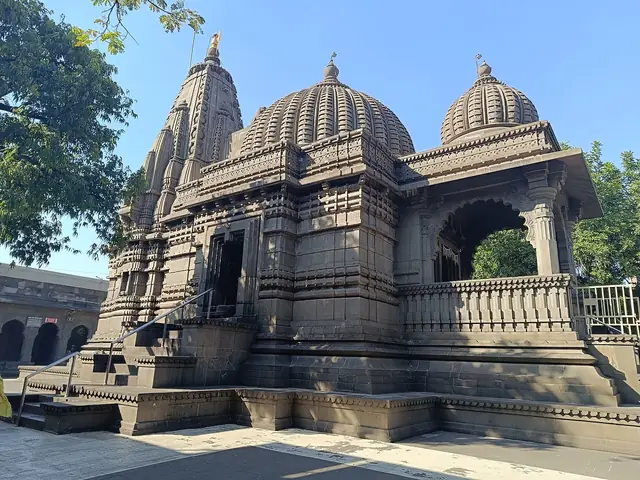
Panchayatana worship sets five forms of the divine together, one in the middle and four around, and at Gondeshwar the idea is built in stone. The main shrine of Shiva rises from a high plinth; at the four corners of the same platform stand shrines of Surya, Vishnu, Parvati and Ganesh, and before the main door is a pillared mandapa for Nandi. The spires are of the Bhumija kind, made of rows of small miniature shikharas climbing in vertical bands. The whole is of black basalt, dry-jointed without mortar, which the Marathi tradition calls Hemadpanti after Hemadri, the minister of the later Yadava court.
02Sinnar of the Yadavas
Before Bhillama V founded Devagiri at the end of the 12th century, the Seuna (Yadava) family ruled from Sinnar, then called Seunapura after their ancestor Seunachandra. Gondeshwar belongs to those years; local tradition credits a Yadava feudatory with raising it. The town keeps a second temple of the same age, Aiveshwar. Gondeshwar is a protected monument of the Archaeological Survey of India and still a place of worship, with its linga in daily puja.
The life of this place
- 11th–12th centuryThe panchayatana temple is built while Sinnar is a Seuna (Yadava) seat.
- c. 1187Bhillama V moves the Yadava capital to Devagiri.
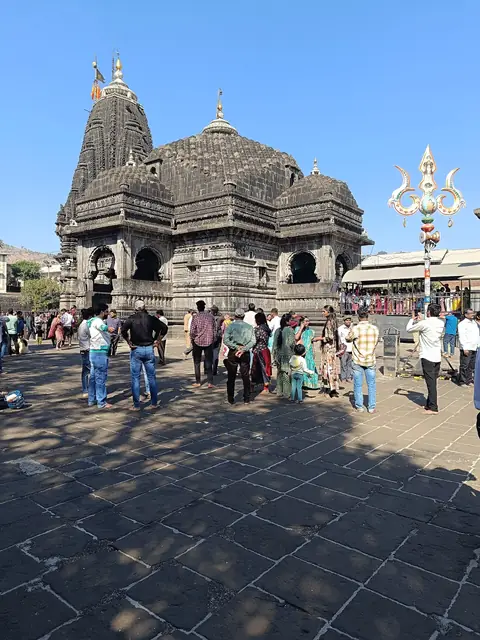
Sinnar is about 30 km south-east of Nashik on the Pune highway; combine it with Trimbakeshwar and Nashik’s Panchavati.