Cite
MLA
“Temple building as engineering.” Hindu History, 2026, https://www.hinduhistory.in/vijnana/temple-engineering-vastu-shilpa/. Accessed .
APA
Hindu History. (2026). Temple building as engineering. Retrieved , from https://www.hinduhistory.in/vijnana/temple-engineering-vastu-shilpa/
01The texts
The Mayamata and Manasara in the south, and in the north the Samarangana Sutradhara of Raja Bhoja and the Aparajitapriccha, set out how to test the soil, orient the plan, lay the Vastu Purusha Mandala grid, and fix every height from one module, often the width of the sanctum. Proportions run from the base mouldings to the finial. The texts also describe machines: the Samarangana Sutradhara has a chapter on yantras, mechanical devices, though some of what it lists is told as wonders rather than as working designs.
02Thanjavur and Ellora
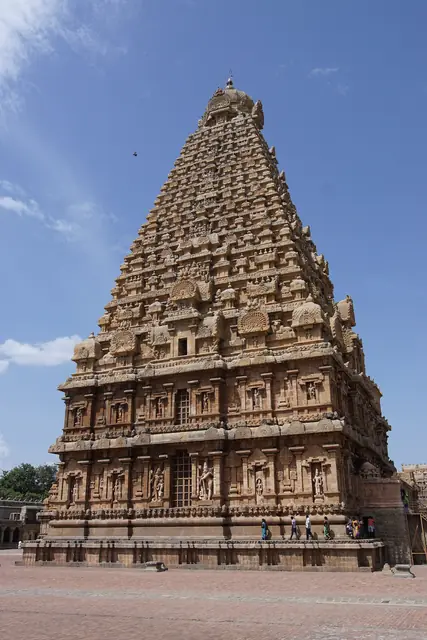
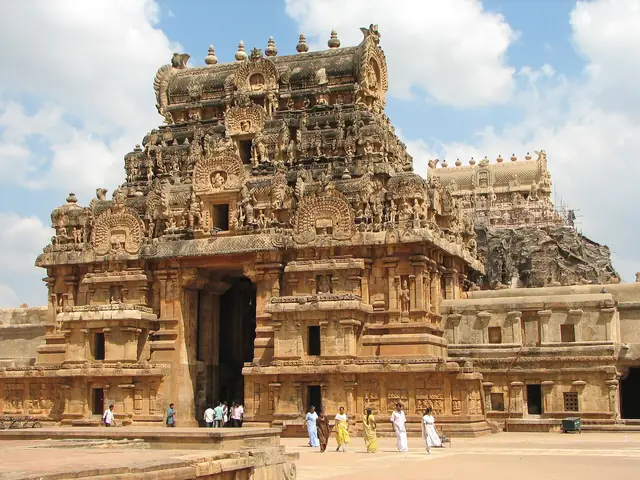
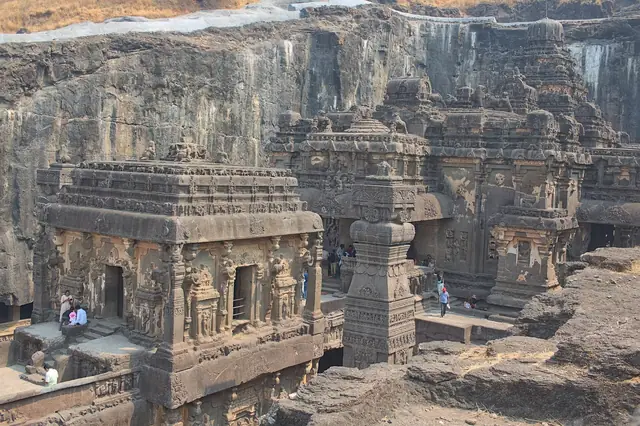
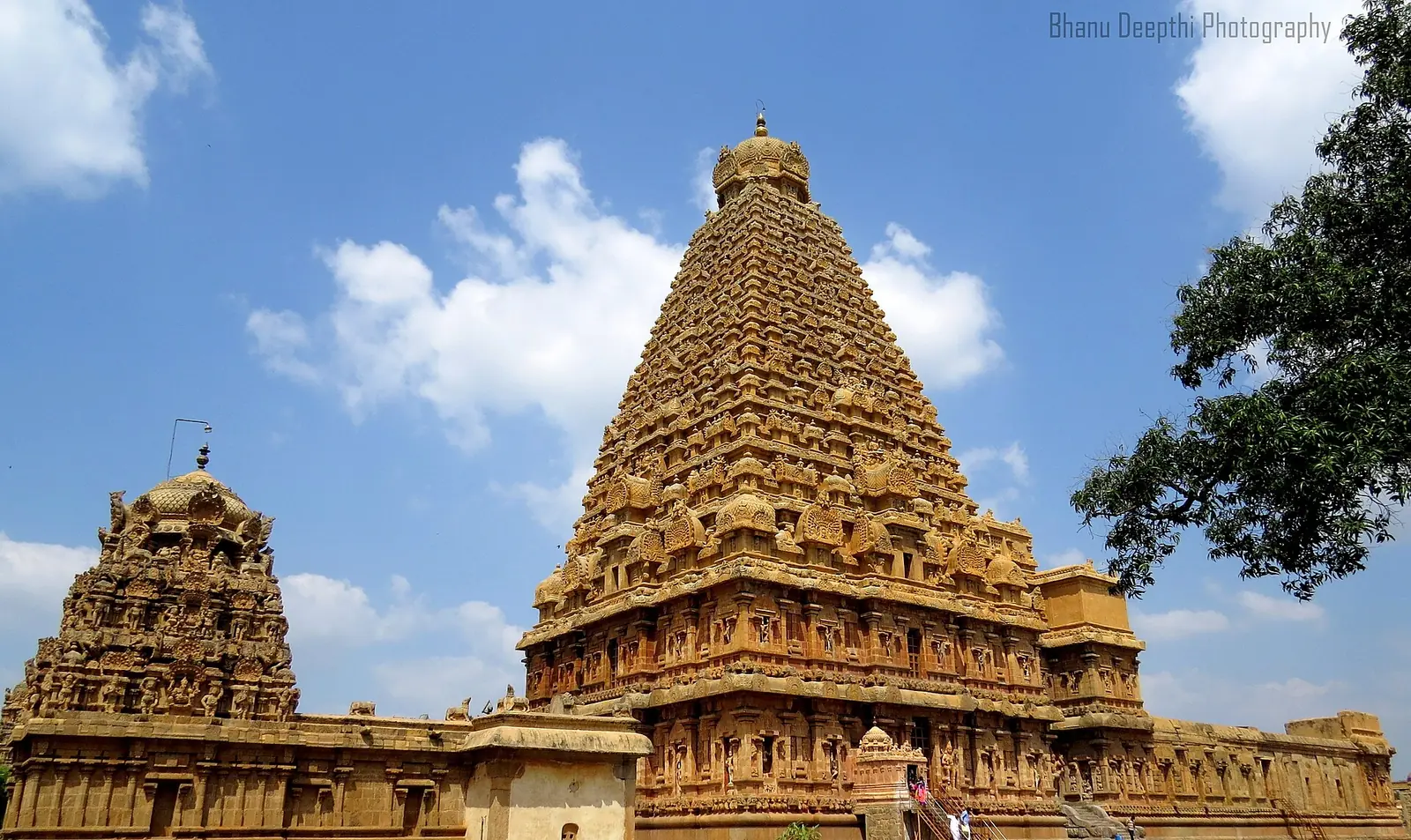
Rajaraja Chola I completed the Brihadeeswara temple in 1010; its vimana rises about 66 metres in granite, a stone not found near Thanjavur, and is built as a hollow pyramid of courses. The domed shikhara at the top is widely said to be one stone of about 80 tonnes; studies suggest it may be made of several pieces, so the figure is uncertain. At Ellora, the Kailasa temple was carved under the Rashtrakuta Krishna I in the 8th century by cutting trenches into the basalt and removing rock from the top down, an estimated two lakh tonnes, with no room to correct a mistake.
03Load and joints
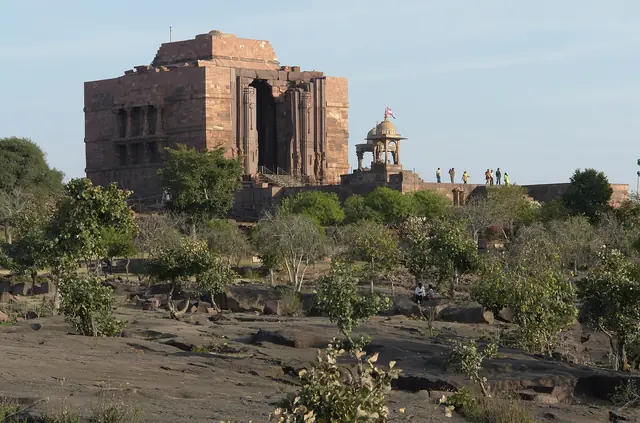
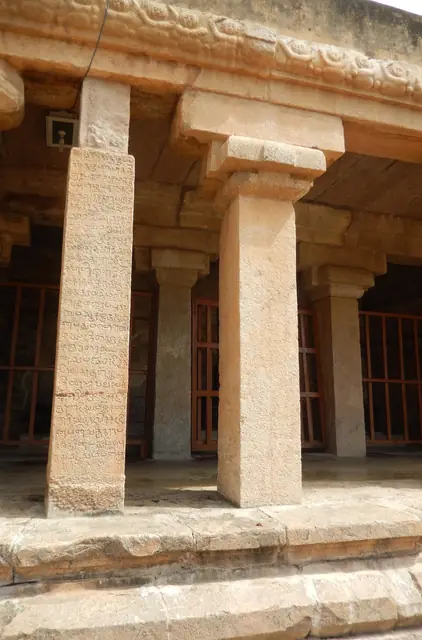
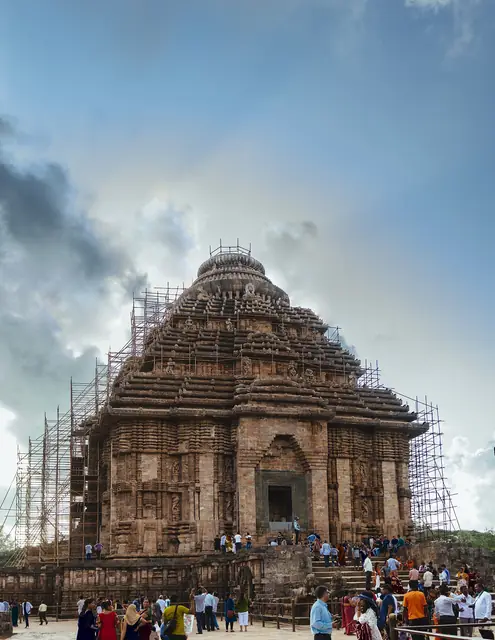
Most Hindu temples are built without mortar, stone resting on stone, held by weight, by careful dressing and by joints such as mortise and tenon, with iron clamps in places. The corbelled shikhara steps inward course by course instead of using a true arch, which suits stone that is strong in compression. Konark used iron beams within its stone. Some popular claims, such as temples designed to resist earthquakes by intent, or shadows that never fall, are not supported by the texts and should be dropped.
In the texts
- Mayamata
- Manasara
- Samarangana Sutradhara of Bhoja