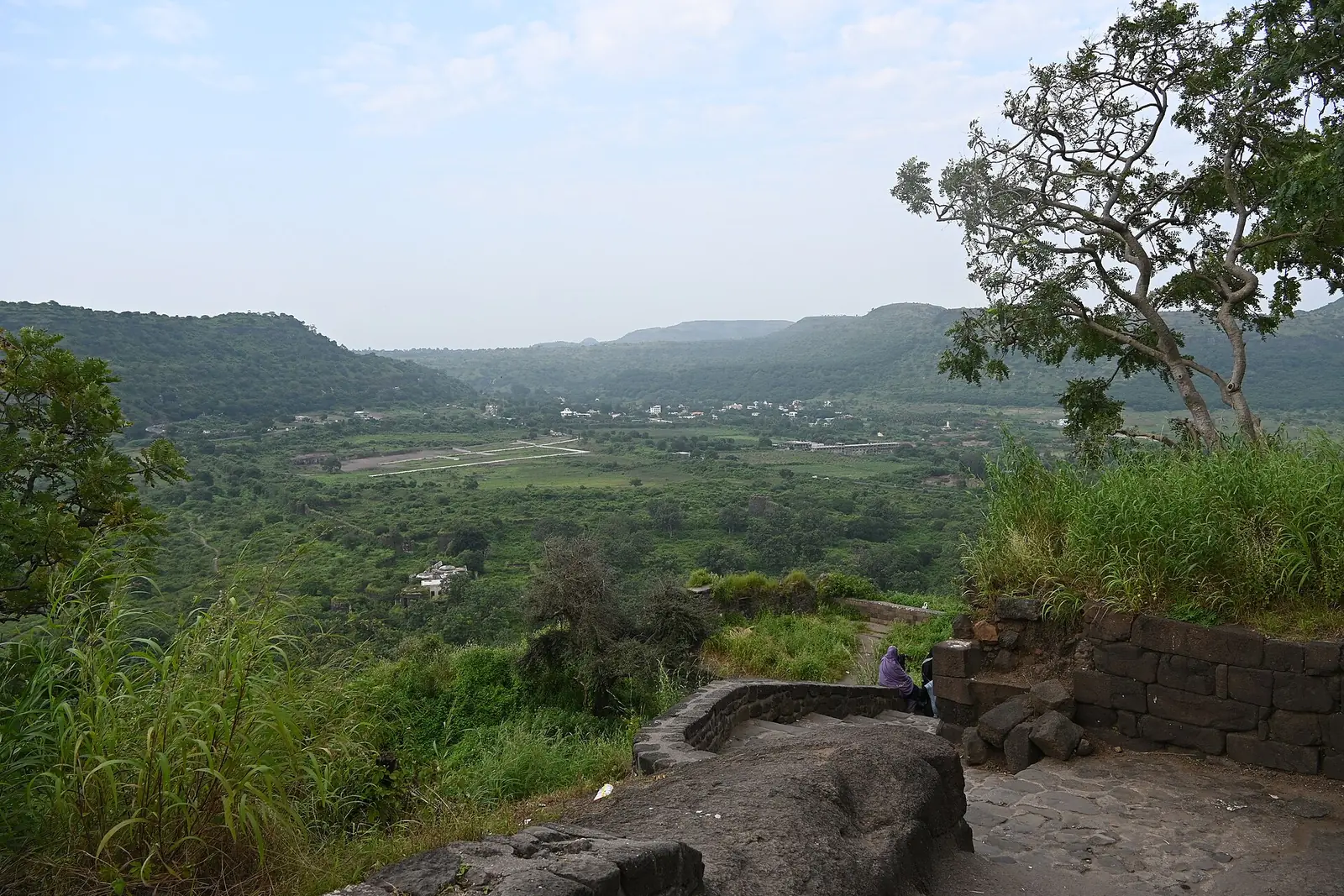
01The Yadava capital
Bhillama V of the Seuna Yadavas made Devagiri his capital around 1187, and under Singhana and Ramachandra it became one of the richest cities in Bharat. Hemadri, minister of the Yadavas, wrote the Chaturvarga Chintamani here, and the Marathi of Jnaneshwar grew up under their rule. The hill was cut away on all sides into a sheer face some 50 m high, ringed by a moat, and the only way up to the citadel was a dark spiralling tunnel that defenders could fill with smoke and fire.
02From Devagiri to Daulatabad
In 1296 Alauddin Khalji, then governor of Kara, raided Devagiri by surprise and forced Ramachandra to pay a huge ransom. In 1307–08 Malik Kafur came again and made the king a tributary. In 1318 the last Yadava, Harapaladeva, rose against Delhi, was captured and killed, and the kingdom was annexed. Muhammad bin Tughlaq renamed the city Daulatabad in 1327 and ordered the people of Delhi to move here, an order soon abandoned. The Bahmanis built the Chand Minar in 1445, and the Mughals took the fort in 1633.
The life of this place
- c. 1187Bhillama V makes Devagiri the Yadava capital.
- 1296Alauddin Khalji’s surprise raid forces Ramachandra to pay ransom.
- 1318Harapaladeva, the last Yadava, is killed and the kingdom annexed.
- 1327Muhammad bin Tughlaq renames the city Daulatabad and moves his capital here.
- 1633The Mughals take the fort.
About 15 km from Chhatrapati Sambhajinagar, on the road to Ellora. The climb through the tunnel to the top takes about an hour; carry a torch.