01Three Sangams
The commentary on Iraiyanar Akapporul gives the Tamil tradition of three Sangams, academies of poets held under Pandya kings. The first two were at southern Madurai and Kapatapuram, both swallowed by the sea; the third, at the present Madurai, judged the poems now gathered in the Ettuthogai and Pattuppattu. One of these, the Maduraikkanchi, describes the city’s day and night markets, its temple festivals and its streets of craftsmen. The Silappatikaram tells how Kannagi, wronged by a Pandya king, set the city ablaze.
02A city that kept its plan
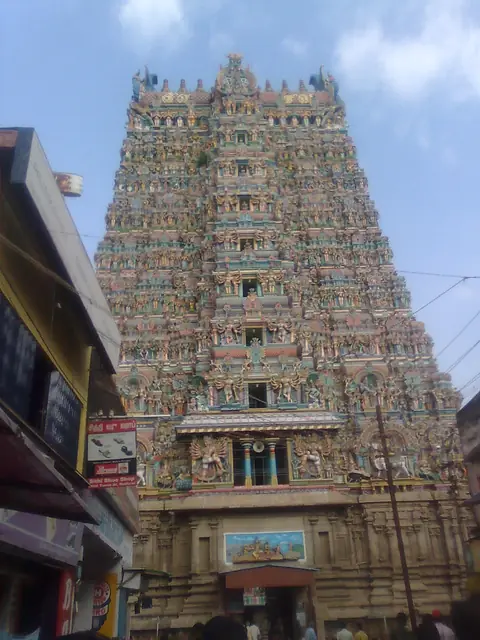
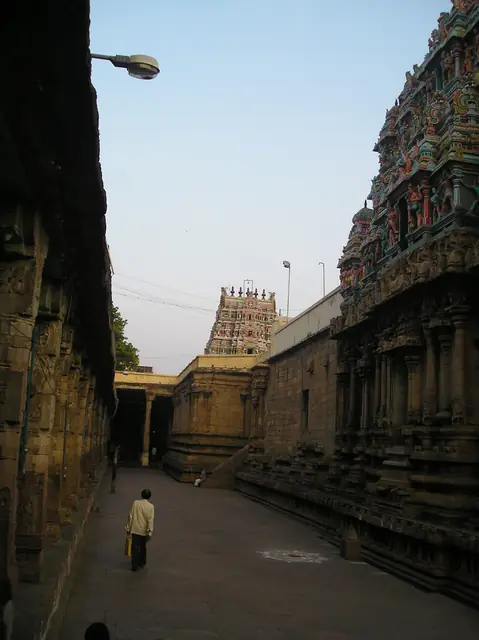
Megasthenes, at the Maurya court, wrote of a southern kingdom of ‘Pandaia’ ruled by a queen and rich in pearls. Madurai is laid out in concentric square streets around the Meenakshi temple, named after the Tamil months in which processions go round them: Chithirai, Avani-moola, Masi. The Nayaks made it their capital in the 16th century, and Tirumala Nayak’s palace still stands. Excavations at nearby Keezhadi have since shown a Sangam-age town of brick houses and literate potters a few kilometres away.
The life of this place
- c. 300 BCEMegasthenes records the Pandya kingdom.
- 1311Malik Kafur sacks the city.
- 16th centuryThe Nayaks of Madurai take power and rebuild the city around the temple.
- 1901Pandithurai Thevar founds the ‘Fourth Tamil Sangam’ at Madurai.
Walk the Chithirai streets around the temple at dawn, and visit Tirumala Nayak’s palace and the Keezhadi museum, 12 km away.